What Determines Whether Misfuelling Damage Can Be Prevented
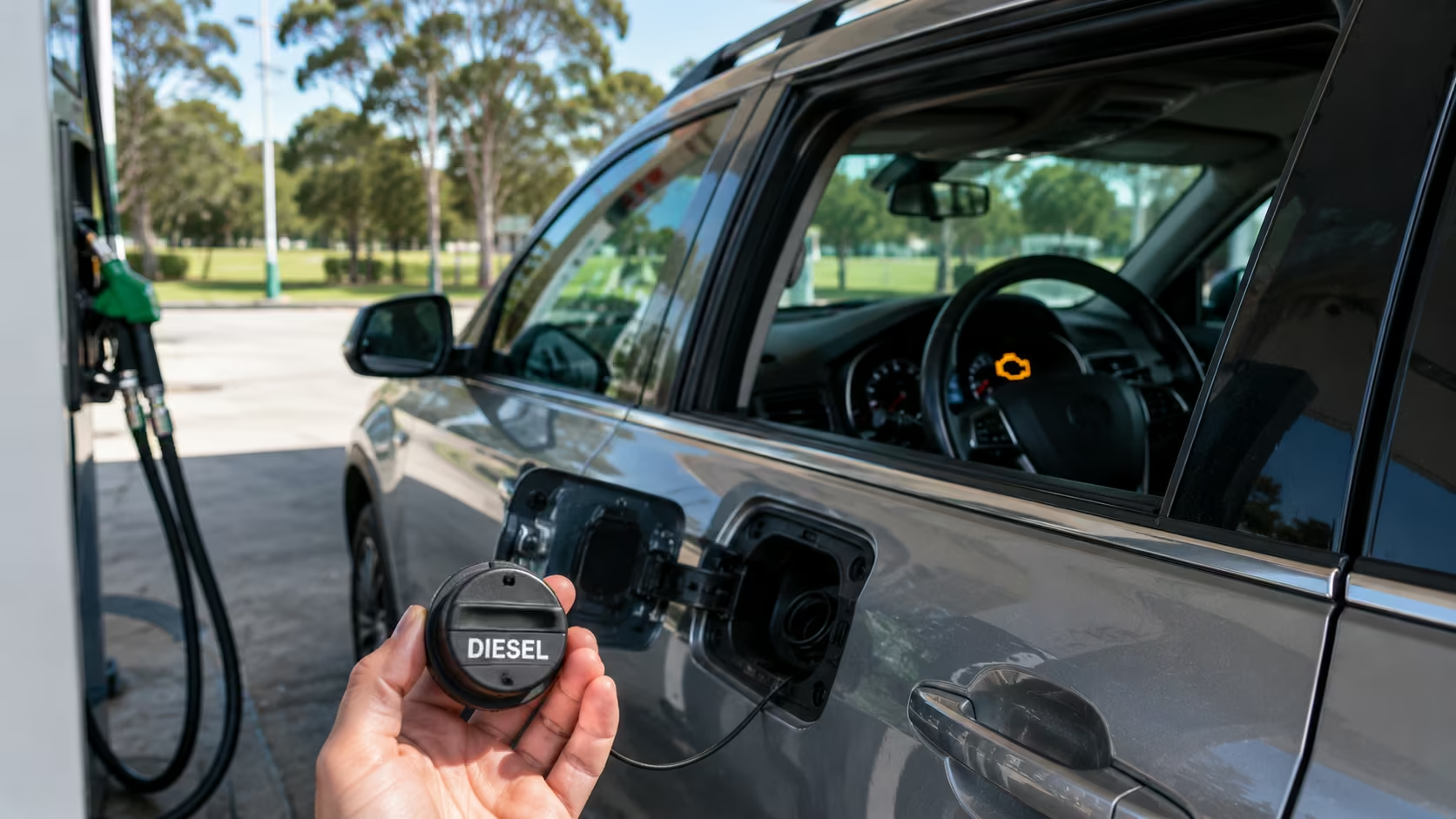
Is misfuelling damage preventable? Yes, but it depends on three things: how quickly the engine is stopped, how far the car has driven on the wrong fuel, and which fuel system is involved. Most vehicles can be drained without lasting damage if caught at the pump. Put petrol in the tank of a common rail diesel and drive a few kilometres and the outcome changes completely. Instead of going over the standard list of immediate steps, this guide looks at the decision points that truly differentiate a simple drain from an expensive repair.
Why Two Misfuelling Incidents Rarely End the Same Way
Two drivers can make the same mistake, putting petrol in a diesel tank, and walk away with two very different bills. You buy a tank drain and you’re on the road in an hour. The other is looking at a new high pressure pump and a full complement of injectors. That difference between those two outcomes is not luck. It boils down to a few measurable factors that determine if prevention is still an option by the time a technician gets there.
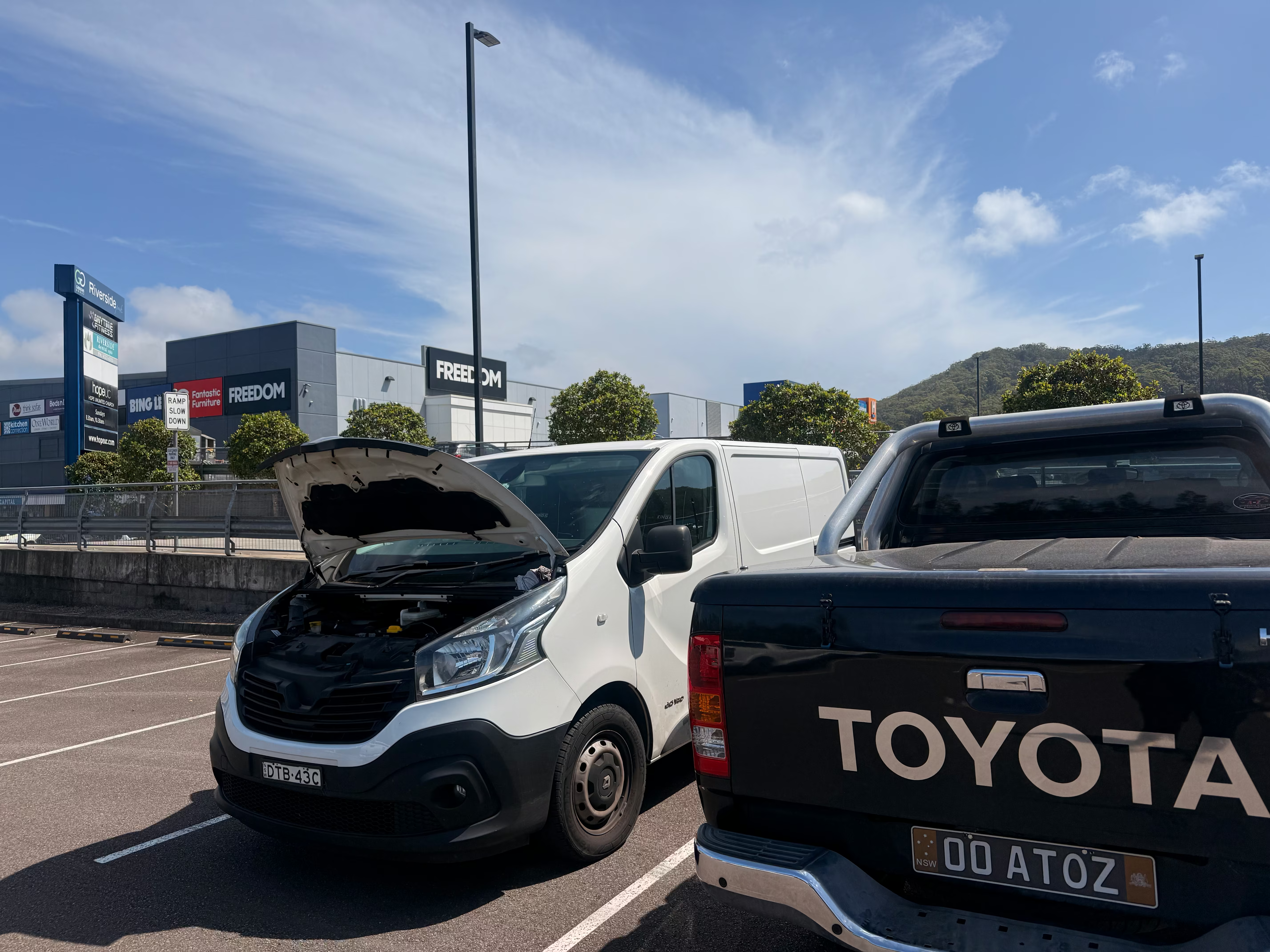
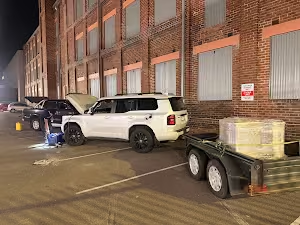
In many cases a mobile roadside fuel drain can be performed without towing.
The Time and Distance Factors That Decide the Outcome
If the ignition was never started then there is no circulation and very little risk. The contaminated fuel just stays in the tank until it is drained out. The moment the engine starts the fuel pump begins sucking the mix through lines, filters and injectors . Every second it runs adds more wear to components that were never designed to handle that fuel .
Distance matters because it increases exposure When a car stalls in the first hundred metres, the fuel has usually only circulated a short time before the engine has protected itself by cutting out. A car driven for several kilometres, especially when under load or at higher RPM, sends far more contaminated fuel to the high-pressure side of the system, where tolerances are tightest and the damage is hardest to reverse.
If the contamination is removed before the fuel runs through the system, it is usually easier to recover.
Why Common Rail Diesel Engines Are Harder to Protect
Most diesel vehicles on Australian roads now use common rail injection, where fuel is stored in a common rail at very high pressure, often well above 2,000 bar, and metered through injectors with internal clearances measured in microns. That precision is why modern diesels are so efficient and low in emissions, but it also means there is no room for error. Diesel itself is the lubricant for these components, so when petrol dilutes it, that friction immediately increases wherever fuel is moving under pressure.
By comparison, older mechanical injection systems operated at lower pressures and with looser tolerances and could often take some contamination without catastrophic failure. That tolerance does not apply to common rail vehicles. What an older diesel might shrug off as contamination can be enough to damage a modern pump and injector set.
AdBlue Contamination Follows a Different Clock
AdBlue is not a fuel and does not behave anything like it once it gets into a diesel tank. It’s heavier than diesel so it sinks to the bottom of the tank. That’s where the fuel pump sucks from. As it combines with diesel and is subjected to heat and pressure, the urea content begins to crystallise. These crystals are hard enough to scratch the surfaces of the injectors and pumps and can quickly clog a fuel filter. That’s why AdBlue contamination is an issue that needs to be addressed urgently, even if the car hasn’t moved an inch. It’s not the distance that matters here.
Where Drivers Undo Their Own Prevention Efforts
Some of the damage attributed to the original misfuelling mistake is actually done later, as a result of well-intentioned actions that worsen the situation.
- Jump-start a car that won’t start assuming it is a flat battery when the real reason is that the engine is protecting itself. Forcing extra crank attempts forces more bad fuel to go through the system.
- Turn the key to accessory mode to un-lock the steering wheel and tow. In some cars this is enough to prime the electric fuel pump and start circulation even if the engine itself never starts.
- Taking a warning light going away as confirmation that the problem is solved, and reverting to normal driving before an appropriate diagnostic check has confirmed there is no residual contamination.
What a Workshop Checks Before Clearing a Car to Drive
You need more than visual checks to be sure prevention worked. Technicians will normally take a sample of the fuel and look for cloudiness, a strange smell or crystallisation. They will look for metal particulate on the fuel filter and, if the engine has been run, they will look at the fuel rail pressure data through the vehicle’s diagnostic port. If the car was started or driven a distance, a compression check may be used to rule out damage that has not yet manifested itself as a symptom. This is the difference between a car that looks good and a car that has been confirmed good.
Where appropriate Wrong Fuel Help also recommends further diagnostics by the workshop if there is any suggestion contamination has reached sensitive fuel system components. Ensuring the vehicle’s safety is paramount, even if it means suggesting additional inspection rather than an immediate return to service.
Why Prevention Isn’t Always Possible
Every misfuelling error is different. The final outcome depends on the type of vehicle, fuel system design, time elapsed and whether the engine has been started. If technicians act quickly, they have the best chance of limiting contamination before it can move through critical fuel system components.
Key Takeaways
- It is time and distance – not luck – that determines whether misfuelling damage can still be prevented when help arrives.
- The older mechanical injection systems are much less sensitive to contamination than common rail diesels.
- AdBlue contamination has a narrower window for prevention than petrol or diesel mix-ups, as crystallisation can start within minutes.
- Jump-starting , towing with the key in the accessory position , and driving after a warning light goes out can all negate the prevention efforts .
- Only a proper diagnostic check can confirm that prevention has worked, not a visual inspection.
Frequently Asked Questions
Can a car that has already driven a short distance still avoid major damage?
Often, yes. Distance is one factor among several, and vehicle type and how hard the engine was driven also play a part. A diagnostic check is the only reliable way to know for certain rather than guessing based on distance alone.
Does a fuel additive help prevent damage after misfuelling?
No. Additives are designed for ongoing maintenance, not for reversing contamination that has already circulated through the system. Adding one after a misfuelling incident does not undo any damage and can delay proper drainage.
Is prevention harder in a hire car or an unfamiliar vehicle?
It can be, mainly because drivers often do not know the vehicle’s fuel history. If a previous warning light was cleared without a full diagnostic check, contamination from an earlier incident could already be present. Treat any unusual symptom in an unfamiliar vehicle as urgent.
Can towing the car yourself help prevent further damage?
It can, but only if the ignition is left fully off throughout. Turning the key to accessory mode to release the steering lock can still prime the fuel pump on some vehicles, which is why professional recovery is generally the safer option.
If the car seems to be running fine afterward, does it still need to be checked?
Yes. Some damage, particularly to injectors, develops gradually and may not show up as reduced performance or a pump failure until weeks later. A car that seems fine immediately after a drain is not the same as a car that has been confirmed undamaged.
Is It Better to Call a Mobile Fuel Recovery Specialist Immediately?
Yes. Early assessment and recovery can often prevent contaminated fuel from circulating further through the fuel system, reducing the likelihood of more extensive repairs.