Why Draining Wrong Fuel From a Modern Car Is Not a DIY Job
You can’t drain the wrong fuel yourself with standard equipment on most cars built in the last two decades. Modern fuel tanks are installed without a drain plug, anti-siphon valves prevent access to the hose, contaminated fuel cannot be legally disposed of and incomplete drainage leaves enough wrong fuel in the tank to cause engine damage when the tank is filled again.
Why Modern Fuel Tanks Have No Simple Drain Point
Many older vehicles, especially those made before the mid-1990s, had a drain plug screwed into the bottom of a metal fuel tank. You could put a container underneath it, pull the plug and let gravity take care of the rest. That design is almost extinct in today’s passenger car and light commercial vehicle on Australian roads.
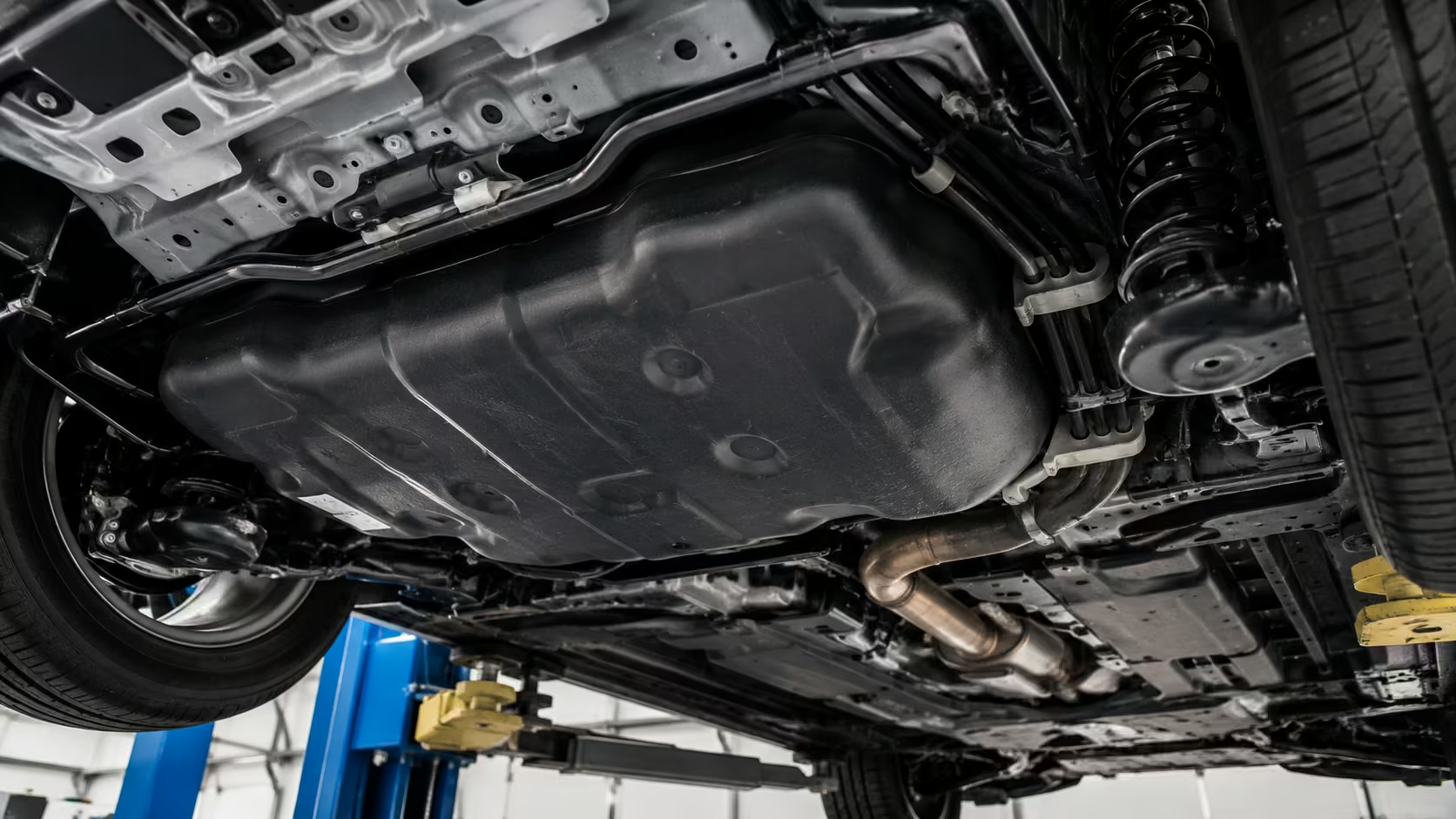
Modern tanks are made from moulded plastic, cross-linked high density polyethylene, formed in one piece. There is no drain plug as there is no place to put one without compromising the structure. It’s also more complex in shape than the old rectangular metal tank, using baffles, internal chambers and formed profiles to help reduce fuel slosh during cornering. Those same features mean that fuel doesn’t simply run to a low point when the car is parked. Even if you could get underneath the tank, you’d need workshop equipment to tilt the car enough to fully empty it.
The filler neck is the only practical place to get a hose in and here is the start of the next problem.
What Anti-Siphon Valves Do and Why They Stop DIY Access
Manufacturers have been installing anti-siphon devices into the filler neck as standard since the late 1990s. They were originally intended to stop fuel theft, as the classic way of syphoning petrol from a parked car was to drop a simple rubber tube down the filler neck.
There is an anti-siphon valve half way down the filler neck. It is easy to put the fuel nozzle in and get fuel flow under pump pressure but there is no way to put anything in from above. In most vehicles it is either a spring-loaded flap or a ball-and-spring check valve. This obstruction is hit by a consumer syphon hose at about 30 to 40 centimetres in and will not pass without being forced.
Forcing a hose through an anti-siphon valve can damage the valve itself. On a modern European vehicle, a replacement filler neck assembly can run several hundred dollars, and that damage is not covered under a standard warranty claim, since it is caused by the owner’s action and not a manufacturing defect. Trying to save a few dollars on a call-out just leads to yet another separate repair bill.
Professional fuel drain equipment is used to approach the tank differently. Specialist pumps then draw the fuel through the filler neck using narrow diameter extraction heads designed to work around or through anti-siphon devices without damage, or through a fuel line disconnect depending on the vehicle type and severity of contamination.
Find out how professional mobile fuel drain companies can safely open modern fuel tanks without damaging these parts.
Fire and Health Risk From Handling Fuel Without Correct Equipment
Fuel handling at the roadside or in a driveway is easy to understate the risks. Petrol in particular is very volatile, and its vapour is also heavier than air, so it settles close to the ground and can travel several meters from the source before it finds an ignition point.
Static electricity is the most frequently neglected hazard. The fuel flowing through a typical plastic hose builds up a static charge . This is not what consumer syphon equipment is made for. Professional fuel extraction pumps are ATEX certified meaning they are intrinsically safe for use in explosive atmospheres. The pumps, hoses and collection containers are all designed to prevent static build-up and to contain any spark risk.
Direct contact with fuel is also a real health risk. Petrol absorbed through the skin over a long period is not trivial and the fumes produced when draining in an enclosed space or a warm driveway can cause headaches, dizziness and nausea. Most people do not have the kind of protective equipment that is appropriate for dealing with fuel.
Why Incomplete Drainage Makes the Situation Worse
A consumer syphon cannot reach the lowest points of a modern moulded plastic tank . On the best case where a driver manages to get a hose past the anti-siphon valve and begins pulling fuel . The tank is composed of baffles and internal chambers. Some of the contaminated fuel will always remain in areas that the hose cannot reach.
Even that residual wrong fuel will be enough to contaminate the new correct fuel to be added later. The mix is still wrong and the driver may think they’ve drained the tank and refuelled, only to find the vehicle running poorly, misfiring, or not starting at all. They are then worse off than before the attempt: money spent on fuel, time lost, and the vehicle still undriveable.
Professional extraction equipment has enough suction power to pull fuel from the lowest accessible points in the tank, and it can often remove more of the contaminated fuel than any consumer method. The difference is most noticeable in common-rail diesel cars, where even a small amount of petrol left in the system continues to reduce the lubrication the diesel gives to the pump and injectors. These systems are particularly vulnerable when petrol gets into a diesel tank.
What Changes When the Engine Has Already Been Started
If the ignition was turned on or the car driven after misfuelling, draining the tank alone is no longer enough, regardless of who does it. The pump on diesel vehicles will have pumped the contaminated mix through the fuel lines, past the fuel filter and into the high-pressure side of the system.
At this point the fuel filter should be changed as a minimum, as it will have absorbed contamination that would otherwise reintroduce it to the system. With common rail diesel engines the lines and injectors also need to be flushed, because the lack of diesel’s lubricating properties begins to wear the pump and injectors as soon as the circulation starts. Doing a tank drain at home doesn’t address any of this.
A professional service checks the entire system and not just the tank. If the engine was running, a technician will check fuel rail pressure, inspect the filter, flush the lines and confirm the system is clear before the vehicle can be driven safely. That confirmation is vital if you need to make an insurance claim down the line for any residual damage.
Legal Disposal of Contaminated Fuel in Australia
This is the part of DIY draining that no one ever thinks about until it’s too late. Under Australian environmental protection legislation, mixed or contaminated fuel is a hazardous liquid waste. You can’t leave it in an unsealed container, dump it on the ground or tip it down a drain, or mix it with household waste. All states and territories have serious penalties for illegal disposal of hazardous waste. Sometimes the problem is more than just a misfuel, it’s fuel contamination.
A professional mobile drain service comes with sealed collection containers and must dispose of the extracted fuel at a licensed waste facility. That disposal cost is included in the service fee . If you do your own tank drain and fill a few jerry cans with a petrol/diesel mix you still have to find and pay for proper hazardous waste disposal separately. In most areas the containers must be taken to a licensed facility or schedule a pick-up service.
What a Professional Drain Does That a DIY Attempt Cannot
But it’s not just a safety issue to consider when comparing the mobile fuel drain service vs. a DIY attempt. It is about the outcome for the car.
| DIY Attempt | Professional Mobile Drain | |
| Tank access | Blocked by anti-siphon valve in most modern vehicles | Specialist extraction head or fuel line disconnect, no valve damage |
| Drainage completeness | Partial at best, baffles and tank shape leave residual contaminated fuel | Full extraction including lowest accessible tank points |
| Fire and static risk | High, standard consumer equipment is not ATEX-rated | Eliminated, ATEX-approved pumps and sealed containers throughout |
| Fuel disposal | Responsibility of the owner, requires licensed hazardous waste disposal | Included in the service, handled by a licensed facility |
| System check if engine was started | Not possible, tank drain only | Full assessment, filter replacement, line flush if required |
| Warranty protection | DIY attempt risks voiding warranty for any damage caused during the process | Professional service protects the warranty claim trail for any residual damage |
See the full list of immediate actions to take after mis fuelling, including whether to try to start the vehicle and what to do in the first few minutes. Check the cost and procedure guide to find out how long it takes a trained technician to do the job, and what the service involves from start to finish. And for a full explanation of how acting quickly saves more of the fuel system, read the guide to preventing engine damage after misfuelling.
Why Modern Vehicles Need Specialist Equipment
There is very little leeway for error with modern fuel systems if the wrong fuel is put in the tank. DIY attempt might risk further damage and the safest and most reliable solution is to call for professional recovery. Wrong Fuel Help provides 24/7 mobile fuel drain and fuel system flushing services to Newcastle, Lake Macquarie, Maitland, Central Coast and surrounding NSW areas.
Frequently Asked Questions
Can I top up with the correct fuel instead of draining the tank?
No. Adding the correct fuel to dilute the wrong fuel does not fix the problem. It changes the ratio but does not remove the contamination, and on common rail diesel vehicles even a small proportion of petrol in the system reduces the lubrication diesel provides to the pump and injectors. Dilution is sometimes mistaken for a solution because older, lower-pressure diesel systems could absorb it. Modern systems cannot.
Is there any vehicle where a DIY drain is realistic?
On very old vehicles with no anti-siphon protection, a drain plug on a metal tank, and a gravity-fed fuel system, it is physically more achievable. As a general guide, if the vehicle was manufactured after the late 1990s, the answer is almost always no. If you are unsure whether your specific vehicle has anti-siphon protection, assume it does. The cost of damaging the filler neck assembly while attempting access is not worth finding out the hard way.
Does a DIY drain attempt affect my insurance claim?
It can. Most comprehensive car insurance policies that cover misfuelling specify that the vehicle should not be driven and that the claimant should take reasonable steps to prevent further damage. A DIY drain attempt that causes additional damage to the filler neck, fuel pump, or fuel lines may be treated as additional damage caused by the owner rather than by the original misfuelling event. A professional service creates a documented record of what was found and what was done, which supports a clean claim. You can also compare whether roadside fuel recovery or towing is the better option.
What if I only put a small amount of wrong fuel in before realising?
A small quantity is different from a full tank, but the rule of thumb is still to drain rather than dilute if you have a modern diesel vehicle. Even a litre or two of petrol in a common rail diesel system is enough to affect the lubrication properties of the fuel and cause wear if the engine is run. For petrol vehicles with a small amount of diesel added, the risk is lower but the correct response is still to avoid starting the engine and get professional advice before driving.
How long does a professional mobile fuel drain take?
Most straightforward drains on a vehicle where the engine has not been started take between 30 and 60 minutes from the technician arriving at the vehicle. If the engine was started or the vehicle was driven, the time increases because additional flushing and filter replacement is required. In either case it is significantly faster than the hours a DIY attempt would take, even in the rare scenario where the attempt was successful.
Can a Mobile Fuel Drain Be Done at My Home?
Yes. In many cases, a professional mobile fuel recovery technician can safely drain contaminated fuel at your home, workplace or roadside, provided the vehicle is accessible and the engine has not suffered additional mechanical damage.