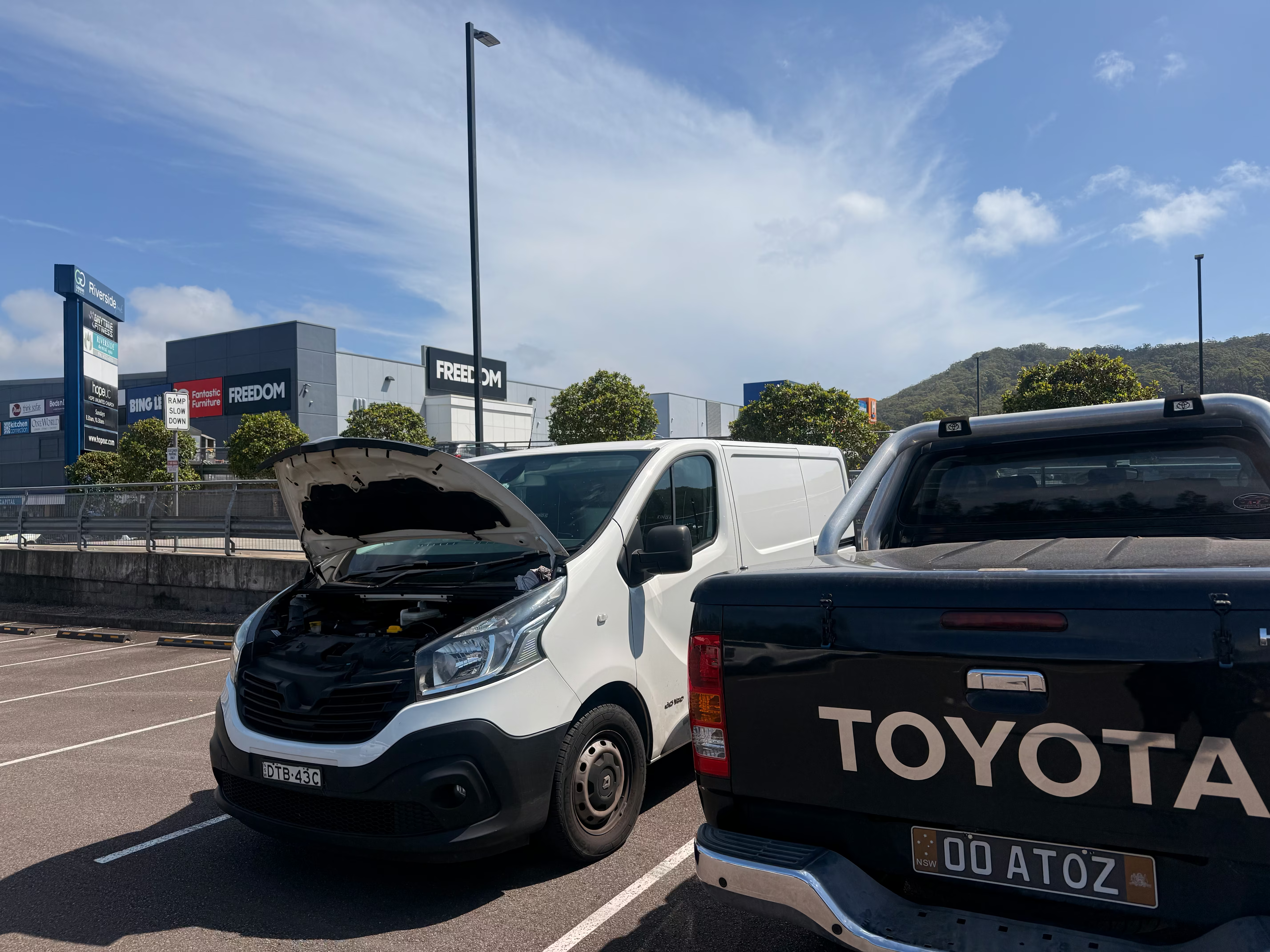
Symptoms of Wrong Fuel in a Diesel Engine and What Each One Means
Symptoms of wrong fuel in a diesel engine follow a predictable sequence of events depending on whether the engine was started and how long it ran. Each symptom tells you something very specific about how far the contamination has spread and what that means for the extent of the damage.
At Wrong Fuel Help Australia we engage with diesel vehicles at every stage of a misfuelling incident from the forecourt before the key was turned to roadside breakdowns after the vehicle has been driven several kilometres on the wrong fuel. The symptom pattern we see tells us exactly where in the contamination process they are at and guides us in how to recover. The most useful information for knowing what you are dealing with until help arrives is knowing what each symptom actually means.
Why Wrong Fuel Causes These Symptoms
A modern common rail diesel engine is designed on one assumption the fuel that is passing through it is diesel. Diesel performs two functions within the fuel system. It is burnt in the cylinders to make power. It also lubricates the high pressure fuel pump and injectors as it passes over them at pressures that can exceed 2,000 bar in modern systems.
Know why the high pressure fuel pump is the most vulnerable component after petrol contamination.
Petrol does neither of these jobs well in a diesel system. Petrol doesn’t have the lubrication that diesel does. Without that lubrication, at the pressures and tolerances of a common rail injection system, you get metal-to-metal contact on surfaces that are supposed to be separated by a film of diesel. Petrol also burns differently to diesel, being ignited by a spark rather than compression and therefore does not burn correctly in a diesel cylinder. All bad fuel symptoms in a diesel engine are the result of one or both of these two incompatibilities.
Symptoms Before the Engine Was Started: What You Noticed at the Pump
The best you can hope for is to realise you’ve made a mistake at the pump before the key goes in. In this case, you may have observed:
- The fuel nozzle seemed a bit different in size or the pump label registered after you squeezed the handle
- The fuel smell was a bit different than your normal diesel fill. Petrol smells more volatile and sharper than diesel
- The fuel flow was different or appeared different at the nozzle
If you’re reading the list of symptoms and you’re recognising the pump-side signs, stop. Do not turn the ignition key. Do not press the start switch. Do not try to move the vehicle to another location with the key in the ignition. The contaminated fuel is fully in the tank. The system is fully clean. This is the safest situation possible and results in the simplest recovery. The fuel is drained and the tank is flushed and the vehicle drives away with no lasting effect.
Our step-by-step guide covers precisely what to do from this point on – what to do the moment you recognise any of these symptoms.
Symptoms in the First Seconds After the Engine Started
If you start the engine with petrol in the tank, the first few seconds will give you an indication of the current level of contamination in the system.
The engine starts then immediately stalls
Actually this is one of the better short term results. The petrol contamination level in a diesel tank is high enough to change the burning characteristics of the fuel so that the engine cannot keep going. It fires briefly on the left-over diesel fuel in the lines, then dies as the contaminated mix hits the cylinders. The stall is the engine protecting itself. Do not try to reboot it. The pump and injectors have been exposed for a short time but the exposure is short.
Rough running and hesitation immediately on start
If there was some good diesel in the tank before the petrol was added, the engine may start and run rough for a short while on the remaining good diesel in the fuel lines before the petrol contaminated mixture reaches the high pressure components. It feels like misfiring, uneven idling or a feeling that the engine is working harder than normal. Switch off the engine. Each second running on contaminated mixture puts the pump and injectors at higher risk.
The engine starts and seems to run normally
This is the most misleading result. If the petrol ratio in the tank is relatively low, or the vehicle has a large tank, the contamination may be diluted enough for the engine to run without obvious immediate symptoms. That’s not to say there is no damage. Petrol is still passing through the pump and injectors and still replacing diesel as the lubricant and still decreasing lubrication at every surface it touches. The damage accumulates silently until symptoms appear, usually after more petrol contaminated fuel has circulated.
Symptoms During the First Minutes of Driving on the Wrong Fuel
The symptoms in a misfuelled vehicle that has been driven follow the progression of the contamination through the fuel system.
Loss of power under acceleration
When the petrol-diesel mix reaches the injection system and the quality of combustion deteriorates, the engine loses the ability to produce normal power under load. This seems to be the car struggling to pick up speed, especially uphill or when overtaking. The engine management system recognises that the injection events are not delivering the expected power output and enters auto-correct mode to adjust fuel delivery, which can temporarily mask the feeling before it returns.
Increased exhaust smoke
Smoke is produced by incorrect combustion of a petrol-diesel mix, which would not be produced by a correctly fuelled diesel engine. White or grey smoke from the exhaust when the engine is at operating temperature is especially noticeable. Diesel engines have very little visible exhaust under normal conditions, especially in warm weather. Any visible sustained smoke after warm-up should be a concern.
Unusual engine noise
If the lubrication of the high pressure pump begins to break down due to petrol contamination, you may hear a change in the engine note, especially at higher revs or under load. It can be a gentle knocking, a rattling or a more high-pitched mechanical noise that was not present when it was running normally. This is the sound of metal hitting metal where there should be a film of fuel between the parts. If you hear this sound, stop driving immediately.
Engine warning light on the dashboard
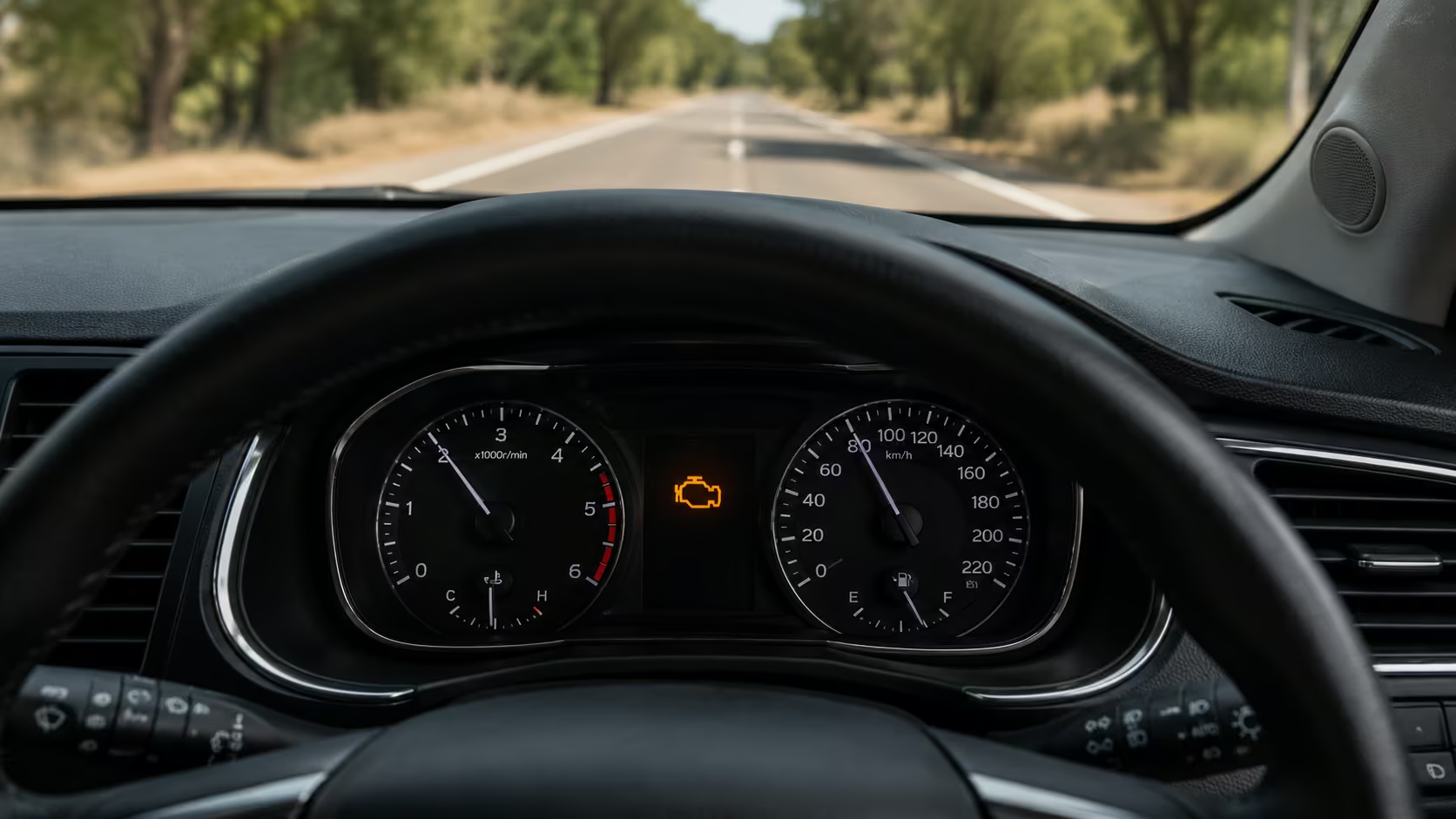
The engine management system monitors injection pressure, fuel trim and combustion events continuously. If the petrol contamination is affecting the injection performance then the system will detect that the injection performance is out of the normal operating range and fault codes will be stored. Usually the warning light will come on after a few minutes of running on bad fuel and in some cases the vehicle will go into limp mode which means the gearbox is locked in one gear to reduce the load on the engine. This is a defensive reaction.
Dashboard warnings are only part of the diagnosis. A professional roadside assessment will confirm the extent of the contamination.
What Happens After Several Kilometres on the Wrong Fuel in a Diesel
If a diesel vehicle has been run for a few kilometres on a significant contamination of petrol the picture of damage changes significantly.
The high pressure fuel pump has been running without sufficient lubrication for the duration. Internal surfaces of the pump machined to tolerances in microns have experienced metal-to-metal contact under high pressure. This means that there’s a progressive scoring system that increases with every kilometre you add on. When the signs of pump failure appear, like a sudden loss of power, a stalling engine, or a vehicle that won’t restart, the damage is generally too severe for a drain and flush to fix.
The fuel filter will have been catching metal particulate from pump wear. The injectors will have had the same lack of lubrication as the pump. How much each part is damaged will depend on how much petrol was in the mix, what load the engine was under and how long it was driven for. The vehicle cannot simply be drained and refilled, it must be assessed.
When these symptoms point to damage that may be permanent, our guide on permanent misfuelling damage goes into the thresholds in detail. And what determines whether damage can still be limited when help arrives. The prevention guide discusses the factors that influence the outcome.
Why Symptoms Vary Between Vehicles
Not all diesel vehicles develop symptoms at the same time. The speed of the warning signs depends on factors such as the quantity of petrol added, the size of the fuel tank, engine load, distance of driving and design of the fuel system. That is why two vehicles with the same misfuelling fault can behave very differently.
The Symptom That Is Not a Symptom: When There Are No Warning Signs
One of the more dangerous aspects of using the wrong fuel in a diesel engine is the situation where the engine continues to run with no obvious symptoms, even though it is badly contaminated. This typically happens when the petrol level in the tank is relatively low, the vehicle has a large tank capacity or the engine is lightly loaded.
Sometimes in these cases the drivers decide to continue until the tank is empty, believing the right fuel will flush the petrol through. This assumption is wrong. The contaminated fuel that goes through the pump and injectors wears them whether it shows symptoms or not. The pump and injectors have been running the whole time without enough lubrication by the time the tank is empty. No symptoms does not mean no damage.
If you know you’ve got petrol in your diesel tank and you don’t have obvious symptoms, treat it as if you did. The symptom free window is not a reason to keep driving. It is the window before any damage builds up that a drain can be done. Contact Wrong Fuel Help Australia right away. We are open 24 hours, 7 days a week across Newcastle, the Central Coast, Lake Macquarie, Maitland and the Hunter region. Don’t restart the engine. Contact Jay directly on 0432 553 905 or contact us at wrongfuelhelp.com.au.
Conclusion
Symptoms of wrong fuel in a diesel engine are often progressive and each stage is informative to how far the contamination is spread. The best way to prevent serious fuel system damage to your vehicle is to recognise the warning signs early and stop the engine immediately. If you do suspect misfuelling, always play it safe and get your fuel professionally recovered before you drive any further.
Frequently Asked Questions
Can a diesel engine symptom from wrong fuel disappear on its own?
Some symptoms may appear to improve temporarily, but the contamination remains in the fuel system. Continuing to drive can increase the risk of damage, so professional fuel recovery is still recommended.
Are the symptoms different on a modern common rail diesel versus an older diesel?
Yes. Modern common rail diesel engines operate at much higher fuel pressures and are less tolerant of petrol contamination. Symptoms usually develop faster and the risk of damage is significantly greater.
What symptoms should mean I absolutely do not attempt to drive the car?
Stop driving immediately if you notice unusual engine noise, loss of power, limp mode, heavy exhaust smoke or the engine stalls. Continuing to drive increases the likelihood of serious fuel system damage.
Why did my diesel engine seem fine at first but then develop symptoms?
Petrol contamination may initially be diluted by the diesel already in the tank. As more contaminated fuel circulates through the system, symptoms become more noticeable and mechanical damage can begin to develop.