How Long Can You Drive on Wrong Fuel Before It Damages Your Car?
Ready to hit the Road?
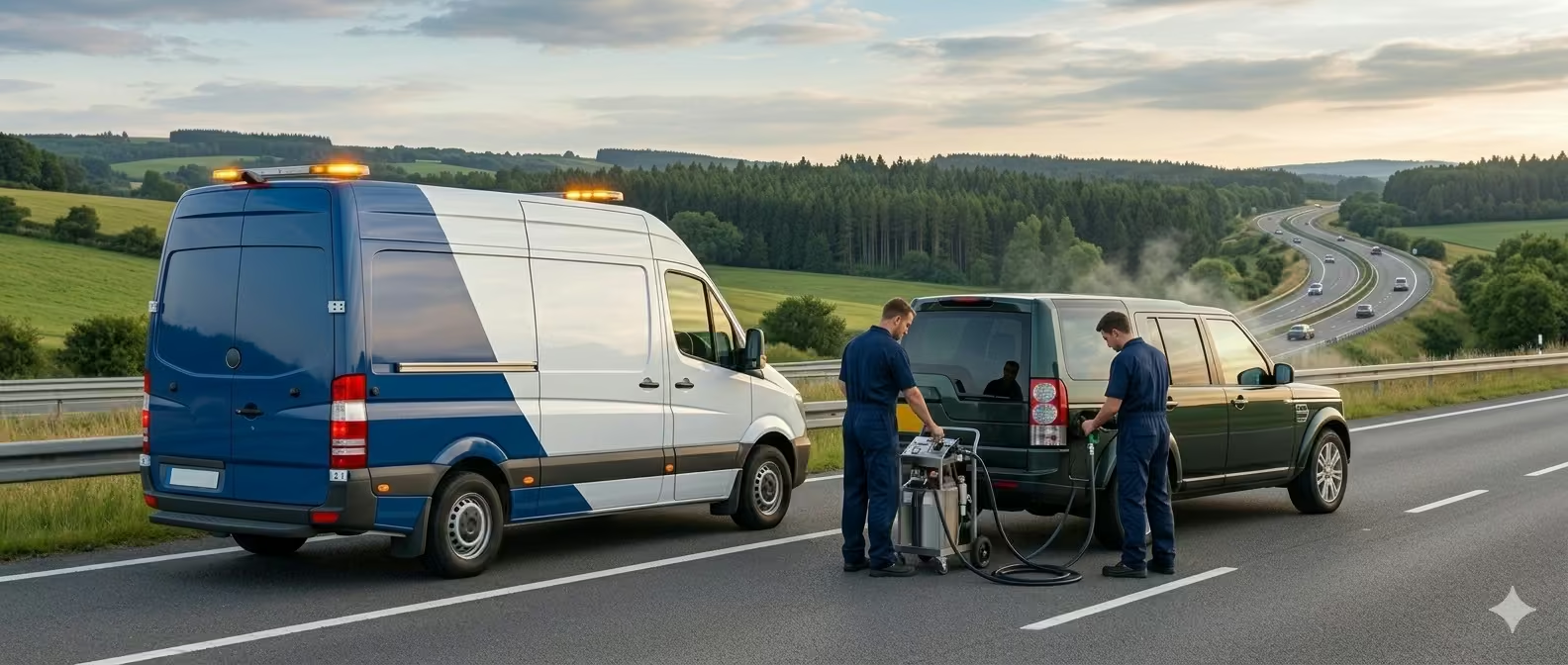
Based in Newcastle, we proudly serve the surrounding areas, offering 24/7 emergency fuel drain and wrong fuel help for all your wrong fuel emergencies. Our mobile team is ready to come to your location and provide immediate help.
One of the most important questions you can ask yourself at this moment is how long you can drive on wrong fuel before serious damage occurs. The short answer is there is no safe distance. But the honest answer is more complicated than that and understanding it could be the difference between a simple drain and a repair bill running into thousands.
If you have already driven on the wrong fuel and are reading this, stop the car, turn the engine off and call 0432 553 905 now. If you want to know what exactly is going on and why the distance is so important, read on.
How Far Can You Drive With Wrong Fuel in a Diesel Car
Every specialist gets asked the question of how far can you drive with wrong fuel. The damage begins the moment petrol is introduced to a diesel fuel system and the engine is started, technically. But how much damage that does depends on how fast you stop.
The diesel engine uses the fuel to lubricate the high-pressure injection system. The fuel pump and injectors also operate at pressures that would be difficult for most people to imagine . They are completely dependent on diesel flowing through them to remain protected . Petrol strips away lubrication. The longer the contaminated fuel circulates, the more metal-on-metal contact inside the pump and the more contamination that makes its way downstream to the fuel rail and injectors.
Distance and Damage: What to Expect at Each Stage
| Distance / Time Driven | What Has Been Exposed | Likely Outcome | Action |
| Engine not started | Fuel tank only | No mechanical damage. Full recovery with drain and refill. | Do not start. Call immediately. |
| Started but cut off within 30 seconds | Tank and lower fuel lines | Minimal exposure. Drain, flush and refill typically resolves completely. | Turn off. Call immediately. |
| Drove under 3 km | Fuel lines and low-pressure pump reached | Usually recoverable with professional drain and full flush. Minor wear possible. | Pull over. Turn off. Call now. |
| Drove 3 to 15 km | High-pressure pump and fuel rail likely reached | Drain and flush required. Pump assessment essential. Cost rises significantly. | Stop safely. Do not restart. Call specialist. |
| Drove 15 to 50 km | Injectors exposed. Pump under sustained contamination | Injector inspection required. Pump replacement likely. | Stop immediately. Specialist assessment needed. |
| Drove over 50 km or noticed symptoms | Full fuel system contaminated | Significant component damage likely. Full system assessment required. | Stop. Do not drive further. Specialist only. |
The above table reflects what specialists see over and over again in thousands of misfuelling recoveries. The figures are not accurate to the metre and results will vary depending on how much petrol went in the tank, how much diesel was left over and the individual vehicle involved. But the pattern is the same. The longer you drive on the wrong fuel the more contamination is exposed to the fuel system and the more expensive the recovery will be.
How Long Before Wrong Fuel Damages a Petrol Engine
Diesel in a petrol car is a different thing, and the timeline for damage is different. Diesel is thicker and it does not catch fire like petrol. If you put diesel in a petrol car and drive it, the diesel will coat the spark plugs and fuel injectors, causing the engine to progressively misfire, smoke and lose power. You will almost always see the signs of wrong fuel in a car within the first few kilometres.
The positive is that a petrol engine is more forgiving of diesel contamination than the other way round. If you caught the mistake early and the engine hasn’t been running for long, then a professional drain and flush will usually take care of the situation without permanent damage to components. The spark plugs may need cleaning or replacement, and the injectors may need flushing, but usually things are not nearly as bad as petrol in a diesel car.
That said, the same rule applies: each kilometre you drove on the wrong fuel counts. Stop the vehicle as soon as it is safe to do so, and do not restart the engine.
You Have Already Driven on Wrong Fuel. Here Is What to Do Now
The main thing to remember is that putting the wrong fuel in your car does not automatically write off the engine. Industry data reveals that 83% of all misfuelling incidents that go to a specialist only require minor repairs, even if the engine was started. The result will be decided by how fast you can move forward from here not what has happened so far.
Do not re-start engine for any reason. Don’t try to add more of the right fuel on top to dilute the problem. And don’t go to any mechanic. Every extra metre is more contaminated fuel for more of the system. A wrong fuel recovery specialist will come out with the right equipment to drain the system, determine the level of contamination, and give you an honest assessment of what needs to happen next.
If you are not sure whether you have wrong fuel or something else, check the symptoms of wrong fuel in a car before calling. Knowing what symptoms apply to your situation helps the specialist prepare.
Conclusion
Wrong fuel means there is no safe distance to drive. “Every metre adds to the chance of contaminated fuel reaching more of the fuel system, and with it the cost of repair. Almost always the best result is achieved by immediately stopping the engine and arranging for professional fuel recovery. Wrong Fuel Help offer a 24/7 mobile fuel drain and flush service across Newcastle and surrounding areas to help drivers minimise damage and get back on the road safely.
FREQUENTLY ASKED QUESTIONS
Does it matter how much wrong fuel went in, or just how far I drove?
Both factors matter. A small amount of petrol in a large diesel tank creates a lower contamination ratio, which reduces the immediate risk to the fuel pump. A full tank of petrol in a diesel car is significantly more damaging than a few litres added by mistake before the driver caught the error. That said, the contamination ratio does not change the advice: stop driving immediately, turn the engine off and call a specialist. Even a low ratio of petrol in a diesel system can cause damage over time as it circulates through the injection system.
Is it ever safe to keep driving a short distance after wrong fuel to get somewhere safer?
If you are in a genuinely unsafe position, getting the vehicle to a safe spot is more important than the additional damage those extra metres cause. But if you are in a location where you can stop safely, stop immediately. Driving an extra kilometre to a more convenient location when it is not necessary for safety adds wear that could mean the difference between a drain only and a drain plus pump replacement. Hazard lights on, pull over to the nearest safe spot, engine off.
My car ran fine for several kilometres on wrong fuel. Does that mean there was no damage?
Not necessarily. Petrol in a diesel engine does not always produce dramatic symptoms immediately, particularly if there was a reasonable amount of diesel already in the tank when the petrol was added. The diesel already present buffers the contamination in the early stages. What this means is that the fuel pump may have been running under reduced lubrication for the entire distance without the driver knowing. A professional assessment after the drain is important in this situation to confirm whether any wear has occurred that needs to be addressed.
Can I just top the tank up with the correct fuel and drive on?
No. Topping up with the correct fuel does not remove the wrong fuel already in the system. It dilutes the ratio in the tank, but contaminated fuel has already entered the fuel lines and, depending on how far you drove, the high-pressure components as well. Adding more diesel over petrol does not flush those components. The only way to properly address misfuelling is a professional fuel drain and flush by a specialist with the right equipment.