Can Wrong Fuel Permanently Damage Your Car Engine
Wrong fuel can cause lasting engine damage, but the severity depends on which parts were exposed and for how long. Most misfuelling incidents cause no permanent damage at all and are detected before the engine is started. If you burn the wrong fuel for too long and you are caught , even quick professional help can not undo some damage.
At Wrong Fuel Help Australia we always check engine condition on every job we attend and the question we are most asked at the roadside is this: Will I have damaged my engine? Most of the time, the honest answer is no But the factors that make that answer remain true are specific, and this post is about understanding them.
The Difference Between Recoverable and Permanent Misfuelling Damage
Most misfuelling events are fixable. That is not comforting to make you feel any better. It is the practical reality of the effect wrong fuel has on a fuel system in the first few minutes before the circulation begins.
If the ignition was never turned on, the contaminated fuel is just sitting there in the tank. It hasn’t gone into the fuel lines, fuel filter or any of the high pressure parts. A professional drain removes it , the system is flushed , the right fuel is added and the vehicle leaves with no lasting effect on any engine component. That’s not a permanent scenario.
The contaminated fuel circulates through components that were not designed to handle it and causes permanent damage. The mechanism is different, depending on which fuel type landed where. Knowing what each combination does to the car, and when that damage is no longer manageable but instead irreversible, is what makes a situation a drain job or a repair job.
Which Components Suffer Permanent Damage and Why
High-pressure fuel pump in common rail diesel engines
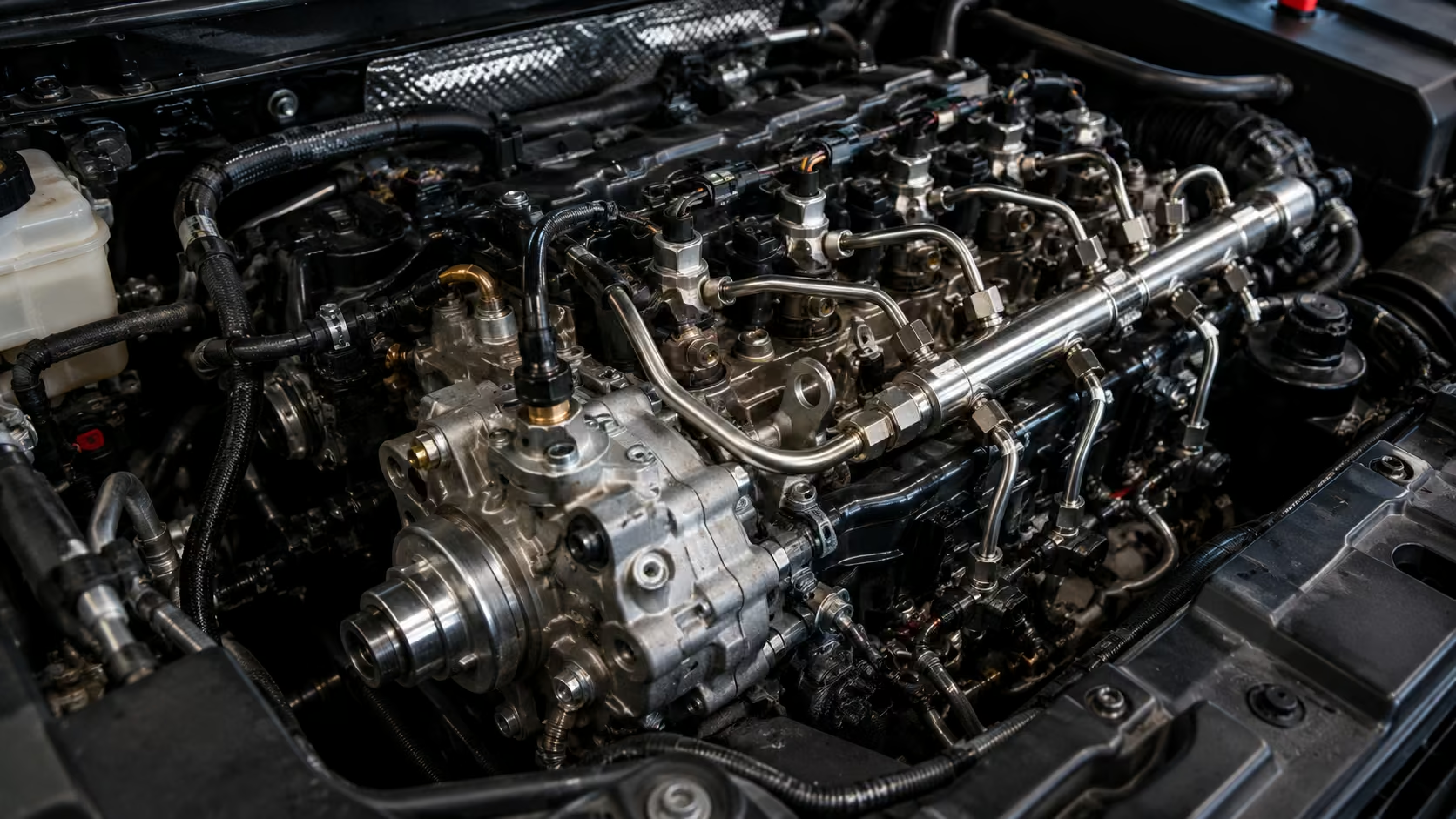
This is the part most often associated with permanent misfuelling damage, and rightly so. The fuel pump in modern common rail diesel engines can operate at pressures up to and in some cases over 2,000 bar. At those pressures, the internal clearances between the moving parts of the pump are in the micron range. The diesel, as it passes through, lubricates those surfaces.
If petrol gets in a diesel system and the engine is running then petrol is the fluid flowing through the pump instead of diesel. Petrol has no lubricating properties of any consequence at these pressures. Now the metal surfaces are in contact after being separated by a film of diesel. The resulting scoring is not gradual like normal wear is gradual. In high pressure operation without lubrication the damage occurs within minutes of running. Often by the time symptoms appear, the damage to the internal surfaces of the pump is irreversible. The pump is not repairable and needs to be replaced.
Diesel fuel injectors
Fuel injectors on a common rail diesel system are precision machined to tolerances similar to the pump. The injector nozzle injects the fuel at high pressure and with a very specific spray pattern. The same lack of lubrication that damages the pump also damages the injector needles and seats when petrol circulates through the injectors. Changed injector seats change the spray pattern and therefore the quality of the combustion. A partially scored injector might not fail immediately, but will perform erratically and deteriorate faster than it would have otherwise. If the injectors are badly scored they have to be replaced.
Fuel filter
If a misfuelling incident occurs, the fuel filter is always changed before the engine is started, regardless of the amount of other damage. The filter captures the metal particles resulting from wear in the pump and injector. If the particulate is not removed prior to refilling the system, it will travel through the repaired or replaced components and, in turn, wear them out faster. This is not permanent damage to the filter itself, but if you don’t replace it, you will have permanent damage to other components that might not have been permanent otherwise.
Catalytic converter in petrol vehicles with diesel contamination
A diesel in a petrol car does a different pattern of damage. Diesel won’t burn cleanly in a petrol engine and unburned hydrocarbons will exit to the exhaust system. The catalytic converter is designed to work within a specific temperature range and with specific exhaust chemistry, and prolonged exposure to the products of diesel combustion in a petrol system can damage it. Catalyst damage may not be permanent after one incident, but it is cumulative and can lead to emissions failures at the next roadworthy inspection even if the engine itself is otherwise fine.
The Point of No Return: When Running Time Determines the Outcome
There is no fixed point for the dividing line between a recoverable incident and a permanent one. It is determined by the combination of engine run time and the conditions.
If the engine started and then immediately stalled, the wrong fuel prevented combustion and the contaminated fuel only circulated briefly. The pump and injectors are exposed but the time frame is short and damage may be negligible. If an engine has been running for several minutes, especially under load or at higher RPM, the contaminated fuel has been aggressively circulated through all the high pressure components. Under such circumstances it is more likely that the damage will be permanent to at least some parts.
Distance makes this worse. The longer you drive the vehicle on the wrong fuel the more time the high pressure pump and injectors are running without proper lubrication. A car that stalls within the first 100 metres will have a different damage profile to a car that has driven several kilometres before the driver noticed the symptoms. Neither is guaranteed, but the risk of permanent damage increases with each kilometre driven on the wrong fuel after the engine has been started.
When help arrives, it is time and distance that will determine whether damage prevention is still possible. Our guide to misfuelling damage prevention covers these in detail.
Petrol in Diesel vs Diesel in Petrol: Different Permanence Thresholds
These two situations are not equivalent in the damage that they cause, and so the question of permanence has a different answer for each.
The higher risk of permanent damage in a diesel engine is petrol. Add to this the high pressure common rail injection and the fact that diesel lubricates the pump and injectors whereas petrol quickly removes that lubrication under operating conditions and the window between starting the engine and permanent damage is relatively short. If a modern common rail diesel engine is run on petrol for more than a few kilometres, it is more realistic to assume that permanent damage will have been done to the pump, rather than assuming that no damage has been done.
Diesel in a petrol engine is usually less damaging over an equivalent distance. Petrol engines do not use fuel as a lubricant for the injection system in the same way. The primary damage mechanisms are misfires, spark plug fouling, and potential catalytic converter damage from unburned diesel in the exhaust. These are serious and require professional attention, but they are less likely to produce the kind of immediate catastrophic internal wear that petrol in a diesel system can produce. That said, driving a petrol vehicle extensively on a diesel-petrol mixture still produces progressively worsening damage to the spark plugs, fuel system, and exhaust.
Signs That Permanent Damage May Have Already Occurred
These signs after a misfuelling incident where the engine has been run point to potential permanent damage that must be assessed before the vehicle is driven further:
- The engine runs rough, misfires or emits black or white smoke after fuel has been drained and the correct fuel added
- Engine starts but bogs down with any load especially under acceleration
- Unusual mechanical noise in engine compartment not present prior to incident
- A warning light on the gearbox or drivetrain after misfuelling, that may be a sign that the delivery of wrong fuel has impacted the management of the engine and the calibration of the gearbox.
- The fuel rail pressure reading, accessible through a diagnostic scan, is outside the expected range for the engine at idle
None of these signs confirm permanent damage with certainty. They indicate that a professional assessment is needed before drawing any conclusions about whether the damage is recoverable or not.
How Professionals Confirm Permanent Damage
Symptoms of engine problems or warning lights alone cannot prove permanent engine damage. Professional technicians will use fuel pressure testing, diagnostic scanning and fuel system inspections to determine if key components have been damaged or if the vehicle just needs a full drain and flush. This assessment helps you avoid unnecessary repairs and points out any parts that need replacement.
What a Full Assessment Looks Like After the Engine Has Been Run
A proper post-misfuelling assessment after the engine has been started goes beyond draining the tank and refilling. At Wrong Fuel Help Australia, when the engine has been run on the wrong fuel, the assessment includes a fuel rail pressure test to establish whether the pump is delivering correct pressure, a diagnostic scan across all modules to check for fault codes related to injection pressure and fuel trim, a fuel filter inspection for metallic particulate indicating pump wear, and a road test under load to confirm whether the engine performs correctly after the fuel system is cleared.
If those checks show that the pump or injectors have been affected we will explain clearly what we find and what the repair options are before we do any more work. For the immediate steps that give you the best chance of a full recovery, our step-by-step guide covers what to do from the moment you realise the mistake. And to get a handle on why it’s the most important thing to get the fuel out quickly, our guide to DIY draining explains what the window of time between a misfuelling and permanent damage actually looks like in practice.
If you have misfuelled and you are concerned about whether your engine has been damaged, contact Wrong Fuel Help Australia now. We operate 24 hours a day, seven days a week across Newcastle, the Central Coast, Lake Macquarie, Maitland, and the Hunter region. The sooner we arrive, the more of the outcome remains recoverable.Contact us directly on 0432 553 905 or reach us through wrongfuelhelp.com.au.
Conclusion
Wrong fuel does not automatically mean permanent engine damage.In many cases, the outcome depends on how quickly the mistake is recognised and whether the contaminated fuel has circulated through the system. Switching the engine off immediately and arranging professional fuel recovery gives your vehicle the best chance of avoiding expensive repairs and preserving critical fuel system components.
Frequently Asked Questions
Will the engine definitely be permanently damaged if I drove on the wrong fuel?
Not always. It depends on how long the engine ran, how far the vehicle was driven and which fuel was used. A professional assessment is the only reliable way to determine whether permanent damage has occurred.
Can a misfuelled engine be repaired or does it always need replacement?
In most cases, only damaged components such as the high-pressure fuel pump or injectors need replacing. Complete engine replacement is uncommon and usually only required after severe or prolonged damage.
What is the best thing to do right now to prevent permanent damage?
Switch the engine off immediately and do not drive the vehicle. Arrange professional fuel recovery as soon as possible, as preventing the wrong fuel from circulating gives your engine the best chance of avoiding permanent damage.
Does insurance cover permanent misfuelling damage?
It depends on your insurance policy. Some comprehensive policies cover misfuelling as accidental damage, while others exclude it. Check your Product Disclosure Statement (PDS) or contact your insurer for confirmation.
Is permanent damage from misfuelling the engine’s fault or the driver’s fault?
Misfuelling is generally treated as driver error, not a manufacturing fault. As a result, manufacturer warranties usually do not cover the damage, while insurance cover depends on the terms of your policy.