How Much Petrol in Diesel Is Too Much? 1, 5 or 20 Litres, and Why Topping Up Won’t Save It
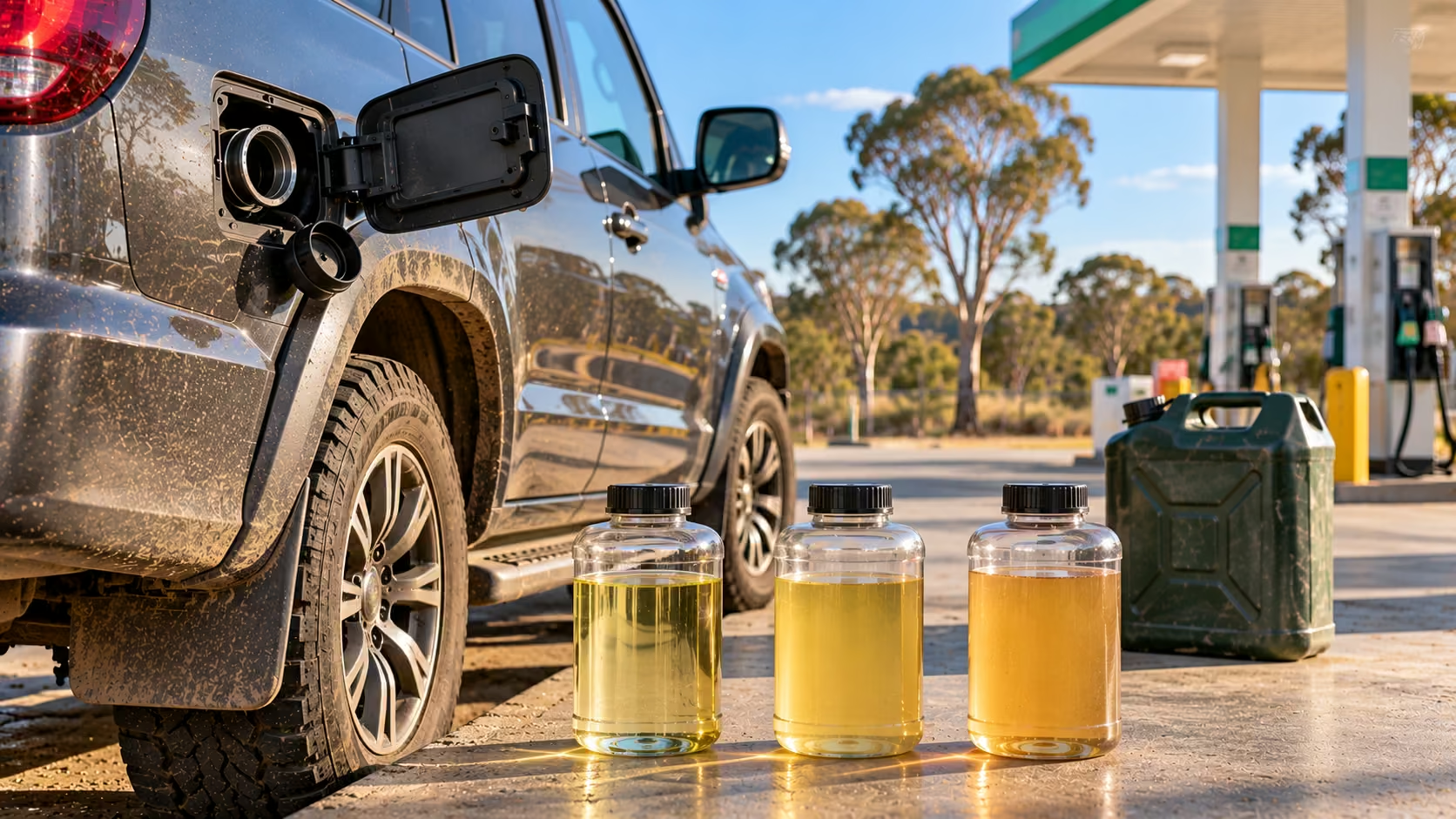
Any amount of petrol in a modern diesel is too much to drive on. One litre in a full tank is a small risk, five litres justifies a drain, and twenty litres will hurt a common rail pump the moment it runs. How full the tank was before you filled matters as much as the litres, and topping up with diesel never takes the petrol back out.
It’s the Ratio, Not the Litres
Each caller tells us how many litres were drunk. The first question we asked on the return was the state of the tank, how full was it before we left? Five litres of petrol on top of 70 litres of diesel is about 7 per cent of the tank. The same five litres sat in a tank on the low fuel light, maybe 10 litres of diesel left, a third of what the pump is about to draw. Same mistake, different fuel.
Check the bowser screen or your receipt for the exact litres and then think about where your gauge was. Those two digits tell a technician more than anything else you can say on the phone.
What 1, 5 and 20 Litres of Petrol Actually Means
1 Litre or Less
Usually a splash before you noticed the nozzle. Some older mechanical diesels would run through it. A modern common rail pump runs above 2,000 bar with clearances measured in microns, and diesel is the only thing lubricating it. We still recommend a drain, because “probably fine” is a gamble with a pump that costs thousands to replace.
5 Litres
This is where most of our callouts sit. In an average ute or SUV tank it’s enough to drop lubrication below what the high pressure pump is built for, and to make the engine knock and run rough. Don’t start it. A drain before the engine runs is the cheapest version of this problem.
20 Litres or More
That’s a petrol-heavy blend, not diesel with a bit extra. If it starts, expect knocking, smoke and often a stall within a few hundred metres, with the pump starved of lubrication the whole way. Leave the key out of it.
Why Topping Up With Diesel Won’t Save It
The idea we hear most is to fill the rest of the tank with diesel and dilute it out. It doesn’t work, for three reasons.
Dilution only lowers the percentage. Every litre of petrol is still in there and still heading for the pump. If the tank was near full when you misfuelled, there’s no room left to dilute anything anyway. And the old advice that a small top-up was acceptable comes from older indirect injection diesels. Makers of modern common rail engines don’t publish a safe petrol percentage, and most owner’s manuals simply say don’t start it and have the fuel removed.
You also end up paying for a tank of diesel that gets drained along with the petrol. Bottles from the auto shop are no better, as we explain in why fuel additives can’t fix wrong fuel.
What to Do Right Now
- Leave the engine off, including accessory mode, which can prime the fuel pump on some cars.
- Note the litres from the bowser and roughly where your gauge was.
- Push the car clear of the bowser in neutral if it’s safe.
- Call a mobile drain service rather than a tow.
If you’ve already started it or driven off, read what to do after starting the engine on wrong fuel.
Frequently Asked Questions
Is a few litres of petrol in a diesel tank OK?
Not in a modern diesel. A few litres in a full tank is lower risk than in an empty one, but no common rail manufacturer gives a safe amount.
Can I add two-stroke oil to fix it?
No. That was an old trick for older engines and it doesn’t restore lubrication in a high pressure common rail system. The petrol still has to come out.
Does it matter if it was E10 or premium unleaded?
Not really. Every petrol grade strips lubrication the same way.
Petrol in Your Diesel Tank? Call Before You Turn the Key
Whether it’s one litre or twenty, the outcome is decided by whether the engine runs. Wrong Fuel Help comes to you across Newcastle, the Central Coast, Lake Macquarie, Maitland and the Hunter, 24/7, drains the tank on the spot and refuels you with clean diesel. Call 0432 553 905 and leave the engine off until we arrive.