Can Fuel Additives Fix Wrong Fuel
No fuel additive can fix wrong fuel. Nothing sold in a bottle separates petrol from diesel once they are mixed, and no additive removes water or sludge from a tank. Additives are maintenance products for fuel that is basically sound, not a rescue for contaminated fuel.
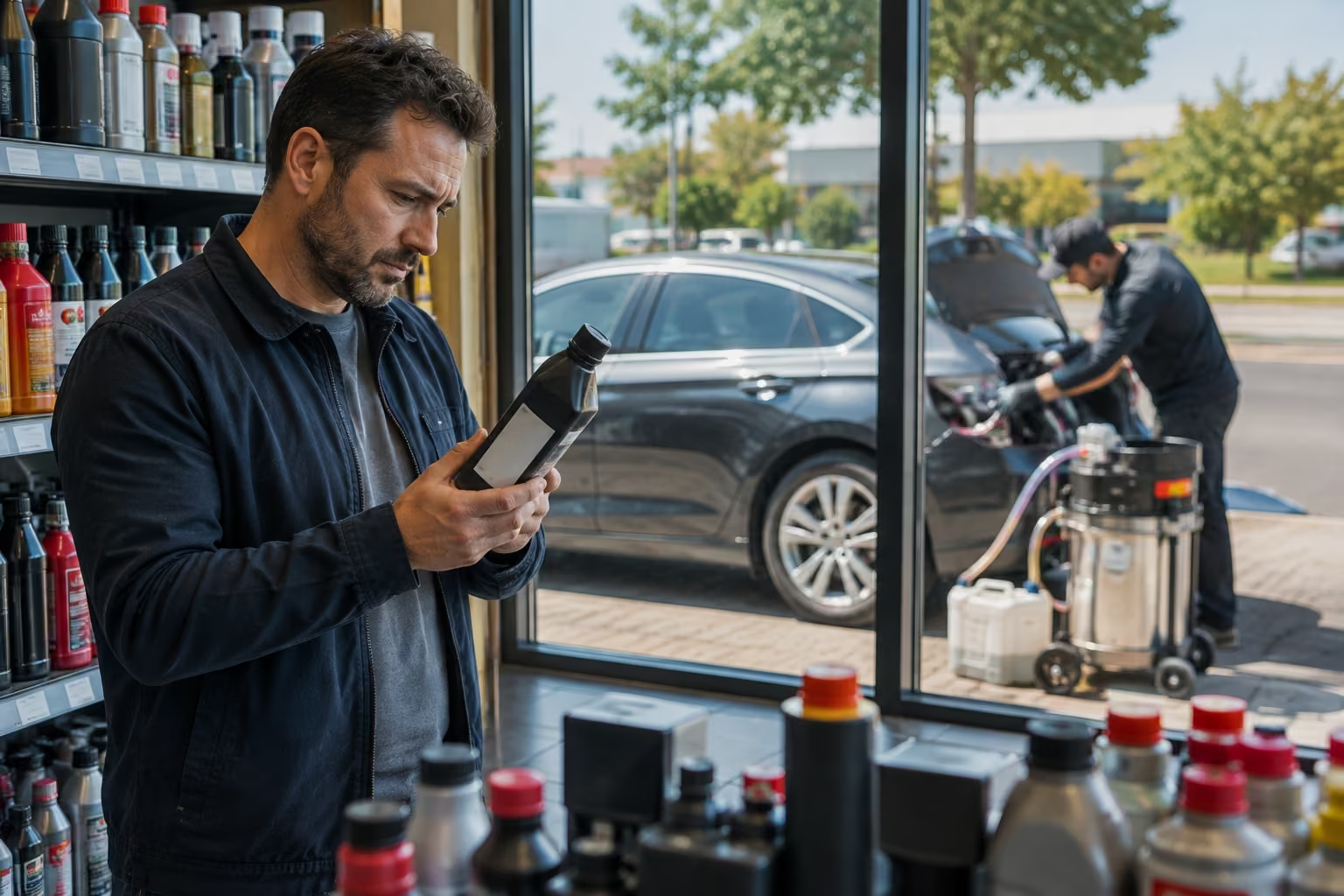
It is a reasonable thing to hope for. You are standing in an auto shop aisle looking at a wall of bottles that promise to clean, restore, treat and protect, your car is not right after a bad fill, and forty dollars would be a lot less painful than a callout. So the question is worth answering properly rather than dismissively, because the honest answer has two halves. Additives are not a con and plenty of them do exactly what they say. They just cannot do this particular job, and understanding why saves you both the money and the time.
Why No Additive Can Separate Petrol and Diesel
Start with the misfuel case, because it is the simplest. Petrol and diesel are both hydrocarbon fuels and they mix completely, right down to the molecular level. There is no layer, no boundary and nothing for a chemical to grab hold of. Once petrol is in a tank of diesel, you do not have diesel with petrol floating in it, you have a new liquid that is neither one thing nor the other. To fix that with a bottle, a product would have to un-mix two fuels inside a sealed tank, which is not something any additive claims to do, because it is not possible. This is also why attempting your own drain rather than treating the tank is where people usually turn next, and why that has its own set of problems worth reading before you try it.
What Water Removing Additives Actually Do
Here is the one place the answer is not a flat no, so it deserves precision. Water removers are typically alcohol based, and what they do is not removal at all, it is dispersal: the alcohol helps a very small quantity of water mix into the petrol as fine droplets so it passes through and burns off with the fuel. For a trace of moisture in a petrol tank, that genuinely works. What it cannot do is deal with real water contamination, and the manufacturers are refreshingly straight about this. One well known additive maker says plainly that no treatment removes water from fuel, and that if there is water contamination in the tank, the fuel should come out and you should start fresh. When the maker of the bottle tells you to drain the tank, that is worth listening to. There is also a hard limit in ethanol blended petrol: once enough water has been absorbed that the ethanol and water drop out as their own layer at the bottom of the tank, no shelf additive puts that genie back in the bottle, and that layer is sitting exactly where the fuel pickup draws from.
Do Diesel Bug Biocides Fix a Contaminated Tank
Biocides are the additive with the strongest legitimate claim, and they still are not a complete answer on their own. A biocide does what it says: it kills the microbial colony living in the water layer at the bottom of a diesel tank. What it cannot do is remove anything. The dead colony, the sludge, the mat clinging to the tank walls and baffles, all of it stays exactly where it was, and now it is loose material heading for your filter. That is why treatment for an established infestation is a drain, a clean, a filter change and fresh fuel, with biocide as prevention going forward rather than the cure by itself. We have set out how diesel bug takes hold and what actually clears it in more detail separately.
What Injector Cleaners and Stabilisers Are Really For
The rest of the shelf is genuinely useful, just for other jobs entirely. Detergent injector cleaners lift carbon and varnish deposits gradually over hundreds of kilometres of ordinary driving, which is housekeeping for a healthy engine, not first aid for a sick tank. Fuel stabilisers slow the natural degradation of petrol that is going to sit for months, which is exactly right for a boat over winter or a mower in the shed, but they preserve fuel rather than restore fuel that has already gone off. Cetane and octane boosters adjust the burn characteristics of fuel that is fundamentally correct. Every one of those products is designed on the assumption that what is in the tank belongs there. Contamination breaks that assumption, and no amount of the right product for another job becomes the right product for this one.
Why Adding an Additive Can Make Things Worse
The real cost of reaching for a bottle is rarely the price of the bottle. It is what you have to do to use it, because every additive is designed to be poured in and then driven on. That means starting the engine and circulating whatever is in the tank through the filter, the pump and the injectors, which is the single thing you most want to avoid when the fuel is wrong. It also means time passing while you wait to see whether the treatment works, and in a diesel with petrol in it, running time is the whole problem. There is a smaller risk too: an additive that shifts deposits or breaks up sludge can send that material toward a filter that was already struggling. A bottle turns a contained problem into a circulating one.
What Actually Fixes Wrong Fuel and Contaminated Fuel
The unglamorous answer is physical removal, and there is no clever alternative to it. The contaminated fuel comes out of the tank, the system is flushed so that nothing is left sitting in the lines, the filter is replaced if it has been through anything, and clean fuel goes back in. That is the whole treatment, and it is the same regardless of whether the tank holds a misfuel, water, stale fuel or a microbial colony, because all four share one property: the bad stuff has to physically leave. The drain and flush process is set out here if you want to know what it involves before you arrange anything.
If you are standing in that aisle right now with the car outside and something not right, the most useful thing anyone can tell you is to stop spending money on guesses. A bottle is a cheap answer to a question nobody has diagnosed yet, and the reason to ring Wrong Fuel Help instead is that a look at what comes out of the tank ends the guessing in one visit, at the vehicle, without a tow. If the fuel turns out to be fine, you will be told that plainly rather than sold a treatment. Call 0432 553 905, and leave the engine off while you wait, because that is the one thing that is free and it is worth more than anything on the shelf.
FAQs
Is there any additive that removes petrol from a diesel tank?
No. No product on any shelf separates one fuel from another once they are mixed, and none is sold that claims to. Petrol and diesel blend completely, so the only way to get one back out of the other is to physically remove the fuel from the tank.
Do injector cleaners help after a misfuel?
Not with the contamination itself. Injector cleaners are designed to lift carbon and varnish deposits over normal driving, which is a slow housekeeping job. They do nothing about wrong fuel sitting in the tank, and running the engine to circulate one is the opposite of what the situation needs.
Can an additive undo phase separation in ethanol blended petrol?
Generally no. Once the ethanol and water have dropped out of the petrol and settled as a separate layer, ordinary shelf additives will not put them back into solution. That layer sits where the fuel pickup is, so it needs draining rather than treating.
Are fuel additives a waste of money in general?
Not at all, they are simply the wrong tool for contamination. Stabilisers genuinely help fuel that is going to sit for months, biocides genuinely control microbial growth, and detergent cleaners genuinely reduce deposits over time. All three are maintenance products, not rescue products.