Wrong Fuel in European and Prestige Cars: Why the Risk Is Higher
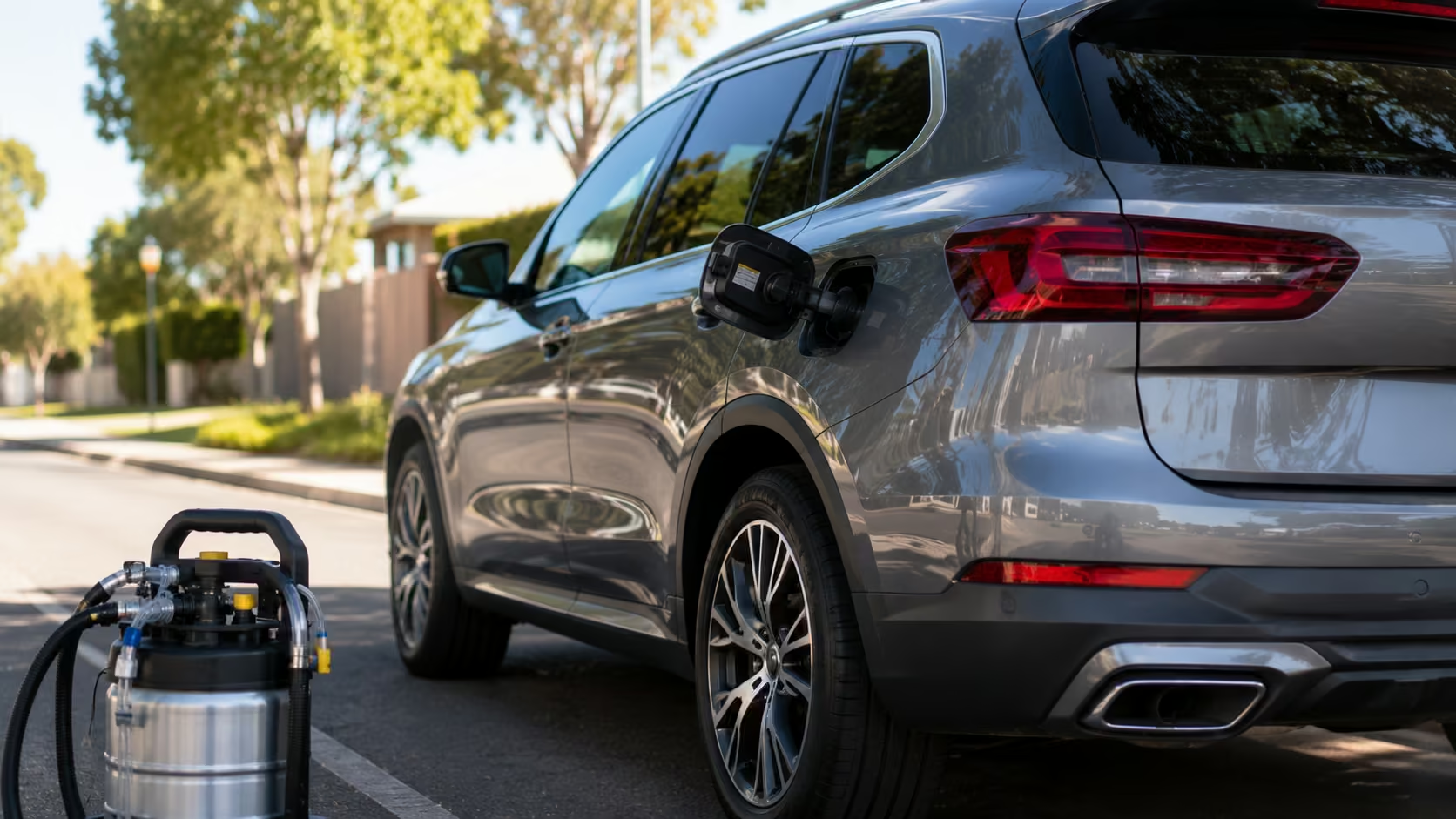
Wrong fuel is never good for any vehicle, but it’s a much bigger problem when it happens to a BMW, Mercedes, Audi, Volkswagen, Porsche or Land Rover. European cars have a more sensitive fuel system. Tighter tolerances and more expensive parts. A mistake on a Camry that costs a few hundred to fix can cost several thousand in a 3 series..
Here is why, and what to do if it happens to yours.
Why European Cars Are More Vulnerable to Wrong Fuel Damage
It’s all about engineering. European manufacturers build fuel systems to very tight specifications. You get fuel pumps that run at higher pressure . You get injectors machined to tighter tolerances . You get engine management systems tuned for a specific fuel type and octane .
For a diesel BMW X5 or a Mercedes ML the common rail system works at pressures over 2.000 bar. Components rely on diesel’s natural lubrication to operate at that pressure. Petrol comes in and the lubrication goes. Metal to metal, and the damage is done quick.
European petrol engines are typically turbocharged to 95 or 98 RON and tuned with higher compression ratios. They are more likely to knock and more sensitive to lower octane fuel.
Parts are more expensive too. A VW Golf TDI will cost you a lot more in injectors than a Toyota HiLux. The price of parts for a high pressure fuel pump on a BMW diesel can run into the thousands.
Petrol in a Diesel European Car: The Most Expensive Mistake
This is the worst case scenario. Those high-pressure common rail systems make petrol in a modern European diesel more harmful than in most other diesels.
Once the engine is running, the pump pushes unlubricated fuel at extreme pressure through the entire system. The pump wears out internally, metal shavings get into the rail and injectors get damaged. That repair bill on a BMW, Mercedes or Audi could be $5,000 to $15,000 or more.
When the engine is not running, the contamination remains in the tank. A professional drain and flush puts the car back on the road with no lasting damage.
Proprietary Diagnostics After Petrol in a European Diesel Engine
When the fuel is drained and the system flushed, a standard OBD scanner will not fully interrogate the fault codes stored in a European diesel. BMW uses ISTA, Mercedes-Benz uses XENTRY, Audi and Volkswagen use ODIS, and Peugeot and Citroen use Diagbox. These are manufacturer specific diagnostic systems and can access subsystems that a generic scanner cannot, such as high pressure pump fault codes, injector calibration values, fuel rail pressure sensor history and DPF regeneration status. One thing the picture shows is the way petrol contamination in a diesel shows itself before the engine is switched off. The other is what the manufacturer level diagnostic reads after the drain. On a European vehicle those two things can tell very different stories.
A driver with European diesel that goes through a misfuel drain with just a generic code clear, could walk away with stored manufacturer specific faults in the fuel system that affect injection calibration or adaptive fuelling that they are unaware of. Those stored faults can cause complications on a vehicle still under its manufacturer warranty or on a vehicle being about to be presented at a dealership for scheduled service that a thorough post-drain diagnostic would have identified and resolved.
Diesel in a Petrol European Car
Less common because diesel nozzles are larger and do not fit easily into petrol filler necks. But it happens, especially from jerry cans.
Diesel in a petrol engine causes heavy smoke, misfiring, and loss of power. It clogs spark plugs and coats the catalytic converter. The engine will usually stall before catastrophic damage occurs, but a full drain, flush, and potentially new spark plugs are still needed.
Wrong Octane Grade in a European Car
Most European cars need at least 95 or 98 RON. If you put 91 in a turbo Audi or BMW the engine management will pull timing back to compensate. You lose power and economy and the engine could knock under heavy load.
One tank of 91 probably won’t do any permanent damage. However, running a European engine continuously on low octane fuel will eventually cause the pistons, valves and turbocharger to wear out. Run the lowest octane your car requires, always.
What to Do If You Have Put the Wrong Fuel in Your European Car
- Do not start the engine. This is the single most important step. If the key is out and the engine has not been cranked, the damage is contained to the tank.
- Do not turn the ignition on. On many European cars, the fuel pump primes the moment the ignition switches on, pushing wrong fuel into the lines before the engine even starts.
- Call a mobile fuel drain service. A professional can drain, flush, and refill the tank on site without the car needing to be towed to a dealer.
Wrong Fuel Help provides 24/7 mobile fuel drain and recovery across Newcastle, Hunter Valley, Central Coast, and regional NSW. We work on all European makes and models. Call 0432 553 905 any time.
Frequently Asked Questions
Why is wrong fuel worse in a European car than a Japanese car?
European diesels use higher-pressure common rail systems with finer tolerances. The components are more sensitive to contamination and significantly more expensive to replace than in Japanese or Korean equivalents.
How much does a wrong fuel repair cost on a BMW or Mercedes?
If the engine was not started, a mobile fuel drain typically costs between $750 and $1,500. If the engine was run, costs escalate quickly. A full fuel system repair on a European diesel can range from $5,000 to $15,000 depending on how far the contamination spread.
Can a fuel drain save my European car’s engine?
Yes, if the engine was not started. A drain removes the contaminated fuel before it reaches the high-pressure pump and injectors. In most cases where the engine was not cranked, the car drives away with no damage after the drain.
Does wrong fuel void my European car warranty?
It can. Most manufacturers consider misfuelling to be driver error, not a manufacturing defect. Fuel system damage caused by wrong fuel is typically not covered under warranty. This makes a fast fuel drain even more important, because the cost of prevention is far less than an out-of-warranty repair.
Wrong Fuel in Your European Car?
The sooner the fuel is drained, the less damage it causes. Do not start the engine and do not wait for a tow truck to take it to a dealer when a mobile drain can fix it on the spot.
Call Wrong Fuel Help on 0432 553 905. Available 24/7 across Newcastle, Hunter Valley, Central Coast, and regional NSW.