How to Check What Fuel Your Car Takes
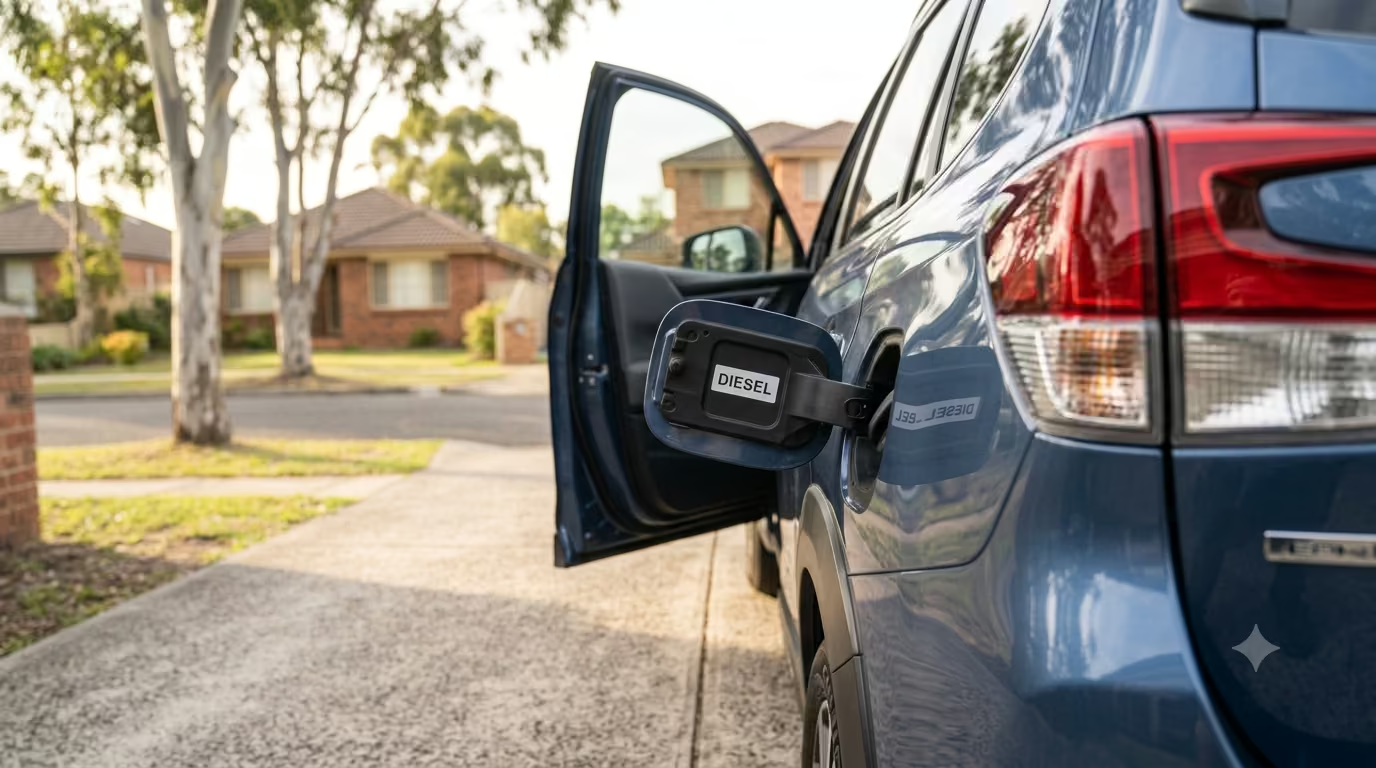
To check what fuel your car takes, look for the label inside the fuel flap first, then the owner’s manual, then the engine badge on the boot. If none of those settle it, a dealer or a registration check against the vehicle details will confirm it in a minute.
Most drivers would swear they know what their car takes, and most of them are right. The trouble is that the moment of doubt never arrives on your own car on a normal day. It arrives in a hire car at the end of a flight, in a work ute you were handed this morning, in a partner’s vehicle you have driven twice, or in a second hand car you bought a fortnight ago and have only filled once. That is when a two minute check done earlier is worth a great deal, so here are the ways to settle the question properly, from the quickest to the most definitive.
Check the Fuel Type Label Inside Your Fuel Flap
This is the answer nine times out of ten and it takes about five seconds. Open the flap and look at the inside face of it, and at the surround of the filler neck. Manufacturers put the fuel type there precisely because it is the last thing a person sees before the nozzle goes in, and the wording is usually direct: diesel only, unleaded petrol only, or a minimum octane figure such as ninety five for cars that want premium. Do this once in your own driveway with a coffee in your hand rather than for the first time at a busy bowser with a queue behind you. If the label has faded, been painted over or peeled off, which happens on older cars and on anything that has had panel work, move to the next check rather than making an assumption.
What TDI, HDi and CRDi Badges Mean on a Diesel
The badging on the boot lid or the guard is a useful cross check, because manufacturers have spent decades signalling diesel with letter combinations. TDI on a Volkswagen or Audi, HDi on a Peugeot or Citroen, dCi on a Renault or Nissan, CRDi on a Hyundai or Kia, D-4D on a Toyota, TDCi on a Ford, CDI or BlueTEC on a Mercedes, and Skyactiv-D on a Mazda all point to a diesel engine. A D on its own or a TD generally does the same. There is no equivalent universal marker for petrol, which is part of why diesels are the ones people label. Two cautions worth keeping. Badges get removed by owners who prefer a clean boot lid, and badges occasionally get fitted to cars they do not belong on, particularly in the used market. So treat the badge as supporting evidence that agrees with the flap label, not as the sole source of truth.
How to Find Your Fuel Type Without the Owner’s Manual
The manual settles it definitively, usually with an index entry under fuel, and it will also tell you the minimum octane the engine wants rather than just the broad category. Second hand cars very often arrive without one, which is where the vehicle’s own paperwork earns its keep. A free registration check returns the recorded details for a registered vehicle, and a dealer for the brand can confirm the engine and fuel type from the build number in under a minute over the phone. Neither of those is a two minute job at the pump, which is exactly the point: do it at home, once, and the question never comes up again.
Capless Fuel Fillers and the Second Blue Cap Explained
Two modern arrangements confuse people, so they are worth naming. A growing number of vehicles have no fuel cap at all, using a flap the nozzle pushes through instead, and drivers who go looking for the usual cap label sometimes conclude there is nothing to find. The information is normally still there, printed on the flap or on the surround inside it, so look at the panel rather than for a cap. The other one catches diesel drivers: a second, smaller filler with a blue cap sitting alongside the main one. That is AdBlue, an exhaust treatment fluid rather than a fuel, it appears on many newer diesels, and the only thing that ever goes into it is more AdBlue. If you have that second cap, knowing which is which matters twice over, because a mixup in either direction is its own kind of trouble.
How to Check the Fuel Type in a Hire or Borrowed Car
Unfamiliar vehicles are where the checking habit actually pays, because your hands are running on the memory of a car you are not currently sitting in. Settle the fuel type at the rental desk, at the dealership or in your mate’s driveway rather than three hundred kilometres later at a servo you have never seen before. Look inside the flap while the car is parked and unhurried. If a hire car gets swapped mid trip, check the replacement, since it is often a different drivetrain to the one you booked. If you run vehicles that other people drive, make the fuel type part of the handover the way you would the keys, and if you lend your own car out, say the fuel type aloud as you pass them over. There is more on the specific wrinkles of company vehicles, hire cars and shared work vehicles if that is your situation.
What to Do If You Have Already Used the Wrong Nozzle
If the check comes too late and the wrong nozzle has already been used, the important thing is what happens next rather than what happened. Do not start the engine, do not turn the key to accessory, and do not move the car under its own power, because contamination that never reaches the engine is damage that never occurs. Do not try to correct it by topping up with the right fuel either. Tell the servo staff, then arrange a proper drain and flush before the engine runs. If you want the full sequence from the moment you realise, the step by step rundown covers it.
Five seconds at the flap is the cheapest insurance in motoring, and the drivers who do it are the ones who never need a number like ours. If the check has come too late today, Wrong Fuel Help comes to the servo, the driveway or the roadside, drains the tank on the spot and gets the correct fuel back in, and the earlier the call comes the smaller the job stays. Save 0432 553 905 in your phone, and go and look inside your fuel flap while you are thinking about it.
FAQs
My car has no fuel cap at all. Where do I check?
Capless filler systems are increasingly common and they usually still carry the fuel type printed on the flap itself or on the surround inside it. If there is nothing there, the manual or a dealer check against the build number is the reliable answer rather than a guess at the bowser.
Does the badge on the back of the car tell me the fuel type?
Often it hints at it. Badges such as TDI, HDi, CRDi, dCi, D-4D, TDCi and BlueTEC all indicate diesel engines, and they are a useful cross check. Treat them as supporting evidence rather than proof, since badges get removed, swapped and fitted to the wrong car.
What if the diesel car also has a second smaller filler?
That second filler with the blue cap is for AdBlue, an exhaust treatment fluid, and it is not a fuel. It only appears on certain diesel vehicles. Nothing but AdBlue goes in it, and diesel never does.
Is it worth writing the fuel type somewhere in the car?
For a vehicle other people drive, yes. A small label inside the fuel flap or on the sun visor takes seconds and removes all doubt for a partner, an apprentice or a friend borrowing the car who has never fuelled it before.