Ford Everest AdBlue System: Problems, Warnings, and What to Do
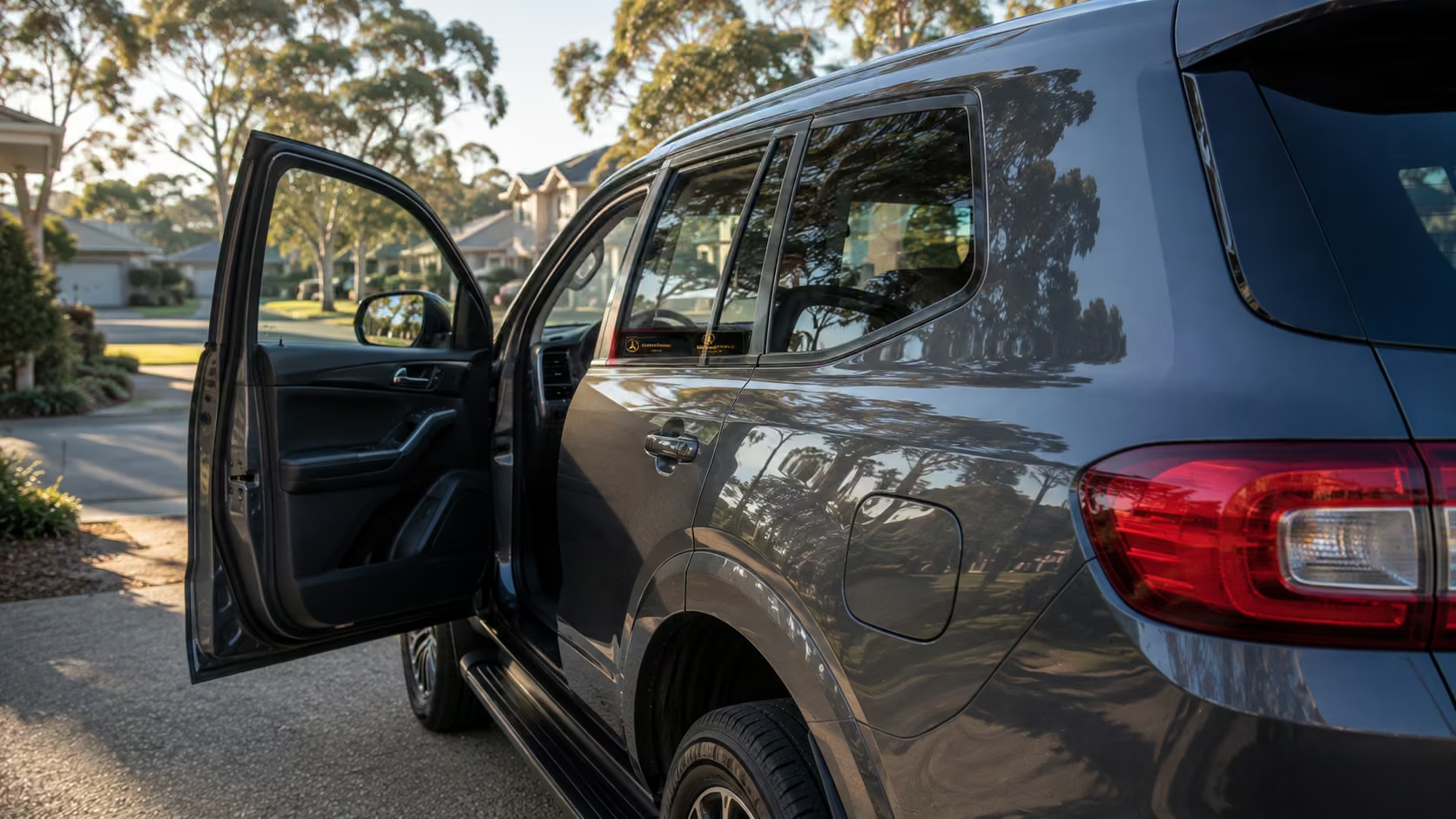
So you are driving along in your Ford Everest, everything feels fine, and then a warning pops up on the dash about AdBlue. Maybe it says the level is low. Maybe it says the system has a malfunction. Or maybe you are reading this because something worse happened and AdBlue ended up in the diesel tank by mistake.
Whatever brought you here, this guide covers everything you need to know about the AdBlue system in your Ford Everest. We will go through what AdBlue actually does, what all those warning messages mean, what happens if it runs out completely, what to do if AdBlue accidentally goes in the diesel tank, and what the repair costs look like here in Australia.
We deal with AdBlue contamination issues on Ford Everests and other diesel vehicles regularly, so this is coming straight from hands-on experience, not just a textbook.
What Is AdBlue and Why Does Your Ford Everest Have It?
AdBlue is a fluid made from purified water and urea, mixed at a concentration of 32.5%. It is not a fuel additive and it does not go into your diesel tank. It has its own separate tank and its own filler cap on your Everest.
The reason your Everest has it comes down to emissions. Modern diesel engines produce nitrogen oxide (NOx) as part of the combustion process, and NOx is harmful to the environment. To meet Euro 5 and Euro 6 emissions standards, Ford fitted the Everest with a system called Selective Catalytic Reduction, or SCR for short. The SCR system injects a small amount of AdBlue into the exhaust stream, and a chemical reaction takes place inside the catalytic converter that breaks those nitrogen oxides down into harmless nitrogen and water vapour.
In simple terms, AdBlue is there to clean up the exhaust gases. Your Everest cannot legally meet emissions regulations without it, which is why the vehicle is designed to restrict performance and eventually prevent you from restarting the engine if AdBlue runs out.
Ford Everest AdBlue Tank Size and How Long It Lasts
Depending on the model year and variant, most Ford Everest variants have an AdBlue tank capacity of around 20 to 21 litres. On some older models, the AdBlue filler is next to the diesel filler cap, under the fuel flap. Later models may have it under the bonnet or at the rear of the vehicle. Your owner’s manual for your specific model will tell you exactly where to look.
On average, your Everest will consume roughly 1 to 1.5 litres of AdBlue per 1,000 kilometres. It is contingent upon the way you drive, what you are carrying and the type of driving you do. Highway cruising takes a little more than city driving, because the engine is working at higher sustained loads, where the SCR system is more active.
So with a full tank of around 20 litres you are looking at somewhere between 13,000 and 20,000km before you need a top-up. That’s a long way off and a lot of Everest owners forget about that until the warning pops up.
How to Check Your AdBlue Level
In most Everest models you can check the AdBlue level in the information display on the instrument cluster. Use the steering wheel buttons to scroll through the menu until you reach the AdBlue or DEF (Diesel Exhaust Fluid) level reading. Some show this as a percentage, others as an estimated range in kilometres.
it is a good habit to top it up each time you service the vehicle instead of waiting for the warning to come up.
Common Ford Everest AdBlue Warning Messages and What They Mean
This is the point where most people begin to worry, and rightly so.The warnings can be frightening, especially those about speed limits or the engine not starting again. Here’s what each message really means, and what to do about it.
“AdBlue Level Low” or “Refill AdBlue”
This is the first warning you will see, and it is the easiest to correct. It simply means that your AdBlue tank is getting low and needs topping up soon.
You still have plenty of driving range left at this point. Normally, the Everest gives you this warning when you have about 1,500 miles of AdBlue range left. You don’t have to pull over right away, but make plans to fill up in the next week or two depending on how much you drive.
How to do it: Grab a container of AdBlue from Supercheap Auto, Repco or most service stations that service trucks and diesels. Open the AdBlue filler cap (not the diesel cap) and fill. It’s that simple.
“Speed Limited” or Reduced Engine Power
If you let the AdBlue range get very low, generally below about 200 kilometres of remaining range, the Everest will start limiting your speed. Some models limit you to 80 km/h, others simply reduce the engine power noticeably.
Nothing wrong with the vehicle. Ford did it on purpose. Basically the car is saying “I’ve asked you nicely several times and you haven’t refilled the AdBlue so now I’m going to make it uncomfortable enough to drive that you’ll deal with it.
What to do: Restock immediately. Don’t keep driving a restricted engine hoping it’ll fix itself.
“Engine Will Not Restart”
This is your last chance to get out before the system locks you out. If the AdBlue level gets down to zero or almost zero, the Everest will show a message that the engine will not start again when you turn it off.
That means if you go to a petrol station and turn the car off to refuel, the engine will not start again until you add AdBlue.
What to do: If you see this warning whilst driving don’t switch the engine off until you’ve got AdBlue in hand. Drive to the nearest seller, buy some, fill up the AdBlue tank and switch off the engine. In most cases a simple top up with a few litres of AdBlue and cycling the ignition will enable the system to recognise the new fluid and allow you to start the engine again. On some models it may take a few minutes with the ignition on for the system to register the top up.
“AdBlue System Malfunction”
This one is different than others because it is not a low fluid level. This warning means that a fault has been detected in the AdBlue system itself. The AdBlue quality sensor, a faulty AdBlue injector that sprays the fluid into the exhaust, wiring problems, a blocked SCR catalyst or a software fault could be the cause.
The annoying thing about this warning is that it can show up even if your AdBlue tank is full. This is a system error, not a level error .
What to do: This one usually needs a professional diagnosis. A mechanic with the right scan tool can read the fault codes stored in the SCR module to see if it is a sensor, injector, wiring or software problem. Do not ignore it, some system malfunction warnings will ultimately lead to the same speed restriction and engine restart prevention as a low fluid level warning.
What Happens If Your Ford Everest Runs Out of AdBlue?
First, let’s clear up a big misconception. Running out of AdBlue won’t damage your engine. The diesel engine itself does not use any AdBlue. AdBlue is only used in the exhaust system after the combustion process has already occurred. So your pistons, turbo, injectors and everything else under the bonnet are all in top shape.
What does happen is a deliberate lockout sequence that Ford (and all other manufacturers that use SCR systems) has programd into the vehicle to comply with emissions standards.
Here is how it typically plays out:
- You get the low level warning well in advance
- You get the countdown warning showing remaining kilometres
- Speed or power gets restricted as the level drops very low
- The vehicle warns you that it will not restart if turned off
- Once you turn it off with an empty AdBlue tank, the engine refuses to start
The fix is simple. Add AdBlue. In most cases, pouring in at least 5 to 10 litres will be enough for the system to recognise the new fluid and let you start the engine again. Some Everest models take a few minutes with the ignition switched on (but engine not running) to process the top-up before they will allow a restart. In rare cases, a dealer may need to reset the system using diagnostic software, but this is uncommon.
The whole point of this lockout is that Australian and international emissions laws require the vehicle to prevent you from driving indefinitely without a functioning emissions system. It is annoying, but it is the law, and Ford would face massive fines if they let you bypass it.
What If You Accidentally Put AdBlue in the Diesel Tank?
Here is where it gets serious and this is the section we really want you to listen to. Running out of AdBlue is one thing, but putting AdBlue into the diesel tank is another story altogether. It’s a contamination problem, and if not handled properly, it can cause a lot of damage.
How Does It Happen?
You might think it would be hard to confuse the two fillers, and usually it is. The AdBlue filler nozzle is smaller than the diesel nozzle and on most Everest models they are in different locations or clearly labelled. But we have seen it happen more often than you would expect.
It happens sometimes when someone pours AdBlue out of a bottle or jerry can and accidentally puts it in the wrong filler. Sometimes it happens when someone is in a hurry at a busy servo. Sometimes it is a new driver who has never owned a diesel with AdBlue and genuinely does not know there are two separate tanks. Whatever the reason, it happens. What matters is what you do next.
What AdBlue Does Inside a Diesel Fuel System
AdBlue is corrosive to the metals and seals used in diesel fuel systems. It is designed to work in the exhaust system where it is exposed to extreme heat and specific catalytic materials. Inside a diesel fuel system, it causes problems in several ways:
- It crystallises as the water evaporates, leaving urea crystals that block fuel filters, injectors, and fuel lines
- It corrodes metal components including the fuel pump, fuel rail, and injector bodies
- It damages rubber seals and O-rings throughout the fuel system
- If it reaches the high-pressure fuel pump (which operates at thousands of PSI), the damage can be catastrophic and extremely expensive to repair
The damage gets dramatically worse if the engine is started. When the engine runs, the fuel pump circulates the contaminated fuel through the entire system, pushing AdBlue into every component from the tank all the way through to the injectors and back via the return lines.
The Critical Rule: Do Not Start the Engine
If you find you’ve put AdBlue in your diesel tank, the most important thing to do is not start the engine. Try not to even turn the ignition to the “on” position because some modern vehicles prime the fuel pump when the ignition is turned on.
If the engine has not been started, the contamination is contained in the fuel tank. A professional fuel drain can remove the contaminated fuel, flush the tank and refill with clean diesel. Most times the vehicle drives away just fine after the drain.
If the engine has been cranked and run, the contamination has been spread through the fuel lines, fuel filter, high pressure pump, fuel rail and injectors. The repair cost goes way up because all of those parts may need to be cleaned, flushed or replaced.
What to Do Right Now
If this has just happened to you, here is exactly what to do:
- Do not start the engine. If the engine is already running, turn it off immediately.
- Do not turn the ignition on. Leave the key out or do not press the start button.
- Put the vehicle in neutral and push it away from the fuel pump if you are at a service station, or just leave it where it is.
- Call a mobile fuel drain service. You need someone who can come to you, drain the contaminated fuel from the tank, flush the system, and refill with clean diesel.
Ford Everest AdBlue Repair Costs in Australia
The cost of dealing with an AdBlue problem on your Ford Everest varies hugely depending on what the actual issue is. Here is a realistic breakdown of what you can expect to pay.
Topping Up AdBlue Yourself
This is the cheapest situation. You can get a 10 litre container of AdBlue for roughly $15 to $25 from places like Supercheap Auto, Repco or major service stations. A 20 litre container (enough to fill the tank from empty) costs around $25-$45. You fill it yourself in the Adblue filler and that’s it. No mechanic required.
AdBlue System Repairs at a Dealer or Workshop
If your Everest has an “AdBlue System Malfunction” warning and the system itself is faulty, repair costs depend on what has failed:
- AdBlue quality sensor replacement: Roughly $300 to $600 including parts and labour
- AdBlue injector replacement: Around $400 to $800 depending on accessibility and the model year
- SCR catalyst issues: These can run from $1,000 to $3,000 or more, as the catalytic converter unit itself is expensive
- Software update or reset: Some dealers charge $150 to $300 for a diagnostic session and software reflash
AdBlue in the Diesel Tank – Fuel Drain Cost
If AdBlue has gone into your diesel tank, you are looking at a professional fuel drain and flush. The cost depends on the severity:
- Engine not started, contamination contained to the tank: Typically between $750 and $1,500. This involves draining the tank, flushing it, replacing the fuel filter, and refilling with clean diesel.
- Engine started and run briefly: $1,000 to $2,500. The fuel lines and potentially the fuel filter housing need to be flushed as well. The longer the engine ran, the more work is involved.
- Engine run for an extended period: If the vehicle was driven for several kilometres on contaminated fuel, you may be looking at component replacements (injectors, high-pressure pump, fuel rail) on top of the drain. In worst-case scenarios, this can run from $5,000 to $15,000 or more at a dealership.
The takeaway here is simple. The moment you realise AdBlue has gone in the wrong tank, stopping immediately and calling for a fuel drain is the cheapest option by a long margin. Every minute the engine runs on contaminated fuel pushes the repair cost higher.
How to Avoid AdBlue Problems on Your Ford Everest
Most AdBlue headaches are completely avoidable with a few simple habits.
Top up before the warning light appears. Make it part of your regular service routine. Every time you get the Everest serviced, ask the workshop to check the AdBlue level or just top it up yourself. A $20 container of AdBlue every few months is far cheaper than dealing with a system lockout at an inconvenient time.
Use quality AdBlue that meets the ISO 22241 standard. This is the international standard for automotive-grade AdBlue. Every reputable brand sold at auto parts stores and service stations in Australia meets this standard. Do not use industrial urea or agricultural-grade products, as they can contain impurities that damage the SCR system.
Store AdBlue properly. If you keep a spare container in the shed or garage, store it out of direct sunlight and in moderate temperatures. AdBlue has a shelf life of about 12 to 18 months if stored correctly, but it degrades faster in heat and sunlight.
Know where your fillers are. Take 30 seconds to familiarise yourself with where the AdBlue filler and the diesel filler are on your Everest. They are separate, labelled differently, and the AdBlue cap is usually blue. But in a rush at a busy petrol station, mistakes happen. If you are ever unsure which filler is which, check the cap colour and the label before pouring anything in.
If something does not feel right, stop and call for help. Whether the fuel looks a different colour than expected, the cap did not seem like the right one, or a warning has popped up that you do not recognise, stopping the engine and calling someone who knows what they are doing is always the smartest move. A quick phone call costs nothing. Running a contaminated engine can cost thousands.
Frequently Asked Questions
Can I drive my Ford Everest without AdBlue?
Not indefinitely, no. The vehicle will allow you to continue driving for a while after the low level warning appears, but as the AdBlue runs out completely, the Everest will progressively limit your speed and engine power. Eventually, once you turn the engine off with an empty tank, it will not restart until AdBlue is added. This is a deliberate design feature required by emissions regulations, not a fault.
How do I reset the AdBlue warning light on my Ford Everest?
In most cases, simply topping up the AdBlue tank will reset the warning automatically. After adding AdBlue, turn the ignition to the on position (without starting the engine) and wait a few minutes for the system to detect the new fluid level. The warning should clear on its own. If the warning persists after a top-up, there may be a sensor fault or system malfunction that needs professional diagnosis.
Is it safe to use any brand of AdBlue in my Everest?
Yes, as long as it meets the ISO 22241 standard, which is the specification for automotive-grade AdBlue. All major brands available at Australian auto parts stores like Supercheap Auto and Repco meet this standard. Avoid using any urea-based products that are not specifically labelled as AdBlue or DEF for automotive use.
What happens if I put AdBlue in the diesel tank?
This is a serious contamination issue. AdBlue is corrosive to diesel fuel system components and can crystallise inside injectors, fuel pumps, and fuel lines. If this happens, do not start the engine. Call a mobile fuel drain service immediately to have the contaminated fuel removed and the system flushed. The longer the engine runs on contaminated fuel, the more expensive the repair becomes.
How much does it cost to drain AdBlue from a diesel tank?
If the engine was not started, a professional mobile fuel drain typically costs between $750 and $1,500 in Australia. If the engine was started and the contamination has spread through the fuel system, costs increase to $1,000 to $2,500 or more depending on the extent of the damage. Acting quickly and not starting the engine is always the cheapest path.
Need Help Right Now?
If you have put AdBlue in your diesel tank or you are dealing with a contamination issue on your Ford Everest, do not risk starting the engine. The sooner the contaminated fuel is drained, the less damage it causes and the less the repair costs.
Call Wrong Fuel Help on 0432 553 905. We are available 24/7 and provide mobile fuel drain and recovery across Newcastle, Hunter Valley, Central Coast, and regional NSW. We come to you, wherever the vehicle is.