Why Is My Car Still Running Rough After a Fuel Drain
A short period of rough running immediately after a fuel drain is normal, because a little air and residual fuel remain in the lines. Roughness that continues beyond the first few minutes, or past the first tank of fuel, usually points to a fouled filter, fouled spark plugs, or damage from before the drain.
The drain is done, the correct fuel is in, and the car pulls away sounding like it is not quite over the experience. It is an uncomfortable moment, because you have just paid to have a problem solved and the car is still telling you something is wrong. The good news is that a certain amount of this is completely expected and passes on its own. The important thing is knowing where the line sits between a system settling down and a fault that is not going to fix itself, because waiting out the second kind is how a solved problem turns into an expensive one.
What Is Normal in the First Few Minutes
When a tank is emptied and refilled, the fuel system does not simply pick up where it left off. A small amount of air inevitably ends up in the lines during the process, and a diesel in particular does not like air, so the first minute or two of running can be lumpy while the system purges it and pressure builds properly. There is also fuel left behind that the drain could not reach, sitting in the lines and the filter housing, and that residue has to pass through and burn before what is in the tank is what is in the engine. Expect some hesitation, perhaps a little smoke, perhaps an idle that is not perfectly smooth, and expect it to clear as the engine runs. That is the system finishing the job rather than a sign the job was not done.
What Is Normal Through the First Tank
Beyond those first minutes, the window narrows. It is reasonable for a car to feel very slightly off through the early part of the first tank while the last traces work through the system, and for a diesel to be marginally noisier on start up once or twice. What is not reasonable is a car that is still misfiring, smoking or lacking power once that first tank is well underway. By then everything the drain left behind has long since passed through, so anything remaining is a fault in its own right rather than a hangover. The pattern matters more than any single symptom: things that are steadily improving day by day are settling, and things that are staying the same or getting worse are not.
Why Diesel in a Petrol Car Can Leave Symptoms Behind
This is the misfuel most likely to leave a car rough after a correct drain, and the reason is mechanical rather than anything to do with the drain itself. Diesel is oily and it does not burn the way petrol does, so when it has been through a petrol engine it coats the spark plugs, and coated plugs keep misfiring long after the fuel that fouled them has gone. A set of plugs is a modest job, but it is a separate job to the drain, and a car that is still stumbling after the fuel has been replaced often simply needs them looked at. The same event can leave the injectors and the catalytic converter carrying some of the residue, which is why the symptoms of the original misfuel are worth comparing against what the car is doing now.
Why Petrol in a Diesel Can Leave Symptoms Behind
With a diesel the question is almost always whether the engine ran on the contaminated fuel before the drain, and for how long. If it never started, the contamination stayed in the tank and there is very little to leave behind. If it ran, petrol has been through the high pressure pump and the injectors, and any wear or stress that occurred while it was running does not reverse when clean diesel arrives. That is why how long the engine ran before it was shut down is the single most useful piece of information when a diesel is still not right afterwards. Persistent hard starting, a rough idle that does not settle, knocking, or power that is clearly down all point at the pump or injectors rather than at leftover fuel, and whether that amounts to lasting damage is a question worth answering properly rather than hoping.
The Fuel Filter Is the Most Commonly Missed Step
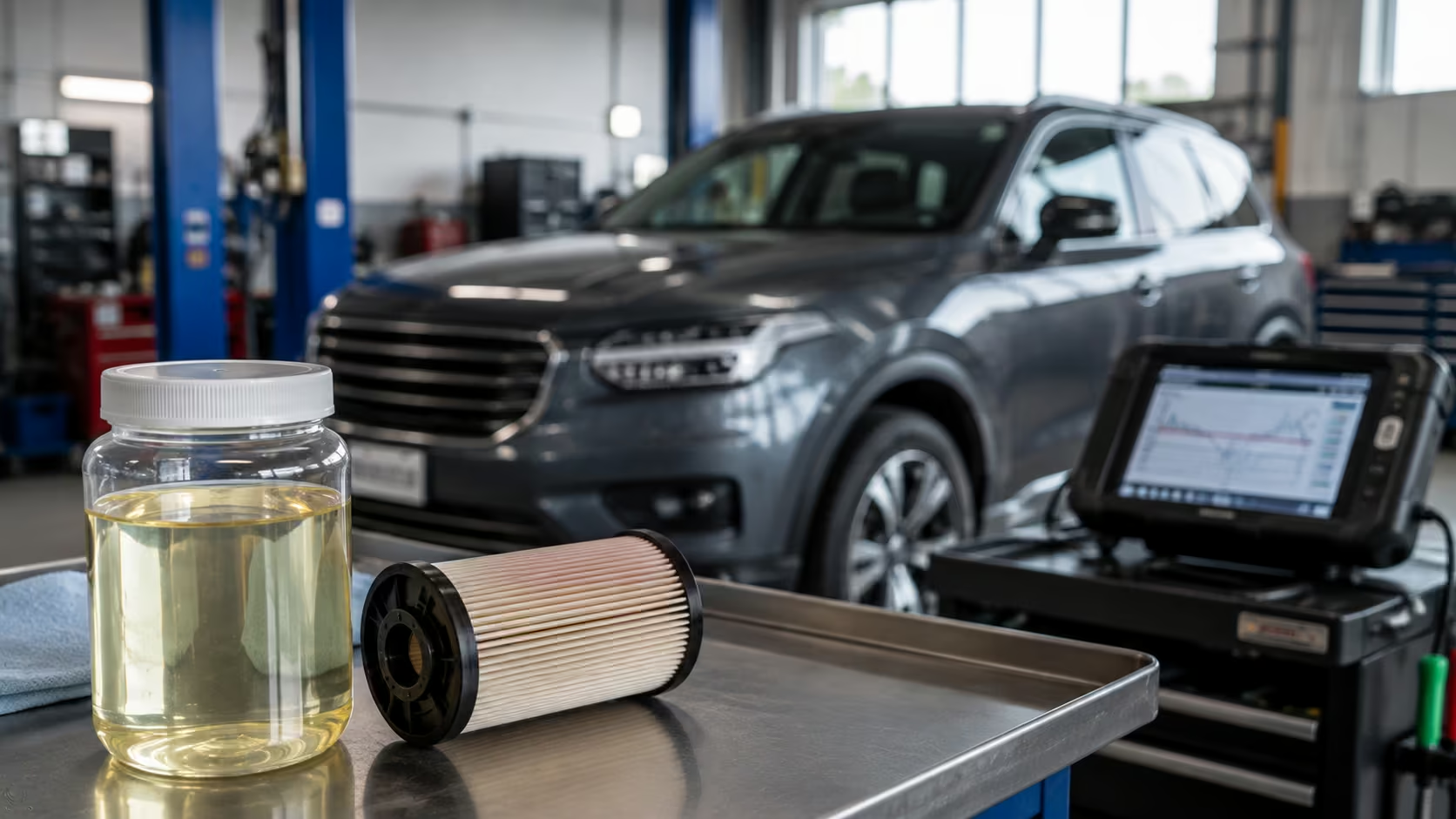
If a car is running rough after a drain and nothing else explains it, the filter is the first thing to look at. A filter that has passed contaminated fuel has done its job by catching what it caught, and it is now partly loaded with material that restricts flow. Clean fuel arriving behind a compromised filter still reaches the engine badly, and the symptoms of that look very much like the symptoms of contaminated fuel, which is exactly how people end up convinced the drain did not work. Whether the filter needed replacing comes down to whether the engine ran on the wrong fuel, so it is a fair question to ask about any drain: was the filter changed, and if not, why was that the right call.
When to Stop Waiting and Get It Looked At
Use three tests. Time, because anything still present at the end of the first tank is not settling. Direction, because symptoms that are improving are different to symptoms that are static or worsening. And severity, because a slightly uneven idle is a world away from misfiring under load, warning lights, or visible smoke. If any of those tip the wrong way, get it looked at rather than driving on and hoping, since continuing to run an engine that is genuinely struggling is how a moderate problem becomes a large one. If the work was carried out by someone else and the car is still not right, you are entitled to expect it to have been done with due care and skill, and consumer guarantees on services are worth understanding before you simply pay somebody else to redo it.
There is no awkwardness in getting a second look at a car that is still not right, whoever did the original work. Wrong Fuel Help can sample what is actually in the tank now, which either confirms the fuel is clean and points you at the plugs, the filter or the injectors, or finds that something was left behind and deals with it on the spot. Either way you stop guessing, and you get told plainly which of the two it is rather than being sold a second drain you may not need. Call 0432 553 905, and in the meantime, go easy on it rather than driving it hard to see if it clears.
FAQs
How long should a car feel normal after a fuel drain?
Most vehicles are back to normal within the first few minutes of running, and any lingering roughness has usually cleared well before the first tank is used. Anything that is still there at the end of that tank is not the drain settling in, it is a fault worth chasing.
Should the fuel filter be replaced as part of a drain?
It depends on whether the engine was run on the contaminated fuel. If it never started, the filter often has not seen anything and may not need replacing. If the engine ran, the filter has passed contaminated fuel and replacing it is usually the sensible call.
My check engine light came on after the drain. Is that expected?
A stored fault code from the misfuel itself can remain after the fuel is replaced and may need clearing, so a light alone is not proof that something is still wrong. A light that returns after being cleared is a different matter and needs diagnosing properly.
What if the drain was done by somebody else and the car is still not right?
You are entitled to expect the work to have been done with due care and skill, and a second opinion on what is actually in the tank now is a reasonable next step. Keep the original invoice, since it establishes what was done and when.