
Is Biodiesel Safe for My Car
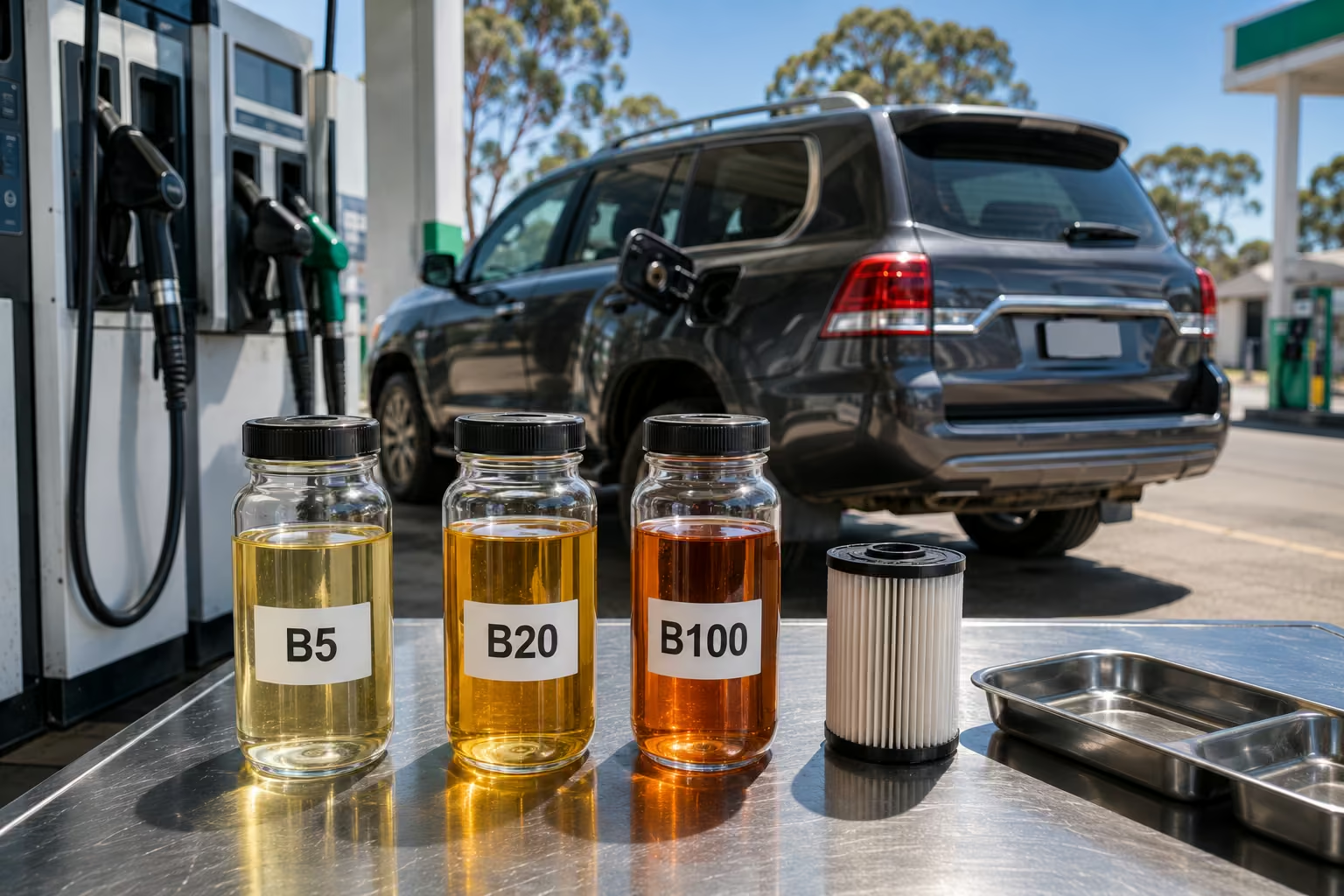
Biodiesel is a legitimate fuel, not the wrong fuel. Australian pump diesel may already contain up to five percent biodiesel without labelling, and most modern diesels handle that without any issue. Higher blends such as B20 are worth checking against your manufacturer first.
Biodiesel makes people nervous in a way that ordinary diesel does not, and the nervousness usually comes from the same place: it sounds like something different going into a tank that is fussy about what it gets. So the useful thing to say first is that biodiesel is not a misfuel, it is not a substitute anyone is sneaking past you, and there is a good chance you have been running a low blend of it for years without ever noticing. What is worth knowing is where the blends differ, what your particular engine is signed off for, and the one practical thing that occasionally goes wrong when someone switches over.
What Biodiesel Is and What B5, B20 and B100 Mean
Biodiesel is diesel made from organic material rather than crude oil, typically vegetable oils, tallow or used cooking oil, processed until it meets the Australian fuel standard. The number after the B is simply the percentage of biodiesel in the blend, so B5 is five percent biodiesel with the balance ordinary mineral diesel, B20 is twenty percent, and B100 is the pure product. That is the whole naming system. The practical differences between the blends are not about whether the fuel works, because it works in all of them, but about how much of a departure from mineral diesel your engine and its warranty are prepared to accept.
You May Already Be Using Biodiesel Without Knowing
This surprises people. Australian diesel standards allow ordinary pump diesel to contain up to five percent biodiesel with no special labelling at all, which means the fuel you have been buying at your usual servo may well have contained a small biodiesel component for a long time. The New South Wales transport authority sets this out plainly in its guidance on the fuel. B5 generally works in modern diesel engines without modification, and the reason it slipped into the fuel supply without drama is precisely that nobody noticed. If low blend biodiesel were hard on engines, the evidence would have arrived years ago in the form of a great many broken cars.
Can Your Car Run B20 and Higher Blends
Above five percent the answer stops being universal and starts depending on your vehicle. B20 is a well established blend, most modern diesel engines are unlikely to have trouble with it, and it is used widely by fleets and bus operators, but it is less available at ordinary retail pumps and is mainly supplied through distributors and to commercial operators, particularly in metropolitan areas. The sensible step before running it is a check with your manufacturer or a look at the owner’s manual, because approval above B5 varies by maker and by model year and it is your warranty at stake rather than your engine’s survival. B100 is a different proposition again and is rare at retail. Running pure biodiesel in an engine that was never prepared for it can be hard on rubber fuel lines and seals over time, so it belongs to operators who have set their vehicles up for it deliberately.
The Solvent Effect That Catches People Switching Over
Here is the one genuine practical issue, and it is the reason a biodiesel article belongs on a fuel recovery site at all. Biodiesel is a better solvent than mineral diesel. In a tank that has been running ordinary diesel for years, there is usually a quiet layer of sediment, varnish and general residue sitting where it has always sat, doing no harm because nothing disturbs it. Switch to a higher biodiesel blend and the fuel begins lifting that material off the tank walls and carrying it forward, and the first thing it meets is the fuel filter. The result is a vehicle that runs beautifully for a week or two and then starts losing power or struggling to start, and the owner blames the new fuel when the actual problem is everything the old fuel left behind. If you are moving to a higher blend, plan on changing the fuel filter early rather than waiting for the service interval, and if the tank is old or the vehicle has sat a lot, having the tank cleaned out first saves you the roadside version of that lesson.
Biodiesel, Water and the Diesel Bug
The second thing worth knowing is that biodiesel is more inclined to pick up and hold water than mineral diesel is, and water in a diesel tank is the ingredient a microbial colony needs to establish itself. That makes housekeeping matter more rather than less: keep tanks reasonably full when a vehicle is going to sit, drain the water separator when it asks, and pay attention to bulk storage on properties, since that is where fuel sits longest. If the tank does develop a colony, the answer is not a bottle, it is removal, and how diesel bug takes hold and what actually clears it is covered separately.
Where Biodiesel Is Genuinely Better Than Ordinary Diesel
It would be an unbalanced article that only listed the watch points, because biodiesel brings a real advantage that matters in this context. It has better lubricating properties than mineral diesel, which means less wear on the fuel pump and injectors, the exact components that a misfuel destroys and that cost a fortune to replace. The emissions case is the reason it exists, and the energy penalty is small: pure biodiesel holds around ninety percent of the energy of mineral diesel, which puts a twenty percent blend at roughly ninety eight percent, a difference nobody notices at the wheel. So biodiesel is not a compromise fuel that engines merely tolerate. In the ways that matter most to a fuel system, it is arguably kinder than what it replaces.
The short version, then. Biodiesel is not wrong fuel and it does not belong in the same conversation as petrol in a diesel tank. Check your manual before going above B5, change the filter early if you switch to a higher blend, and keep an eye on water if the vehicle sits. If a diesel starts running rough or losing power after a fuel change and a new filter has not fixed it, the fuel in the tank is worth looking at rather than guessing, and Wrong Fuel Help can sample and drain the tank wherever the vehicle is parked rather than sending you to a workshop to find out. Call 0432 553 905, and what shapes the cost is set out here if you want the numbers before you ring.
FAQs
How do I know if the diesel I am buying contains biodiesel?
Often you cannot tell, and that is by design. The Australian standard permits up to five percent biodiesel in ordinary pump diesel without any special labelling, so a great many drivers have been using a low blend for years without knowing. Anything above that is labelled.
Does biodiesel give less power or use more fuel?
Barely at a low blend. Pure biodiesel holds around ninety percent of the energy of mineral diesel, so a twenty percent blend sits at roughly ninety eight percent, which is a difference most drivers would never notice. At B5 the difference is smaller again.
Is biodiesel worse in cold weather?
It can gel a little more readily than mineral diesel, which matters in countries with hard winters and rarely matters across most of Australia. Vehicles kept at genuine elevation through frost season are the exception worth thinking about.
Is renewable diesel the same as biodiesel?
No, they are different products. Renewable diesel, sometimes called HVO, is processed so that it is chemically much closer to ordinary petroleum diesel, which is why it behaves as a straight substitute in many engines. Conventional biodiesel is a different chemistry with the handling considerations described above.