What to Do If You Put the Wrong Fuel in Your Boat
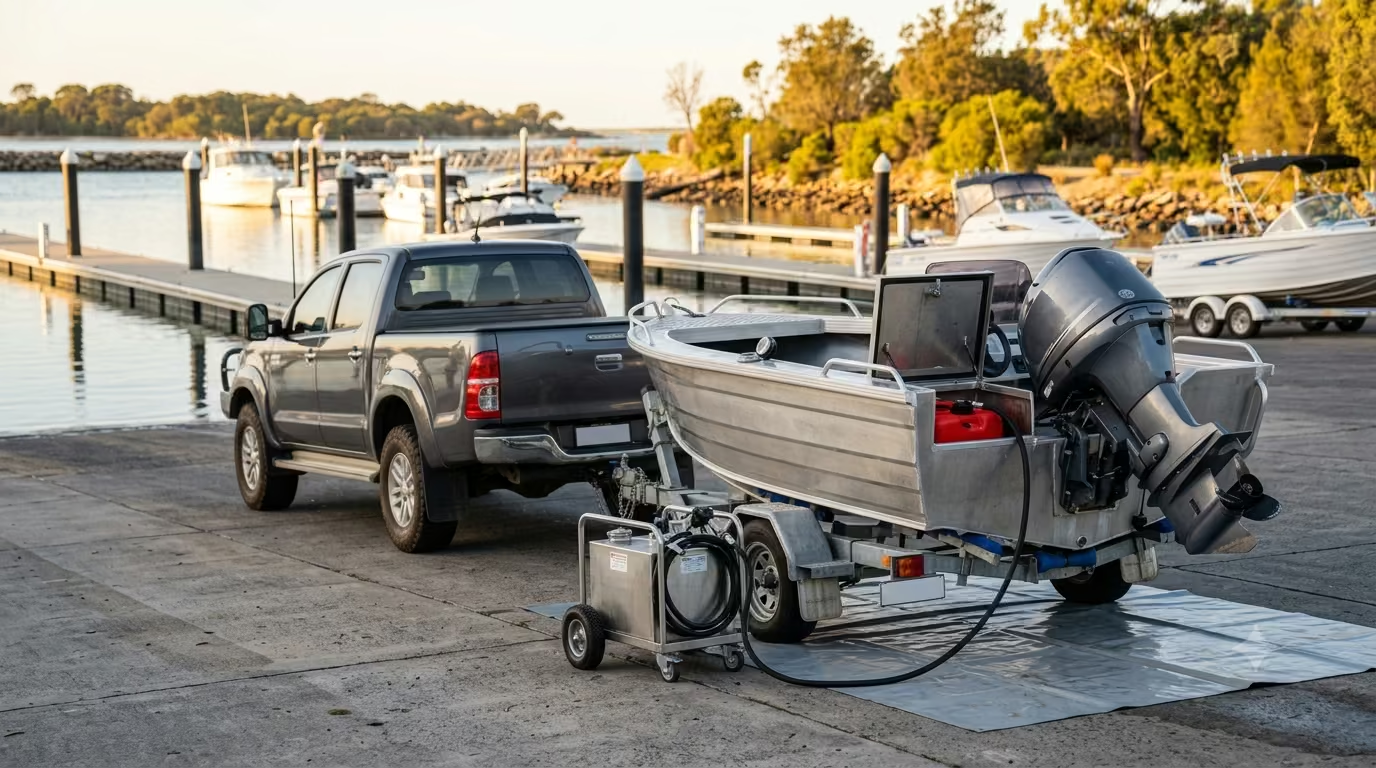
If you put the wrong fuel in your boat, do not start the motor, and do not try to siphon it out at the ramp. Petrol boat and diesel boat engines both need the tank drained properly before they run again, and a mobile fuel drain comes to the ramp, marina or driveway.
Here is a call we get every summer, usually on a Saturday morning. Someone has towed the boat to the servo on the way to the water, filled the ute, filled the boat, and somewhere between the two nozzles the fuels got crossed. Now they are standing at the ramp with a queue building behind them, wondering if the day is dead and whether they can fix it themselves with a length of hose. Short answer: the day is probably not dead, and no, please put the hose down. Let me walk you through why this mistake is so easy to make, what the wrong fuel actually does to a marine engine, and why the boat ramp is the one place in Australia where a DIY fix can cost you more than the engine.
Why Boat Owners Put the Wrong Fuel in at the Servo
Boats get misfuelled more often than they should for one simple reason: the fill usually happens on a trailer, at a busy roadside servo, as the second tank of the visit. Think about what that fill actually looks like. You are stretched across a trailer at an awkward angle, the filler is somewhere you refuel maybe a dozen times a year, there is a diesel ute sitting a metre away that you fill every week on autopilot, and there is a line of cars waiting behind the trailer putting you under pressure to hurry. Muscle memory does the rest. The hand that just put diesel in the Hilux reaches for the same black nozzle for the boat, or the reverse, the petrol that belongs in the outboard ends up in the tow vehicle. We see both, and the trailer version outnumbers the marina version many times over, because at a fuel wharf you at least expect to think about which hose is which.
Jerry cans cause their share too. A lot of tinnies and small boats with portable tanks get filled from cans in the garage, and an unlabelled can of diesel for the mower looks exactly like an unlabelled can of unleaded for the boat. If any part of your boating runs on jerry cans, label them like your weekend depends on it, because it does.
What Wrong Fuel Does to a Petrol Outboard
Most trailer boats in Australia run petrol outboards, so the common version of this mistake is diesel going into a petrol motor. Diesel does not ignite from a spark the way petrol does, so the motor either refuses to start, coughs and smokes heavily, or runs rough for a minute and dies. On a two stroke it is worse again, because the oil mixed through the petrol is what lubricates the motor, and diesel in the mix throws that ratio out completely. The good news is that a diesel misfuel in a petrol motor caught before or shortly after starting is very recoverable. The tank, lines and carburettor or injection system need to be cleared and refilled with clean fuel, which is the same recovery we do for cars every day, adapted to the boat sitting on its trailer.
What Petrol Does to a Marine Diesel Engine
Bigger boats, flybridge cruisers and serious offshore rigs run marine diesels, and this is where a misfuel gets expensive fast. Modern marine diesels from the likes of Volvo Penta, Yanmar and Cummins use the same high pressure common rail injection as a late model ute, and in these systems the diesel itself is the lubricant. The injection pump and injectors are machined so precisely that they depend on the slippery film diesel leaves on every surface. Petrol is a solvent. It strips that film off, and then hardened steel components run dry against each other at enormous pressure. An injection pump that eats itself sends metal debris downstream into every injector, and on a twin engine boat the bill for that can pass what many trailer boats are worth. The single biggest factor in whether that happens is whether the motor runs on the contaminated mix, so if you have already turned the key, here is what to do if the motor has already been run. If you have not, keep it that way and the odds are very much on your side.
Why You Should Never Siphon Fuel Out at a Boat Ramp
Now the part that is specific to boats, and the part I most want you to remember. At a servo, a spilled cup of fuel is a mess. At a boat ramp, it goes straight down the concrete into the water, and that changes everything. Polluting a waterway is a serious offence in NSW, the state environment watchdog can issue on the spot fines that run into the thousands, and if a visible slick ends up across a public waterway the penalties climb steeply from there. It does not matter that it was an accident. The person siphoning forty litres through a garden hose into buckets at a public ramp owns whatever ends up in the water.
And honestly, the fine is only half the argument. Hand siphoning means mouthfuls of fuel vapour, open containers of petrol next to hot engines and cigarettes and other people’s kids, and then the question nobody thinks about until the buckets are full: what exactly were you planning to do with forty litres of contaminated fuel? You cannot tip it down a drain, you cannot put it in your wheelie bin, and the servo does not want it back. A proper recovery drains the tank with sealed equipment, nothing touches the water, and the contaminated fuel leaves in our containers as our problem, not yours.
Portable Tanks vs Built In Boat Tanks
One piece of genuinely good news for small boat owners. If your tinnie runs a portable tote tank, your problem is smaller than you think: disconnect it, and that is the contamination contained in one liftable box. The tank still needs to be emptied and rinsed properly, and the fuel line and motor may need clearing if the motor was run, but you are not stuck at the ramp. A built in underfloor tank is a different story. There is no lifting it out, access is through the filler or sender unit, and the anti surge baffles inside make half measures pointless, because fuel hides behind them. Built in tanks are precisely where professional equipment earns its keep.
The Safe Way to Get Your Boat Back on the Water
So here is the playbook, and it is short. Leave the motor off, or shut it down as soon as you notice if it is already running. Pull the boat clear of the ramp queue if the tow vehicle can do it. Make a rough note of how many litres of what went in on top of what. Then call us, and go get a coffee. We come to the ramp, the marina hardstand, the servo or your driveway, drain and flush the system on the trailer, and dispose of the contaminated fuel properly, away from the water. The same applies if the mixup happened to the tow vehicle instead of the boat, and if you are towing a van rather than a boat, the same logic covers holiday vehicles and motorhomes too.
A word on who you call, because this is where boats are different. Most fuel drain and roadside outfits are set up for cars, full stop. A boat on a trailer, with its baffled tank, its awkward filler, its two stroke oil questions and a ramp full of spectators, is outside their comfort zone, and you can hear it in their voice when they answer the phone. At Wrong Fuel Help, boats are part of a normal week for us, the gear on the van suits marine tanks as well as cars, and we are on call 24/7 because misfuels do not keep business hours and neither do fishermen. One call to 0432 553 905, keep the motor off, and in most cases you are back on the water the same day with a story to tell rather than a repair bill to pay.
FAQs
Can I run E10 in my outboard motor?
Check your motor before you do. Plenty of outboards, especially older ones, are not built for ethanol blends. Ethanol attracts water and can break down fuel lines and seals in motors that were never designed for it, so many manufacturers recommend straight unleaded instead.
What if I only realise the fuel is wrong once I am out on the water?
Shut the motor down and treat it as a breakdown at sea. Anchor if it is safe, call your marine rescue service on VHF or phone, and get towed in. Do not keep restarting the motor to limp home, that spreads the contamination and can leave you drifting somewhere worse.
Does wrong fuel damage a two stroke outboard differently?
Yes. A two stroke relies on oil mixed through its petrol for lubrication, so diesel or the wrong premix ratio starves the crankcase and cylinders of the oil film they need. The fix is the same, drain the tank and lines completely before the motor runs again.
Will my boat insurance cover a misfuel?
Most policies treat putting the wrong fuel in as driver error rather than an insured event, so the drain itself usually comes out of your own pocket. Where cover sometimes helps is with consequential engine damage, but that varies policy to policy, so read yours before you assume either way.