What Happens to Fuel That Sits in Your Tank Too Long
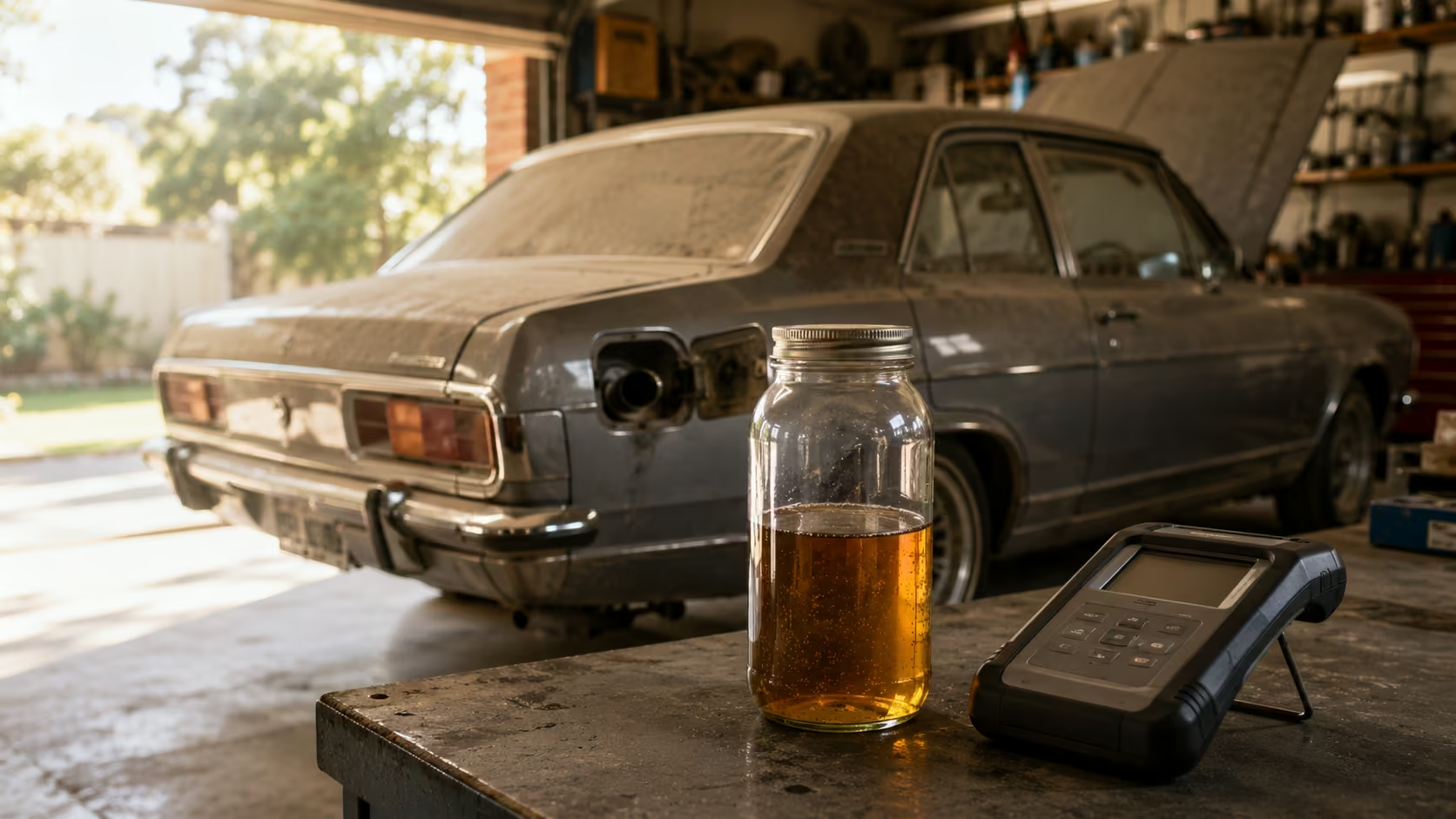
In a vehicle tank, fuel begins to go bad after three months or so. The lighter compounds evaporate. E10 blends can absorb moisture and separate. Oxidation forms gums and varnish. Diesel has a longer life but it has its own problems. A car that has been standing long enough may need its fuel drained, not just topped up.
How Long Petrol Lasts in a Fuel Tank
Petrol is a mixture of hundreds of hydrocarbon compounds. But the mixture is not forever stable. Fresh petrol. The lightest, most volatile compounds are the ones that make an engine start crisply, and they are also the first to evaporate through the tank’s breather system. At the same time, oxygen slowly reacts with the fuel that remains, forming gums and varnish that were never part of the original blend.
In a vehicle tank, standard unleaded is at its best inside about three months. Between three and six months it becomes noticeably stale, and an engine may start harder and run rougher on it. Beyond six months you are into genuinely degraded territory, and past a year the fuel can smell sour or varnish-like and is doing the fuel system no favours at all. These are honest working figures rather than laboratory ones, and heat shortens all of them. A car parked outside through a Newcastle summer ages its fuel faster than one in a cool garage.
Stale Fuel Symptoms After a Car Has Been Sitting
The pattern is clear: the car was fine when parked, it is not fine now. The most common complaint is hard starting, followed by a lumpy idle, hesitation when you touch the accelerator and a general lack of the crispness the car had before it sat. When you open the cap sometimes there is a sour or solvent-like smell at the filler.
These symptoms are similar to real contamination and from the driver’s seat the two are difficult to differentiate. The warning signs Newcastle drivers spot when something in the tank is behind the rough running cover the same ground, because the instinct to just drive it through often makes things worse either way. Every rough km on bad fuel pushes gums and varnish through injectors, which then have to be professionally cleaned.
E10 and Ethanol Blends Age Faster
E10 deserves special mention because it ages differently, not just faster. Ethanol is hygroscopic, which means it draws moisture out of the air. The ethanol part takes in the humid coastal air and absorbs water steadily in a half-empty tank. Water stays dissolved and is safe to a point. Beyond that point the mixture begins to separate into phases. The ethanol and water fall out as a separate layer on the bottom of the tank. Right where the fuel pickup pulls from.
An engine fed that watery ethanol layer will run badly or not at all, and the petrol left above it has lost octane, because the ethanol that provided part of the rating has left the blend. You can’t jiggle or top up the car to bring it back to life from a phase-separated fuel. It has to come out. An easy habit to get into is to fill it up with straight 91, 95 or 98 instead of E10 before parking it, which completely avoids the problem for a vehicle that will sit for more than a few weeks.
Old Diesel in a Tank and What Changes
Diesel is more forgiving of straight ageing, being good for six to twelve months under reasonable conditions. But diesel that sits has a different risk: water from condensation, and with it, the microbial growth that can turn a diesel tank into a biology experiment. The result is filters clogged with dark sludge, and a larger job to fix than ageing itself. Stored diesel can wax out during cold snaps with the paraffins stiffening enough to clog filters until things warm up.
So fuel age is usually not a big concern for a diesel that has been sitting for months. But what has been growing in it? A glance at the fuel filter tells the story quickly.
Getting Old Fuel Out of a Vehicle Safely
A mild remedy for a mild case. A car that has sat 3 or 4 months with a quarter tank will usually run happily once you dilute the stale remainder with fresh fuel and a tank of premium will help restore the octane lost in the old fuel. The real drain cases are the long sitters, the car that sat for a year while someone was away, the inherited vehicle, the project car that is finally being revived, or any tank showing phase separation or sludge. As we use the same mobile process for misfuels and explain how the extraction process works and how long the job takes on site, the car does not need to run on the bad fuel at all, not even to get to a workshop.
If you’re going to recommission a car that’s been sitting, there is a correct order of operations: check the fuel before you crank the engine, not after. Anything built this century is a lot more complicated to drain with a hose and a jerry can in the driveway than it sounds, with anti-siphon valves and the fire hazard of handling degraded fuel. A mobile drain pumps out the stale fuel, the tank is checked out and fresh fuel added, all without the engine ever seeing what went stale.
Wrong Fuel Help services Newcastle, Lake Macquarie, Maitland, Central Coast and surrounding NSW areas, 24 hours a day, 7 days a week. If you have a car in your driveway that has sat long enough that you are uncertain of the condition of the tank, call us before you turn the key.
FAQ
Can old fuel damage the engine permanently?
It can if the vehicle is run on it repeatedly. The gums and varnish that form in stale petrol coat injectors and valves over time, and severely degraded fuel can leave deposits that need professional cleaning to remove. A single cautious start on borderline fuel is unlikely to cause lasting harm, but persisting with rough running on old fuel is how the damage accumulates.
Does fuel last longer in a jerry can than in the car?
A properly sealed metal jerry can, stored full and out of the sun, preserves petrol better than a part-empty vehicle tank because there is less air and less temperature swing. Plastic containers and part-filled cans breathe more, and fuel stored in them ages at much the same rate as fuel in the car, sometimes faster in the heat.
Should fuel be drained before putting a car into long-term storage?
For storage under six months, filling the tank close to full with fresh fuel and adding a fuel stabiliser is the practical approach for a petrol car. For storage beyond a year, draining the system or planning a professional drain before recommissioning is the safer path, since even stabilised fuel has a limit.
Is it safe to just top up old fuel with fresh fuel?
Only in mild cases. If the car sat for three or four months and the tank was mostly empty, filling with fresh premium fuel dilutes the aged remainder enough for most engines to run through it. If the fuel is closer to a year old, smells sour or varnish-like, or the tank was full of E10, dilution does not fix what has already degraded and a drain is the reliable option.