Put 91 in a Car That Needs 95 or 98? Wrong Petrol Grade Explained
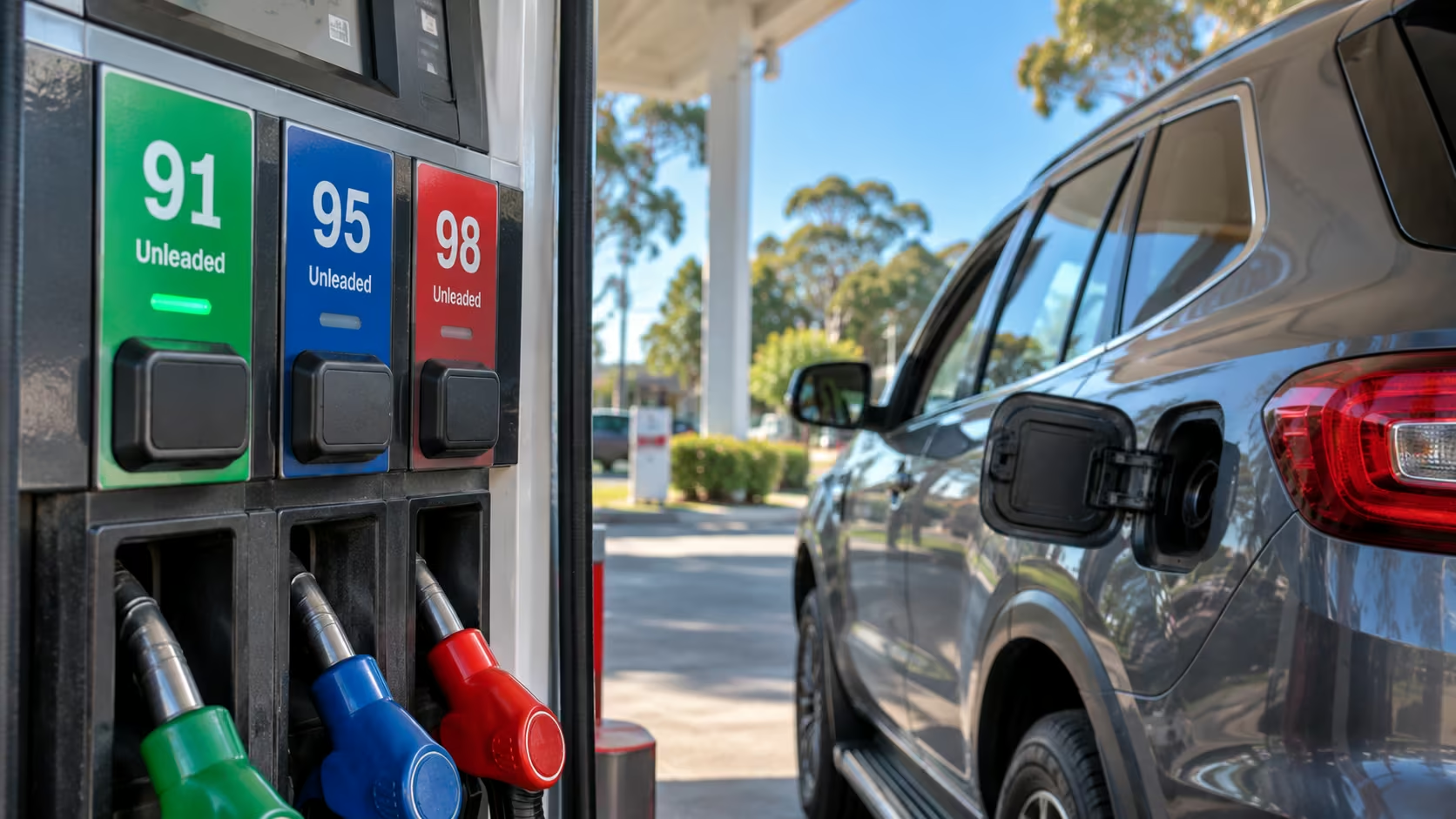
You are at the servo, fuel prices are painful, and you grab the 91 nozzle instead of the 95 or 98 your car is supposed to take. Maybe you did it to save a few dollars. Maybe you just grabbed the wrong one. Either way, now you are wondering if you have done something expensive to your engine.
One tank of the wrong octane grade is unlikely to cause lasting damage in most modern cars. But there is more to it, and there is an important difference between using the wrong grade and using the wrong fuel type altogether.
What Do the Numbers 91, 95 and 98 Actually Mean?
The number on the bowser is the Research Octane Number or RON. It measures the resistance of the fuel to knocking, which is when the fuel mixture in the engine ignites at the wrong time rather than burning smoothly.
More compression and turbocharged engines mean more heat and pressure. They require higher octane fuel to prevent premature ignition. That’s why your Euro car or turbo SUV requires 95 or 98 whereas a simple NA engine runs fine on 91. It’s not about quantity or power. “It’s about being steady under pressure.”
What Happens If You Put 91 in a Car That Needs 95 or 98?
Most modern cars have knock sensors that can detect when the fuel is detonating too early. This causes the engine computer to retard the ignition timing to protect itself. It is safe . You lose some performance and fuel economy while the engine compensates .
Probably won’t notice much around town. It shows up when you load it. Towing, climbing a long hill, merging onto a highway, or driving in very hot weather can put more strain on the engine. You may hear a slight pinging or rattling under heavy acceleration. That’s the fuel knocking. You want to stay away from that.
Will 91 Fuel Damage My Engine?
One tank is very unlikely to cause permanent damage. The knock sensor exists for exactly this situation.
However, consistently running lower octane over weeks and months can add up. This is especially true for turbocharged engines and European cars tuned for 98. These engines run tighter tolerances and rely on higher octane to operate as designed. The gap matters too. Dropping from 98 to 91 is a bigger stretch than 95 to 91, and the engine has to compensate much more aggressively.
What Should You Do If You Have Already Filled Up?
Drive slow. Don’t accelerate hard, don’t tow heavy loads and don’t drive at high speeds until you’ve emptied the tank. Next fill, put in 98 to get the average octane back up.
If the car pings or knocks under acceleration, ease off the throttle and get the right grade in as soon as you can. If it persists after swapping back or if a check engine light illuminates, get a mechanic to check it out.
Wrong Octane Grade vs Wrong Fuel Type – Know the Difference
This is an important distinction.
Putting 91 in a car that needs 95 is an inconvenience. The engine compensates, you lose a bit of performance, and life goes on.
Putting petrol in a diesel tank, diesel in a petrol tank, or AdBlue in the diesel tank is an emergency. These are incompatible fuel types that can seriously damage the fuel pump, injectors, and engine. If started on the wrong fuel type, the repair bill can run into thousands.
If you have put the wrong fuel type in your car, do not start the engine. Call Wrong Fuel Help on 0432 553 905. We provide 24/7 mobile fuel drain and recovery across Newcastle, Hunter Valley, Central Coast, and regional NSW.
Frequently Asked Questions
Can you mix 91 and 95 petrol in the same tank?
Yes. Mixing gives you a fuel somewhere in between, roughly around 93 octane depending on the ratio. It will not cause damage and is a reasonable short term approach until you fill with the correct grade.
Is it okay to put 95 instead of 91?
Yes, putting higher octane than required is perfectly fine. Your engine simply will not take advantage of the extra knock resistance, so you are paying more for no real benefit in a car designed for 91.
What if my car is making a knocking sound after using 91?
That pinging under hard acceleration is pre-ignition. Drive gently and fill with the correct grade as soon as possible. If the knocking continues after switching back, have a mechanic check the knock sensor and timing.
Will 91 fuel damage my engine long term?
Occasional use is unlikely to cause lasting damage. Consistently using lower octane over many months can increase wear, especially in turbocharged and high compression engines. Stick to the minimum rating your manufacturer specifies.
Is putting 91 in a 95 car the same as putting petrol in diesel?
No. Wrong octane grade means slightly less knock resistant fuel. Wrong fuel type means completely incompatible fuel that can seriously damage the fuel system and engine. If you have put petrol in diesel or diesel in petrol, do not start the engine and call a wrong fuel specialist immediately.