
Why Old Diesels Survived Wrong Fuel but New Diesels Do Not
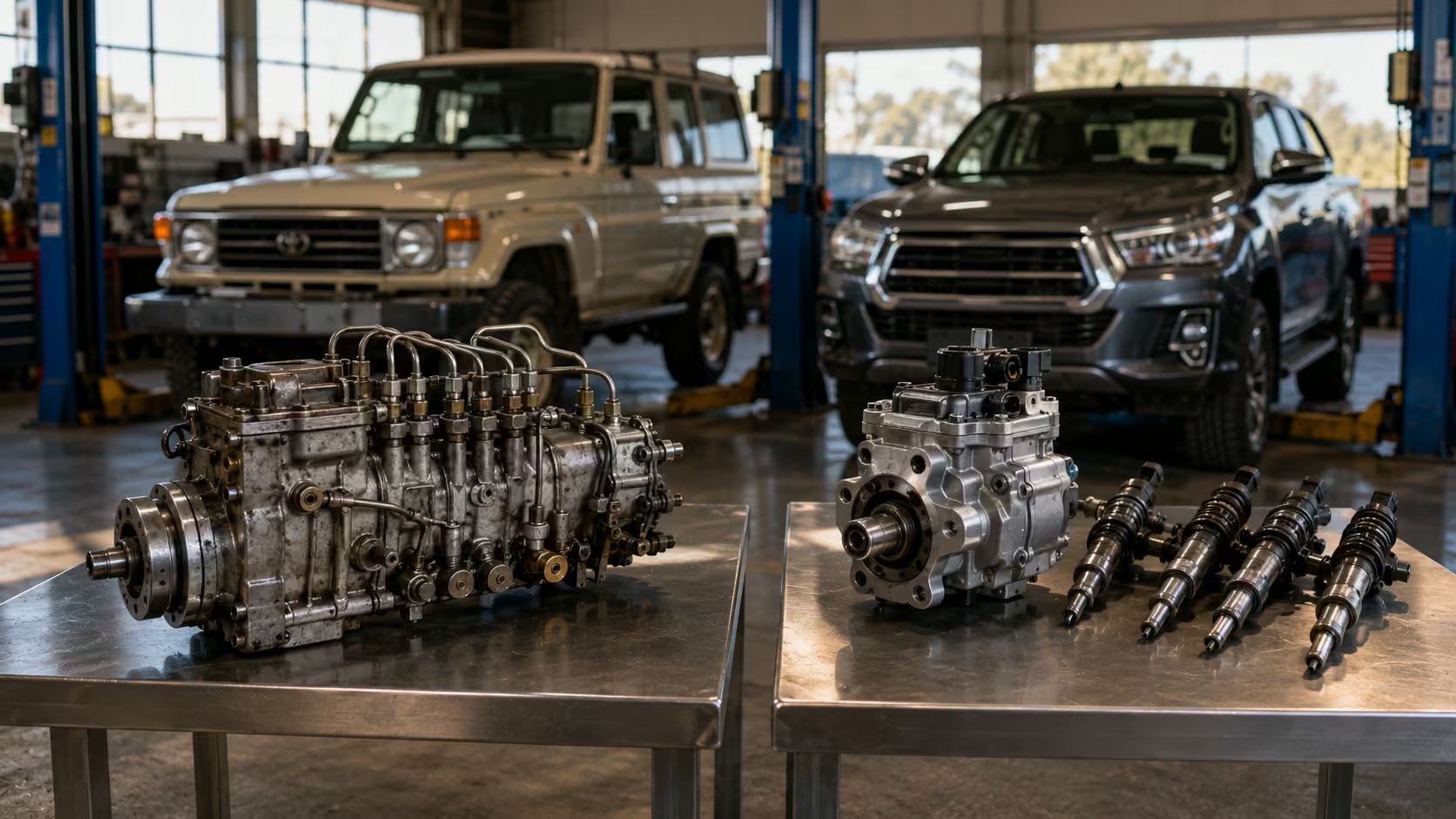
Old mechanical diesels tolerated small amounts of petrol because their injection systems ran at low pressure with loose tolerances. Modern common rail diesels do not, because petrol strips the lubrication their high pressure pumps and injectors depend on. Any misfuel in a modern diesel needs a full drain before startup.
There is a conversation I have at least once a month, usually with a bloke my age or older, usually starting with the words: mate, my old man ran his Cruiser on whatever was in the shed. And here is the thing, he probably did. That story is usually true. The problem is what people do with it, which is decide that a bit of petrol in today’s diesel is nothing to panic about, keep driving, and turn a one hour drain into a five figure fuel system rebuild. So let me give the old timers’ story the respect it deserves, and then explain exactly why it stopped being true.
The Old LandCruiser That Ran on Anything
The legend is grounded in real engineering. The diesels that built that reputation, the old Cruisers and Patrols, the tractors, the truck engines, used mechanical injection. A rotary or inline pump, driven off the engine, pushed fuel to simple injectors at pressures in the low hundreds of bar. The machining tolerances were generous by today’s standards, the injection happened once per cycle in one big squirt, and there was no computer trimming anything. Farmers in cold climates genuinely did splash petrol into winter diesel to stop it waxing, and plenty of those engines wore it for decades. When someone tells you their uncle did it for years, do not argue with them. It happened.
How Mechanical Diesel Injection Handled Petrol
Those old systems forgave petrol for three reasons. Pressure, tolerance and simplicity. At a couple of hundred bar, the loads inside the pump were modest, so a thinner, less lubricating fuel mix did not instantly grind metal on metal. The clearances between moving parts were wide enough that a slightly degraded lubricating film still did its job. And with no fine multi hole injector tips or electronic metering to upset, a fuel that burned a bit differently just meant a bit less power and a bit more smoke. Petrol still shortened the life of those pumps, make no mistake, but it shortened it over years, not minutes.
What Changed With Common Rail Diesel Engines
Then, from the late 1990s, everything changed at once. The common rail systems Bosch and others developed took injection pressure from a couple of hundred bar to well over 1,500, sometimes beyond 2,000. Getting fuel to those pressures, and metering it through injector holes finer than a human hair several times per combustion cycle, demanded components machined to tolerances measured in microns. At that precision, the engineering makes an assumption: that the fuel itself is the lubricant, coating every surface in an oily film that keeps hardened steel parts from ever truly touching. Diesel does that beautifully. Petrol does the opposite, it is a solvent that washes the film away. The very quality that made old engines merely grumble now makes new ones destroy themselves, because at 2,000 bar there is no forgiveness in the clearances at all.
Why Even a Small Splash of Petrol Matters Now
This is also why the old rule of thumb about small amounts being fine died with the old engines. In a mechanical system, ten percent petrol was a rough ride. In a common rail system, even a modest contamination thins the lubricating film across every surface of the pump and injectors while they work at full load. The wear starts the moment the engine runs, it puts metal particles into the fuel, and those particles then do their own damage downstream. Add a diesel particulate filter that was never designed to swallow the soot from poorly combusted mixed fuel, and a splash is no longer a splash. If your engine has run on any petrol at all, here is what to do when the engine has already been started, and these are the warning signs to watch for in the hours afterwards.
What This Means the Day You Misfuel a Modern Diesel
The practical takeaway is simple, and it is the opposite of the shed wisdom. Treat every misfuel in anything built this century as a stop everything event. Do not start it, do not move it under its own power, do not top it up with diesel hoping to dilute your way out, and do not let anyone talk you into running it to see how it goes, because how it goes is the most expensive experiment in motoring. A proper drain and flush before startup turns the whole event into an inconvenience. Running the engine turns it into a rebuild.
I will finish with a small confession: I love the old stories, and I never correct the uncle who ran his tractor on shed juice, because he is not wrong about his tractor. But the reason people call Wrong Fuel Help rather than reaching for the shed wisdom is that we live in the new world every working day. We know exactly which engines forgive and which do not, we drain the system before it gets the chance to hurt itself, and the phone is answered around the clock by someone who has seen your exact situation more times than any workshop in the region. New diesel, wrong fuel, engine off, 0432 553 905. The old Cruiser would approve.
FAQs
Is an older diesel still safe to drive after a misfuel?
No. Tolerance is not immunity. An older engine might survive what kills a new one, but petrol still thins the fuel, hurts the injection pump over time and can damage seals. Whatever the age of the engine, drain the tank before running it.
People used to add petrol to diesel in winter. Can I still do that?
Do not do it in anything modern. That trick belonged to low pressure mechanical engines and older fuel formulations. Today’s diesel already carries seasonal additives, and today’s injection systems cannot tolerate petrol in any quantity. Use an anti waxing additive if cold starts are your worry.
My diesel is from the early 2000s. Which category is it in?
Almost certainly the modern one. Common rail arrived in passenger diesels from the late 1990s and spread quickly through the 2000s. Unless you are driving something genuinely old with a mechanical injection pump, treat your engine as a zero tolerance system.
Does the same old versus new logic apply to diesel in a petrol engine?
Less so. Diesel in a petrol engine mainly fouls plugs, injectors and the catalytic converter rather than destroying a high pressure pump, and that has been true across generations. It still needs draining, but the stakes did not jump the way they did for diesels.