How Long Does a Fuel Pump-Out Take?
Ready to hit the Road?
Based in Newcastle, we proudly serve the surrounding areas, offering 24/7 emergency fuel drain and wrong fuel help for all your wrong fuel emergencies. Our mobile team is ready to come to your location and provide immediate help.
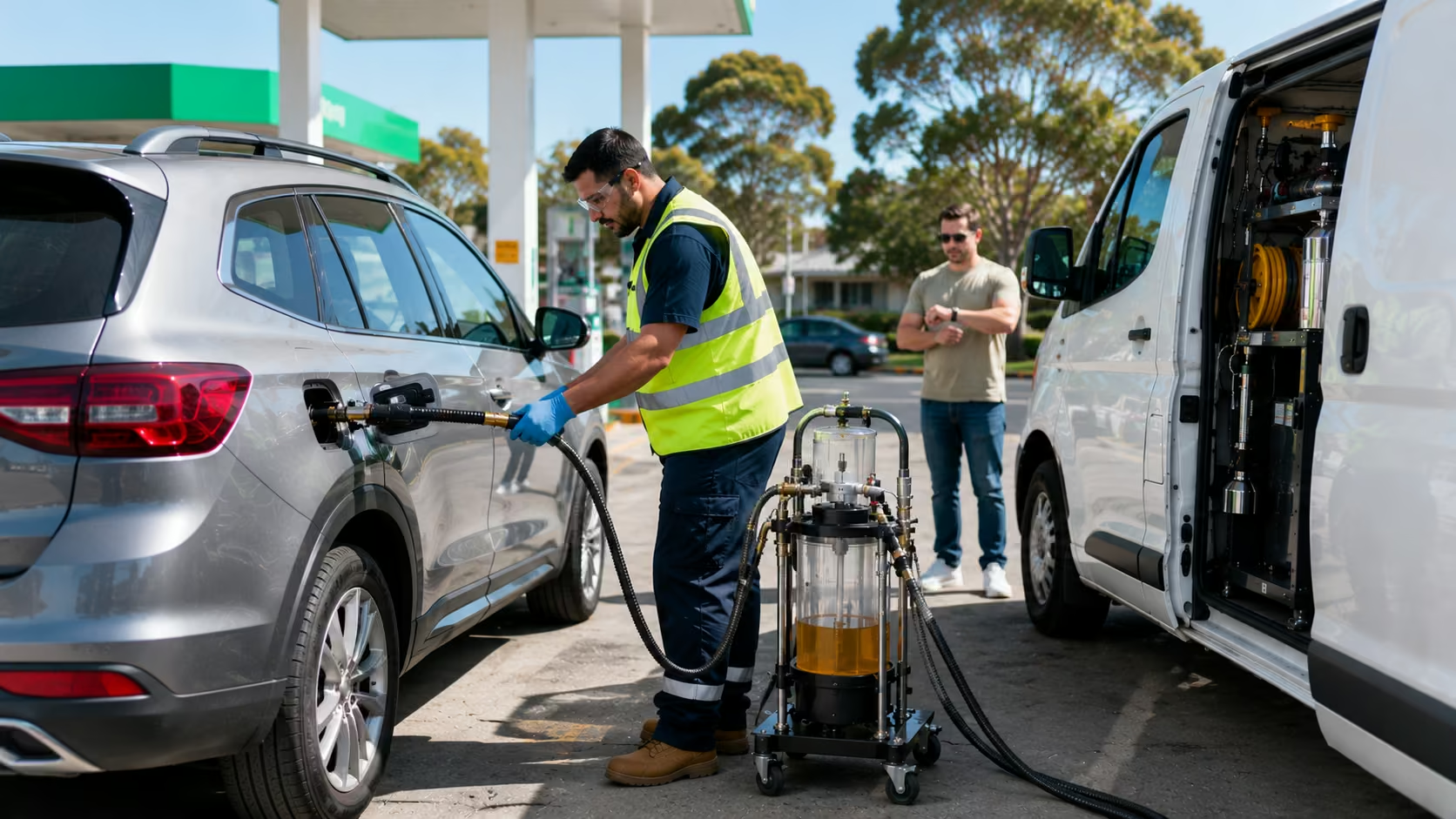
A fuel drain, or pump-out, uses a sealed pump to remove the contaminated fuel from the tank without the need to remove or drop the tank. When that tank is empty the technician will flush the other lines and the filter because there is likely still some fuel left in those when the main tank is empty. Finally, top up with the correct fuel and run the engine for a few moments to ensure that everything is moving cleanly through the system.
If you’re not sure whether a vehicle can be fixed on the roadside, read our guide to wrong fuel removal on the roadside.
Why Some Jobs Take Longer Than Others
The most important factor in how long a job takes is if the engine was started after the wrong fuel went in. If not the job is contained to the tank and immediate lines, which is the thirty to sixty minute range most jobs fall into. If the engine was running even briefly, the wrong fuel has likely reached the fuel pump and injectors, which need to be checked and sometimes cleaned or replaced, extending the job well beyond a simple pump-out.
If the contamination has entered via the fuel system, recovery time may be extended as additional cleaning and inspection is required.
Vehicle type also adds a small amount of time. More fuel tanks = more contaminated fuel to be removed. Some European diesels have more complicated fuel systems to properly access and flush.
Wrong Fuel Help will first confirm if the engine has been started, how much incorrect fuel was added and whether additional fuel system cleaning may be needed before starting any recovery. This evaluation helps to decide the recovery technique and estimated time to complete.
What Should You Do Before the Technician Arrives?
While waiting for a fuel recovery technician:
- Switch off the engine.
- Do not switch on the ignition.
- Only move the vehicle if it can be moved safely without starting the engine.
- Note the type of fuel added and the approximate amount pumped.
- Wait somewhere safe until help comes.
What You Can Do While the Job Is Underway
There’s not a lot of active stuff for you to do during a pump-out and that’s by design because the safest thing is to stay out of the engine bay and let the technician do their work without the car being touched or started by anyone else. It is worth taking the time to see if the fuel station has any record of the pump you used as this can sometimes help to confirm exactly what went into the tank if there is any doubt.
Once the recovery is complete Wrong Fuel Help will produce a written service report confirming the removal of the contaminated fuel and that the vehicle has been tested before being returned to service.
Why Recovery Time Varies
No two wrong fuel incidents are the same. The time to recover will depend on the type of vehicle, whether the engine was running, the amount of wrong fuel added and the level of contamination throughout the fuel system. There is a time pressure on technicians to perform a simple fuel pump-out before more serious repairs are needed.Recovery time depends on factors such as the type of vehicle, whether the engine was started, the amount of incorrect fuel added and how far the contamination has travelled through the fuel system. Acting quickly gives technicians the best opportunity to complete a straightforward fuel pump-out without more extensive repairs.
FAQ
Do I need to be present for the whole job?
It helps if you are nearby in case the technician has questions about what happened, but you do not need to stand over the car for the entire process.
Will the car be safe to drive immediately after?
Yes, once the technician confirms the engine is running cleanly on the correct fuel, the car is safe to drive away from the job.
Does AdBlue contamination take longer to pump out than a regular misfuel?
Yes, in many cases. AdBlue contamination may require additional flushing and inspection because it behaves differently from petrol or diesel, especially if the engine has been started.
Can a fuel pump-out be completed at the roadside?
Yes. In many cases, mobile fuel recovery technicians can safely drain contaminated fuel, flush the system and refill the correct fuel without the need for towing, provided the vehicle has not suffered extensive damage.
How long does fuel tank draining take?
Most fuel tank draining takes thirty to sixty minutes on site. The main factor is whether the engine was started after the wrong fuel went in. If it was not, the job stays contained to the tank and lines. If it ran, checks add time.