
Diesel Bug: What It Is and How It Differs From Misfuelling
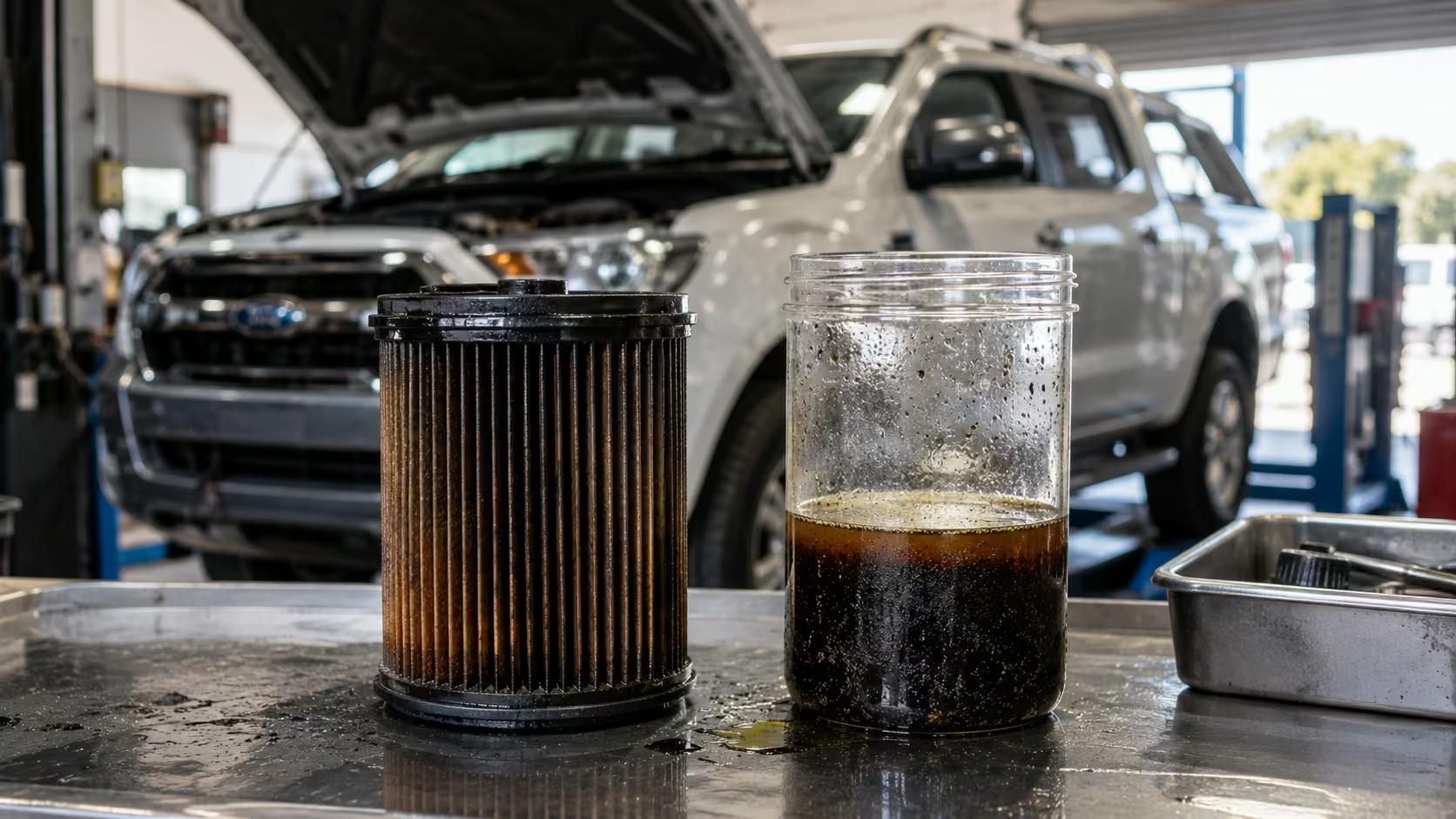
Diesel bug is microbial growth, bacteria and fungi that live in your fuel tank at the interface of water and diesel. This was the right fuel, not the misfuelling. The contamination built up in the tank over weeks or months, migrating and clogging filters and fuel lines with dark sludge.
Diesel Bug and How It Grows in a Fuel Tank
The name makes it sound like a single organism, but diesel bug is actually a mixed colony of bacteria, fungi and yeasts that live in the layer where water sits underneath diesel in a tank. The microbes feed on the hydrocarbons that float above them in the water. Given heat and time, the colony crawls along that boundary layer as a black slimy mat. Pieces of it break off into the fuel.
Water is the ingredient that makes it all possible. Water gets into diesel tanks easier than most owners expect. This is true most of the year around Newcastle and the coast, where the temperature swings from days that are warm to nights that are cool, leading to condensation on the inside walls of a part-empty tank. Add a vehicle, boat or farm tank that sits for weeks between uses and you have the perfect conditions. Modern diesel makes it a little worse, because today’s fuel contains a bit more dissolved water than the older blends.
Diesel Bug Symptoms in a Diesel Vehicle
First of all you’re looking at the fuel filter. The sludge and dead microbial matter travel with the fuel until they are caught by the filter, and a filter that clogs repeatedly, or clogs shortly after being replaced, is the classic giveaway. Before that point you could have rough running, hesitation under load, power loss that comes and goes, or an engine that starts fine one week and struggles the next.
What makes diesel bug frustrating to diagnose is that these symptoms are similar to other fuel problems. Drivers around Newcastle see warning signs very similar from the driver’s seat after a bad fill. The difference comes into play when someone actually looks at what came out of the tank or filter. Diesel bug produces a distinctive dark sludge sometimes described as resembling black jelly or coffee grounds. The fuel usually has a sour smell. That biological residue is not a bad batch of fuel or a misfuel.
Diesel Bug vs Wrong Fuel Contamination
This is important because the treatment differs. A mis-fuel is an event. The wrong product was added to the tank on a known date, the contamination is chemical, and a complete drain and flush will remove it completely. Diesel bug is an infestation. The right fuel went in, but a living colony has taken hold in the tank, and draining the fuel alone doesn’t necessarily get rid of the mat that’s clinging to the tank walls and baffles.
The other tell is timing. The symptoms of a misfuel show up within minutes or kilometres of the bad fill. The diesel bug symptoms develop slowly, and are usually found in vehicles or equipment that sit unused for periods of time; the boat pulled out a few weekends a year, the ute that lives on the farm, the caravan tow vehicle between trips. If the vehicle was fine, sat for six weeks, and came back ailing, put the bug on your suspect list..
Treating Diesel Bug in a Fuel System
Proper treatment removes both the fuel and the colony, not just one or the other. This means taking everything out of the tank, cleaning out the sludge from the tank where you can get at it, flushing the lines and replacing the fuel filter because your old filter is full of the very thing you are trying to get rid of. Here is the same process of removal, step by step, and what drives the price of the job as it would be on any contamination call out.
Biocide additives have their place, but a smaller place than the labels suggest. A biocide will kill the live microbes. Which actually is useful as a preventative dose or follow-up after a clean-out. Poured into an established infestation on its own it will turn a living colony into dead debris which still has to pass through your filters and owners sometimes end up with worse blockages in the fortnight after dosing than before.
Preventing Diesel Bug in Stored Diesel Vehicles
Water management is the key to prevention. Store tanks with liquid levels as full as possible. This minimises headspace and thus condensation. Fill up at the busiest stations where the underground tanks are turned over quickly. A preventative biocide dose before a long spell parked is cheap insurance for boats, farm tanks and sit-around vehicles. If a filter change shows dark sludge then deal with it then, rather than fitting a new filter and hoping. The colony that clogged the first filter is still in the tank, and on modern cars trying to drain and clean it yourself carries real risks, from anti-siphon damage to hazards in handling fuel.
Here at Wrong Fuel Help we cover diesel bug and fuel contamination callouts Newcastle, Lake Macquarie, Maitland, Central Coast and local surrounding areas 24/7. If your diesel has been sitting and is not running properly, call before you drive it any further.
FAQ
Can diesel bug spread from one vehicle to another?
Yes, indirectly. The microbes are present in contaminated fuel, so filling from an infected storage tank, jerry can or farm bowser will introduce the contamination to a clean vehicle. The bug does not jump between parked cars, but shared fuel sources are a common gearbox path, especially on farms and boats.
Does diesel bug affect petrol cars?
Virtually no. The microbial growth that causes diesel bug feeds on the hydrocarbons in diesel at the water interface but the chemistry and the volatility of petrol do not support the same colonies. Petrol ages in its own way, but classic diesel bug sludge is exclusive to diesel.
Will a fuel additive alone fix an established diesel bug infestation?
Hardly ever. A biocide additive kills the live microbes but the dead material has to go somewhere and it often ends up in the fuel filter along with the existing sludge. For a well-established infestation, the sure cure is to drain the contaminated fuel, clean the tank and replace the filters. A biocide is used afterwards for protection.
How quickly does diesel bug develop in a tank?
Colonies can be established in a few weeks if water is present and conditions are warm. A diesel bug really cannot get a grip at all without water so this is why condensation management and relatively full tanks during storage are more important than any additive.