Roadside Assistance for Putting the Wrong Fuel in Your Car in Newcastle, NSW
Ready to hit the Road?
Based in Newcastle, we proudly serve the surrounding areas, offering 24/7 emergency fuel drain and wrong fuel help for all your wrong fuel emergencies. Our mobile team is ready to come to your location and provide immediate help.
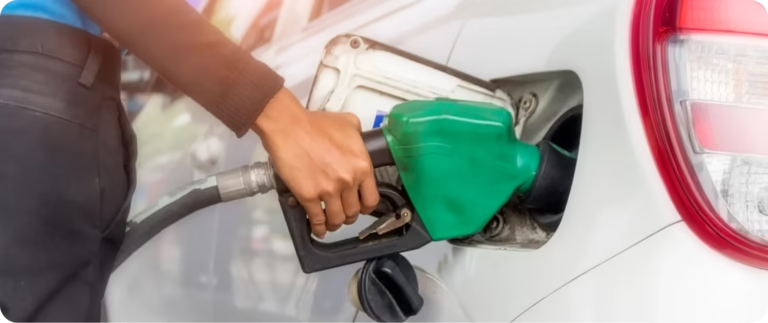
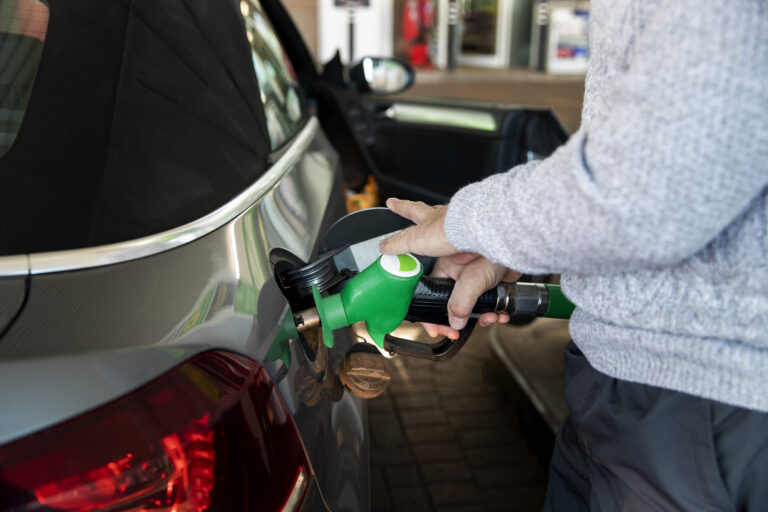
You just figured it out. Maybe you were filling up at a servo somewhere around Kotara on the Pacific Highway and the nozzle you were holding up wasn’t the one your car actually takes. And now you’re standing there with the wrong fuel in the tank, phone in hand, trying to figure out who you’re supposed to call.
Most drivers think of calling their roadside assistance membership first. NRMA, RACV, RAA, whatever card is in the glovebox. That seems like the smart move. The car’s broken down, you’ve got cover, that’s what it’s for, isn’t it?
If you’re looking for roadside assistance for putting the wrong fuel in your car in Newcastle, NSW, here’s the short version: a roadside patrol can confirm what’s happened and get a tow to the nearest workshop but they can’t drain or flush the tank on site. That’s for the team that really drags the gear for this. Many Newcastle drivers end up calling one of them anyway, sometimes after the roadside patrols have come and gone.
Here’s what each one actually means, how much it costs and what to do in the first few minutes if you’re dealing with this right now.
What NRMA, RACV and similar memberships are actually built for
Breakdown roadside assistance programs are available. Flat batteries, flat tyres, lost keys, a car that won’t start, stuck in the sand up at Stockton. The patrol vans are equipped with jump packs, tyre gear and enough fuel to get someone to the nearest servo if they have just run out.
NRMA’s own advice on wrong fuel is clear on where the queue sits. If you put the wrong fuel in do not start the engine and call for a tow to your nearest garage. And that’s all you need. The patrol can check what has happened and sort out transport but draining a tank, flushing the fuel lines and filters and refilling with the right fuel is not part of the standard call-out.
So when you call your membership about mis fuelling you’re not booking a fix. You are calling a tow truck.
A tow moves the car. It doesn’t move the fuel.
This is where a lot of people make mistakes. A tow truck shows up, hooks up to the car and hauls it off to a garage, either one you’ve chosen or the one that’s available and ready to do the job at short notice.
And then the car queues up. Workshops that do fuel contamination have to fit the drain and flush between other bookings and if it’s after hours or a weekend then that queue might not move until the next business day. But you’re out near Maitland or the Hunter Valley without a car and no easy way home.
Then there is the question of distance. Most memberships include a set number of free towing kilometres, anywhere from 25 to 100 depending on the package. If the only workshop that will take a misfuelled car at short notice is further away than that, you pay the difference. For drivers in Cessnock, Singleton or Raymond Terrace, the nearest available workshop can be a fair way from where they actually broke down.
Often you will be without your vehicle for a day or more, by the time the tow arrives, the car is dropped off, the workshop opens, the drain and flush is done and you’ve collected the car again. On top of the tow fee and what the workshop charges for labour.
What a mobile wrong fuel recovery service does instead
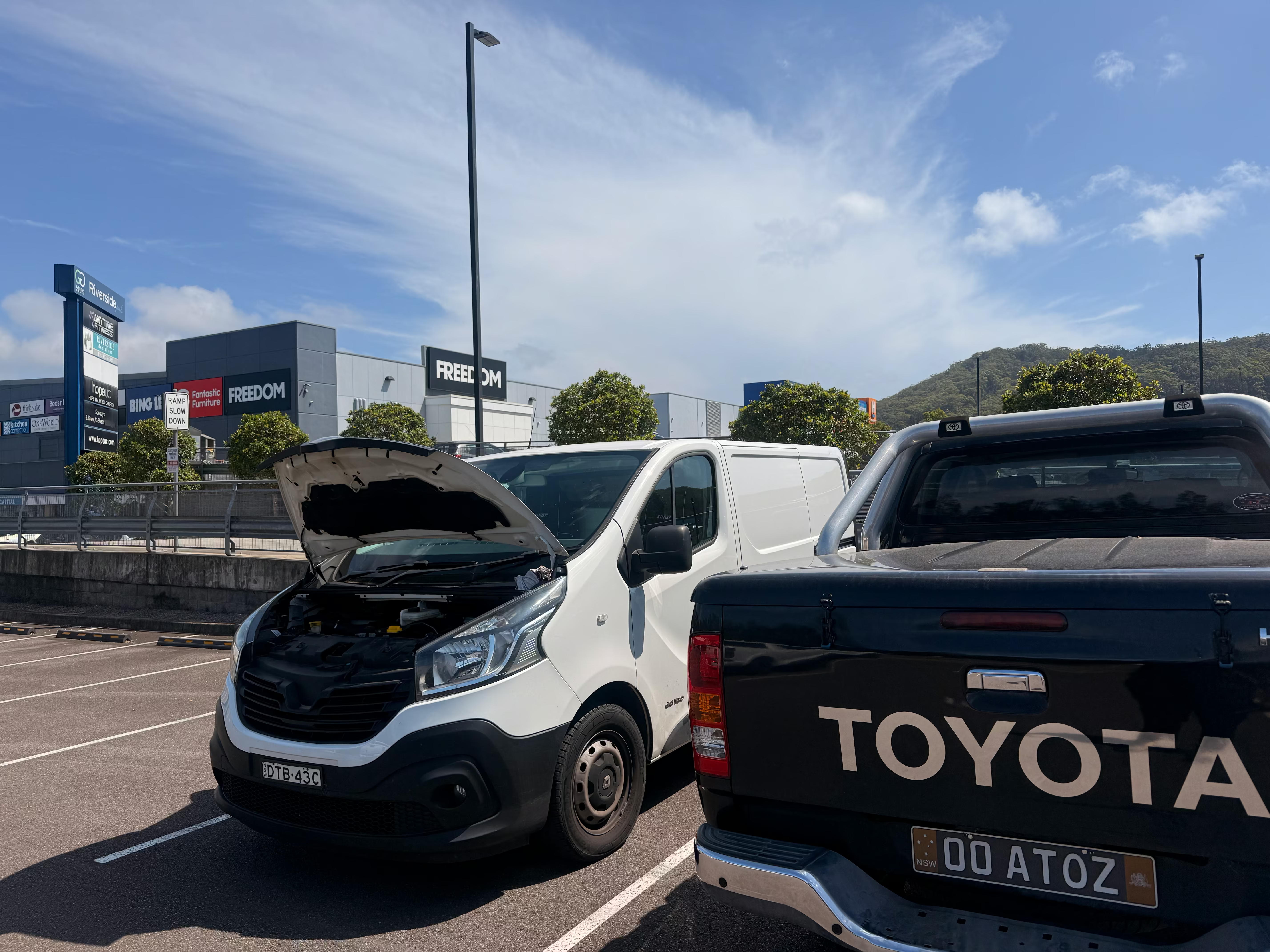
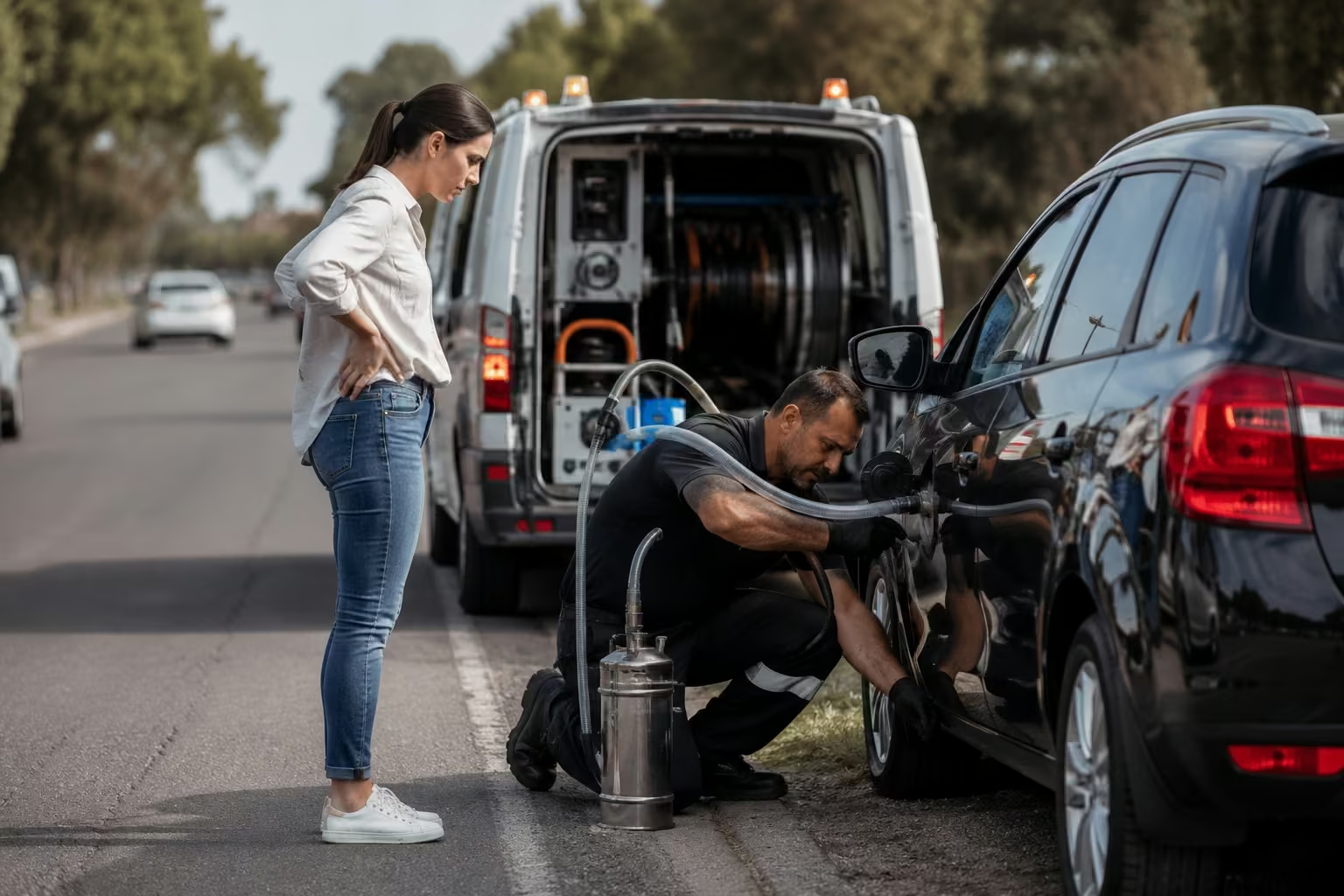
One job, getting the wrong fuel out without moving the car, is the focus of a specialist recovery service. The technician arrives at wherever it is the vehicle is, the servo forecourt, your driveway, the side of the road, with the equipment to drain the tank, flush the lines and injectors, and refill with the correct fuel on the spot.
There’s no tow, no workshop queue, no second trip to collect the car later. Most jobs around Newcastle, Mayfield and the inner suburbs are done in the hour. You get in the car on the right fuel and drive away from the same spot you called from.
This is also the reason why the result is generally so much easier if the engine has not been started. The wrong fuel is still in the tank and not in the system, so the job is quicker and the risk of any lasting damage is much lower. Once the engine has been started the steps look a little different but it’s still worth calling straight away rather than waiting.
What to actually do in the first few minutes
If you are standing at the pump and you just realised the mistake don’t start the car. Just don’t even turn the key in the ignition. If safe, put the car in neutral and get someone to help push it away from the bowser so other drivers can use the pump.
If you’re already on the road and the car starts spluttering, losing power or behaving strangely get off the road if you can. The shoulder of the Pacific Highway, a side street, a car park, anywhere out of the traffic. Engine off, hazard lights on, and stay by the car.
From there, the call you make counts. Call ring roadside assistance general and you are booking a tow and a wait. If you’re in Newcastle or the wider Hunter area, call a specialist fuel recovery service directly on 0432 553 905 and you’ll be talking to someone who can walk you through what to do while a technician is on the way.
Membership tow versus specialist callout, what it actually costs
Let’s put the money cards on the table right up front, because that’s usually the deal breaker.
If you have roadside assistance the callout itself may be covered but the tow beyond your free kilometre allowance, the workshop’s diagnostic fee, labour to get at the fuel lines or drop the tank and any filters or parts that need replacing all add up as separate charges. You are a member but none of that is covered.
One job, one upfront quote for a specialist drain and flush call out. There is no towing line item because nothing gets towed. There is no separate workshop labour charge because the work takes place on site. In most cases of petrol in diesel or diesel in petrol where the engine hasn’t been run this usually ends up cheaper overall than going down the membership route and takes a fraction of the time.
If you’ve already called roadside assistance
Some drivers dial up their membership out of habit before they think to look for a specialist, which is quite understandable when you’re standing at a servo feeling like you’ve just done something expensive.
If a patrol has attended to confirm it’s wrong fuel but hasn’t yet towed the car, it’s worth ringing a specialist recovery service before agreeing to the tow. Most of the time the drain and flush can be done right there, on the spot where the patrol is standing, thus eliminating the need for the tow.
If the car is already at a workshop, sometimes a special team can directly go to the workshop to do the drain instead of waiting for the general queue of that workshop. Depending on what’s already arranged, it’s worth a phone call to see before you settle in for a long wait.
Conclusion
Getting the wrong fuel in your car can be a stressful experience but the right approach can save you time and money. Roadside assistance memberships are useful for many types of breakdowns, but wrong fuel incidents will usually require specialist fuel recovery rather than a tow truck. Wrong Fuel Help is a professional 24/7 mobile fuel recovery service providing prompt assistance to drivers in Newcastle and the Hunter Region with contaminated fuel removal solutions to get them back on the road as soon as possible.
Frequently Asked Questions
Will calling a specialist instead of using my roadside assistance affect my membership?
No. Roadside assistance memberships and specialist fuel recovery services are completely separate things. Choosing not to use a tow for this particular incident doesn’t affect your membership status, and you can still use it for any other breakdown in future.
I don’t have roadside assistance at all. Can I still get help?
Yes. Specialist fuel recovery doesn’t require any membership or sign-up. You call, you get a quote, and a technician comes out, much the same as calling a locksmith or an electrician.
Will my car insurance cover any of this?
It depends on the policy, and most standard comprehensive policies treat misfuelling as driver error rather than something they’ll pay out for, particularly once the engine has been started. It’s worth checking your policy wording, but don’t hold off calling for help while you wait on an answer from your insurer. The cost of recovery is usually small compared to the cost of engine damage from waiting.
What if the wrong nozzle was hard to tell apart from the right one?
This happens more often than people expect, especially at servos where the diesel and unleaded nozzles look similar or are positioned close together. If you think the signage or pump labelling played a part, it’s worth taking a photo of the bowser and keeping your receipt before you leave. It won’t change what needs to happen with the car, but it’s useful information to have on hand if you decide to raise it with the fuel retailer afterwards.