How to Avoid Putting the Wrong Fuel in Your Car
Ready to hit the Road?
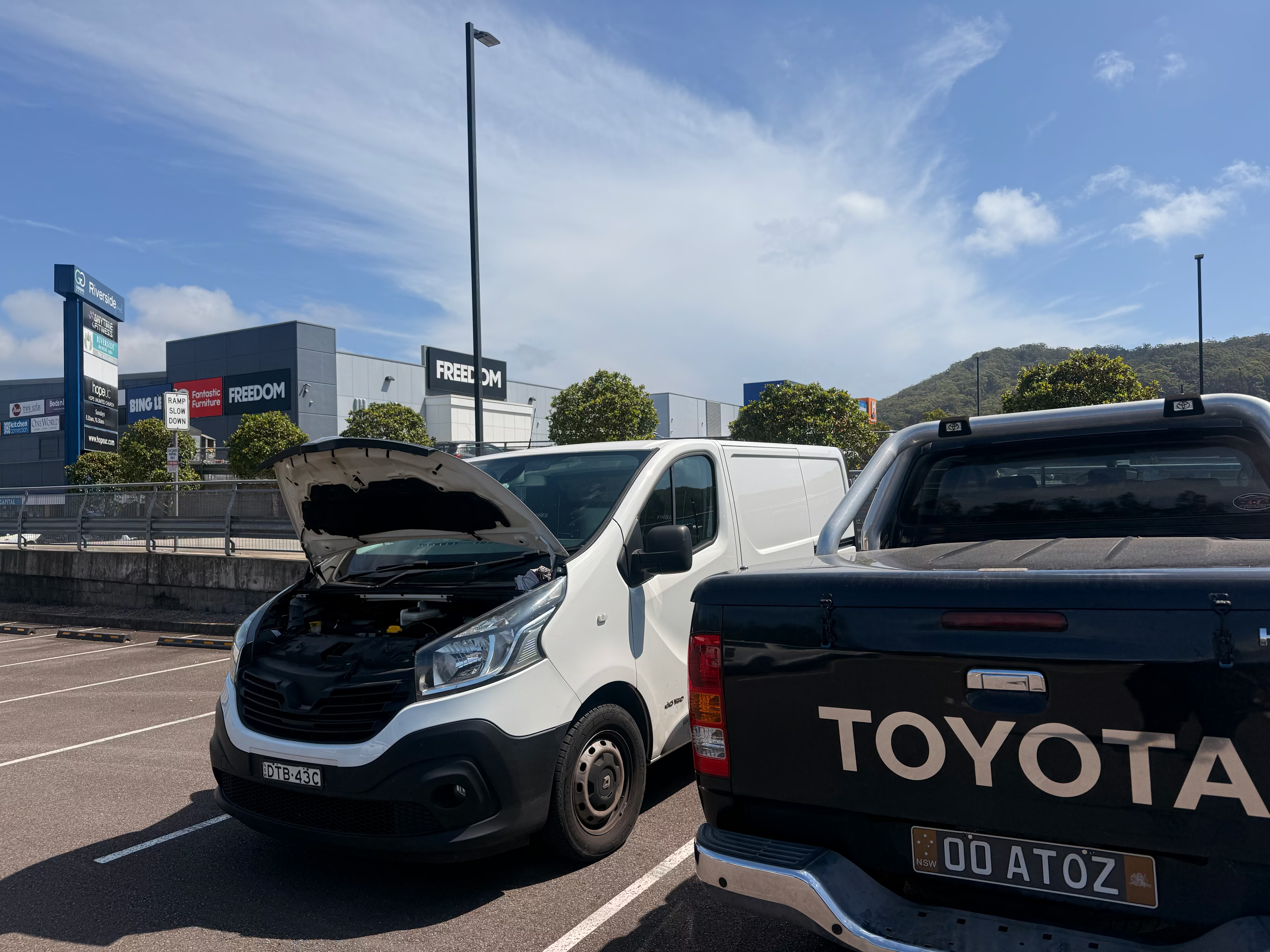
Based in Newcastle, we proudly serve the surrounding areas, offering 24/7 emergency fuel drain and wrong fuel help for all your wrong fuel emergencies. Our mobile team is ready to come to your location and provide immediate help.
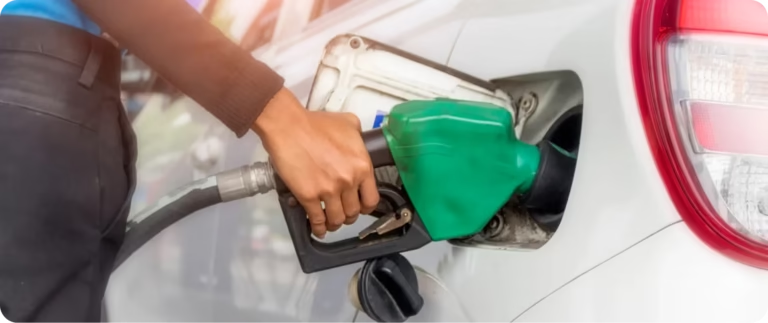
To avoid putting the wrong fuel in your car, know which fuel your vehicle takes before you arrive, read the words on the pump rather than trusting the colour, and check the nozzle against your filler cap label before you squeeze the trigger. Distraction causes most misfuels.
At Wrong Fuel Help we get called out to misfuels every week of the year, and here is the thing almost nobody expects: the people it happens to are not careless. They are ordinary, competent drivers having an ordinary day. That is what makes this worth five minutes of reading, because if being careful were enough on its own, our phone would barely ring. What actually stops a misfuel is not care, it is a couple of small habits that survive a bad morning, and none of them take longer than a few seconds at the pump.
Why Misfuelling Happens to Careful Drivers
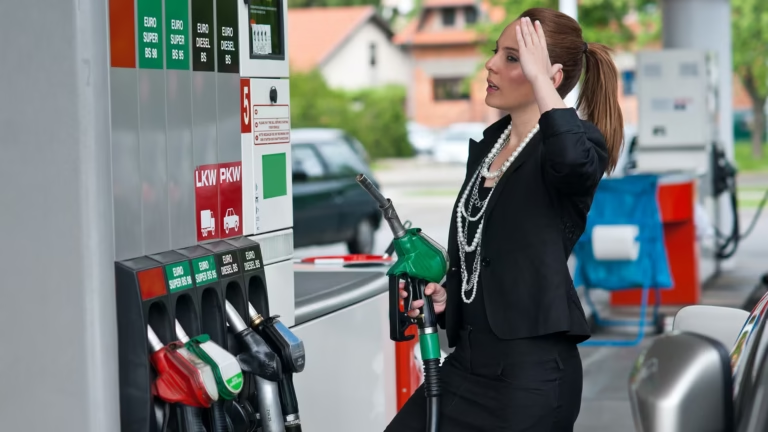
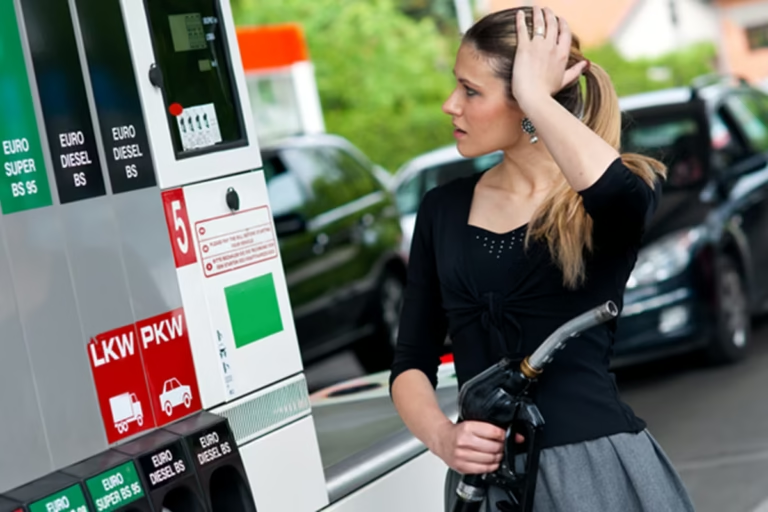
Filling up is one of the most automatic things we do. You have done it hundreds of times, your hands know the routine, and your brain quietly checks out and starts thinking about work, the kids or the drive ahead. Autopilot is brilliant right up until something in the pattern changes, and then it just keeps running the old habit. That is why the misfuel almost never happens on a normal day in your normal car at your normal servo. It happens the week you change vehicles. It happens in the hire car at the end of a flight. It happens when you borrow your partner’s diesel and your hands reach for the nozzle you have used for a decade. It happens on the phone, with a queue behind you, in the rain, at the end of a long shift. Every one of those situations has the same shape: routine plus one small change, and nobody stopped to think.
Know Which Fuel Your Car Takes Before You Get to the Pump
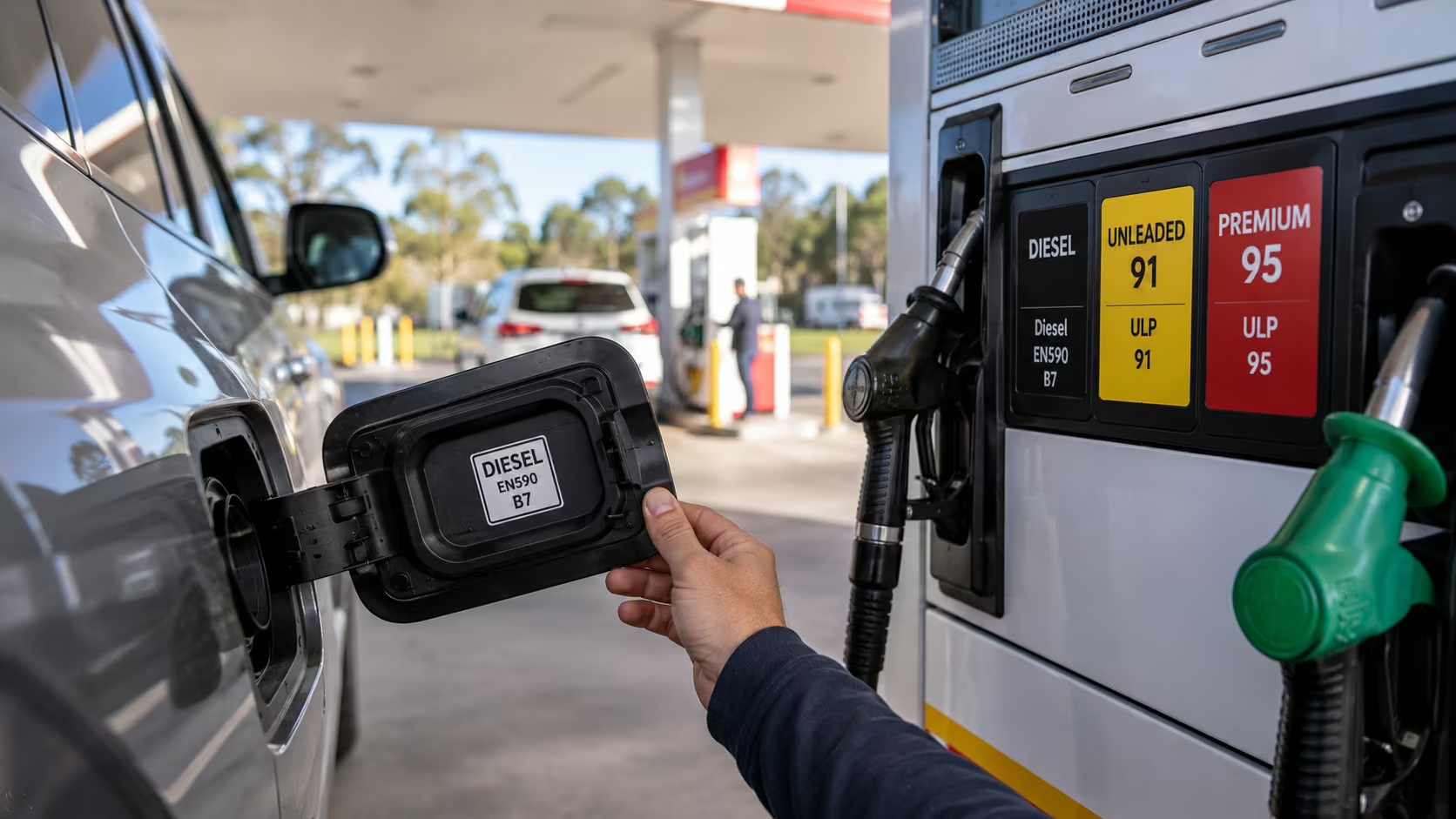
Sounds obvious, and yet plenty of people cannot say it with certainty about a car they have owned for a month. Settle it once, at home, when there is no pressure. The label inside your fuel flap is the first place to look, and most cars state the fuel there in plain words. If it is missing or worn off, the owner’s manual will tell you in one index lookup, and if the manual has vanished, which happens with most second hand cars, your dealer can confirm it from the VIN in about thirty seconds. Then say it out loud once so it sticks, because the driver who knows the answer without thinking is not the driver we get called out to.
Read the Words on the Pump Instead of the Colour
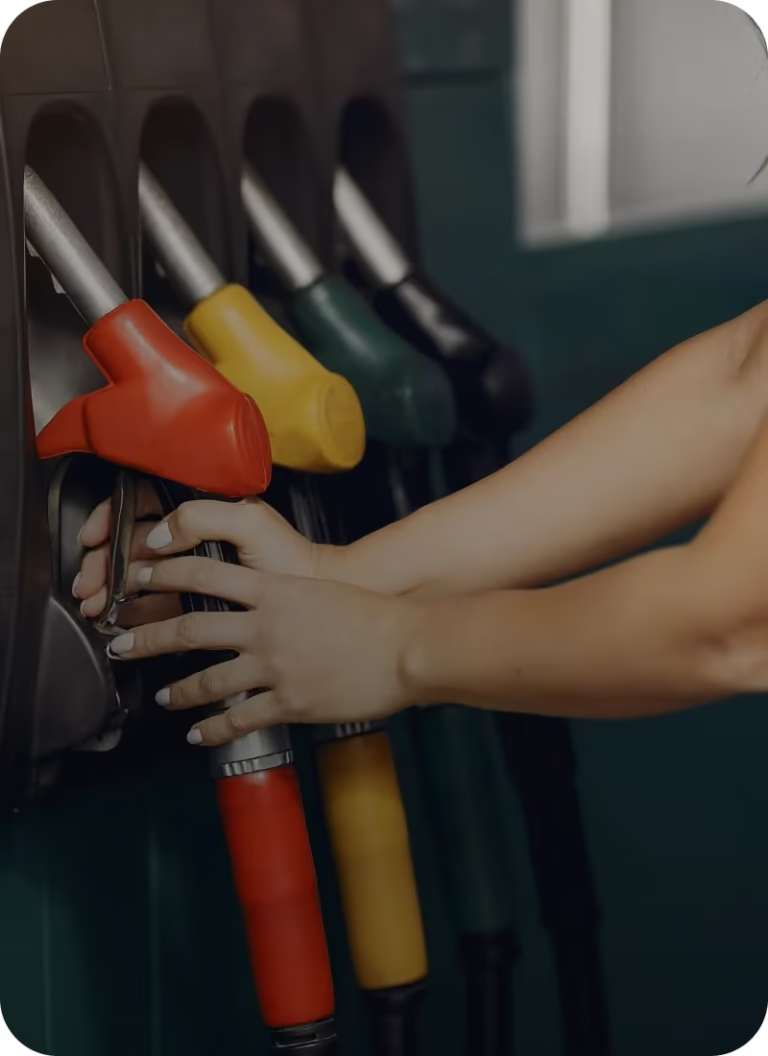
Here is the mistake that catches switchers most often. Australia has no single legal colour scheme for fuel nozzles and handles, and the conventions vary between brands and even between old and new sites of the same brand. What is black at one servo is not guaranteed to be black at the next one down the highway, and the labelling and grade information you rely on sits under the federal fuel quality rules rather than a colour code you can memorise. So build the habit around words, not colours. Read the label on the pump itself, then read the label on your filler cap, then fill. Two seconds, two labels, and it works at every servo in the country regardless of what the handle looks like.
The Nozzle Size Trap That Catches Diesel Drivers
There is a piece of built in protection at the bowser, and it only protects half the drivers on the road. Diesel nozzles are made wider, roughly 25 millimetres against about 21 for unleaded, and most petrol cars have a restrictor in the filler neck sized to keep that bigger diesel spout out. That is why diesel in a petrol car is the rarer mistake. The catch is that the protection does not run both ways: the slimmer petrol nozzle slides into a diesel filler with nothing to stop it, which is exactly why petrol in a diesel is the one we attend most, and why it is also the more damaging direction. If you drive a diesel, accept that the bowser will not save you and the habit has to. And if you drive a petrol car, do not lean on that restrictor either, because older vehicles, worn parts and non standard hardware all weaken it, and a nozzle that seems to be going in with a bit of persuasion is telling you something is wrong.
Simple Habits That Prevent Wrong Fuel at the Servo
None of this is complicated, it is just deliberate. Put the phone down before you get out of the car, because a distracted fill is where most of these start. Do the two label check every single time, even in the car you have driven for years, because the day you skip it is statistically the day you are driving something different. Never let someone talk to you through a fill, and if you do get interrupted, restart the check rather than picking up where you think you were. If you have a diesel and a petrol car in the household, a bright sticker on each filler flap costs nothing and gives your eyes something to catch on. There are also aftermarket misfuel prevention devices that fit inside a diesel filler neck and physically refuse the wrong nozzle, which are worth a look if you or someone in the family has already had a close call.
Extra Care With Hire Cars, Borrowed and New Vehicles
Unfamiliar cars deserve their own rule, because they account for a serious share of the calls we take. Check the fuel type before you leave the rental desk, the dealership or your mate’s driveway, not at the pump three hundred kilometres later. Take ten seconds to look inside the filler flap while the car is parked and calm. If a hire car has been swapped mid trip, check again, because the replacement is often a different drivetrain to the one you booked. And if you lend your own car to someone, say the fuel type out loud as you hand over the keys. It feels like fussing. It is a lot less fussing than the alternative.
What to Do If You Put the Wrong Fuel in Anyway
Habits fail sometimes, and if this has already happened to you today, the rest of this article can wait. Do not start the engine, do not turn the key to accessory, and do not move the car under its own power, because everything that stays out of the engine is damage that never happens. Do not try to dilute it by topping up with the correct fuel either. Tell the servo staff, then arrange a professional drain and flush before the engine runs. If you have already started it or driven off, the situation changes but it is far from hopeless, and this is the right sequence to follow from there. If you are still not certain what has happened, the full step by step rundown is here.
I will be honest about why we write pieces like this, because it probably sounds strange coming from a business that gets paid when this goes wrong. The drivers who read an article like this and never need us are the ones we would rather create. But when it does happen, and it happens to good drivers constantly, the thing that decides how your day ends is who you ring in the first ten minutes. Wrong Fuel Help answers around the clock, comes to the servo rather than making you go anywhere, and drains the tank properly on the spot instead of leaving you to explain the situation to a workshop queue in the morning. Save 0432 553 905 in your phone now while you are thinking about it, keep the two label habit, and with any luck the number just sits there unused.
FAQs
Does a car have a sensor that warns you about the wrong fuel?
No. There is no wrong fuel sensor in a normal car, and nothing on the dash lights up while the tank is filling. The vehicle only reacts once the wrong fuel reaches the engine, which is well past the point you wanted to know about it.
Is the service station responsible if I use the wrong pump?
At a self serve bowser the choice of nozzle is the driver’s, so the servo is generally not liable for a misfuel. Tell the staff anyway. They deal with this regularly, they can help you move the car without starting it, and they will know to keep the bay clear.
Do misfuel prevention devices fit every car?
No. Most are designed for diesel filler necks, and fitment varies by make and model, so check that a device is listed for your exact vehicle before buying one. They also do not help when fuel is poured in from a jerry can rather than a bowser.
What should you do if you notice mid fill that you have grabbed the wrong nozzle?
Stop immediately, put the nozzle back and do not start the engine, not even to move off the bowser. A few litres still needs draining, but a tank that has never been run through the engine is the quickest and cheapest version of this problem to fix.