
What to Do If You Put the Wrong Fuel in a Tractor or Farm Machine
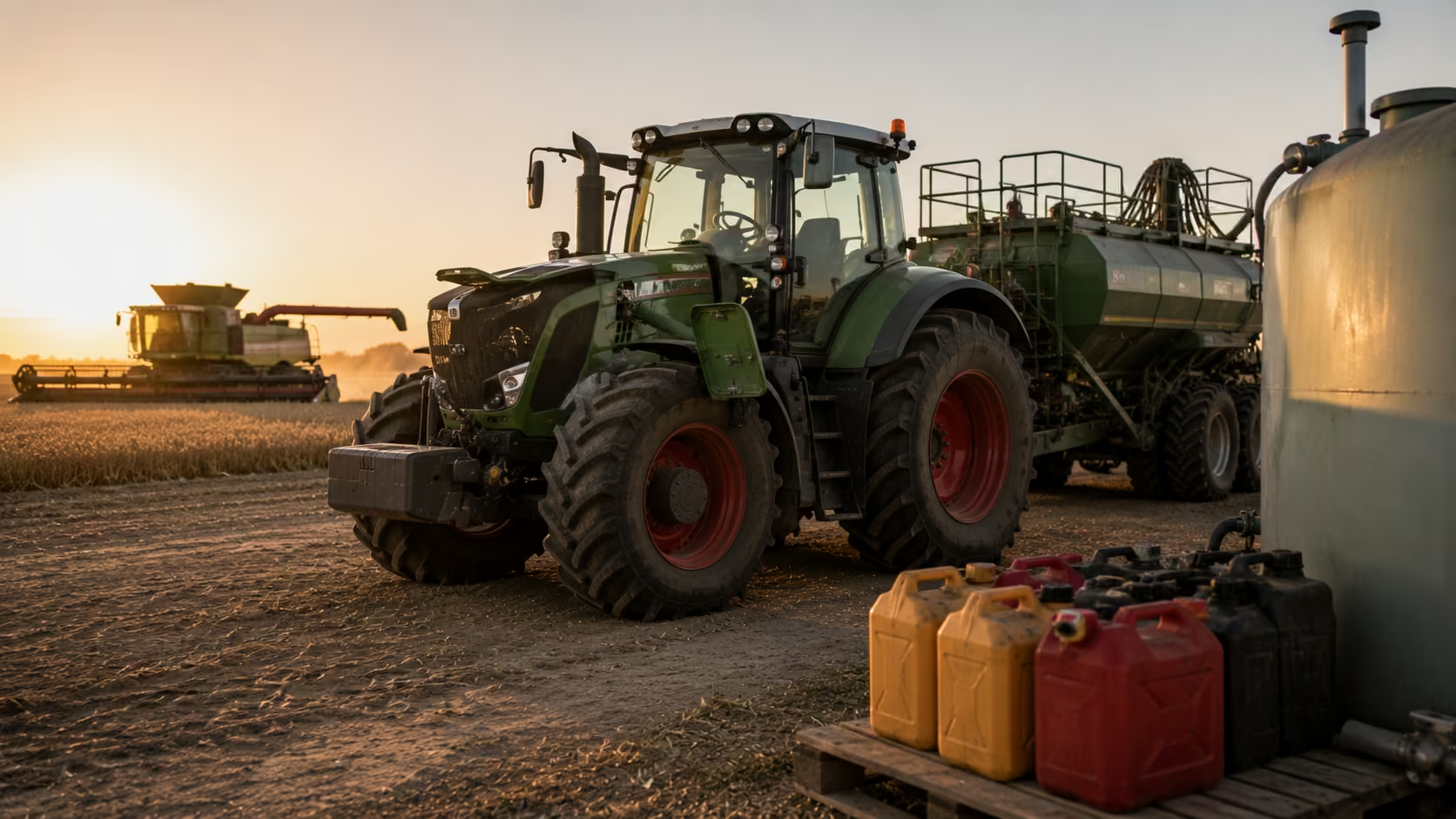
If you put the wrong fuel in a tractor or farm machine, shut it down and do not restart it. Modern farm machinery runs the same high pressure diesel systems as new utes, so the fix is the same: a full drain and flush, done where the machine stands.
Farm misfuels are different from servo misfuels in almost every way except the chemistry. Nobody is standing at a bowser with the right nozzle labelled in green and black. It is a transfer pump on a 1,000 litre cube, a drum with a hand pump, a jerry can grabbed off the shelf in a dark shed at half past five in the morning, and half the time the person fuelling the machine is not the person who owns it. When it goes wrong, the machine is not conveniently parked at a service station in town, it is halfway down a paddock with work waiting on it. Here is how it happens, why the new gear is far less forgiving than the old gear, and how the fix comes to you rather than the other way around.
How Wrong Fuel Ends Up in Farm Machinery
Every farm we have worked on runs a mixed fleet: diesel tractors and headers, petrol quads and pumps and chainsaws, a diesel ute and someone’s petrol car, all fuelled from the same corner of the shed. That corner usually holds a bulk diesel tank, a drum or two, and a family of jerry cans in various states of labelling. The mistakes come from exactly where you would expect. The unleaded can that looks identical to the diesel can. The worker or seasonal hand who has never fuelled that particular machine before. The transfer hose that reaches both the tractor and the quad parked next to it. Fuel handling guidance for farms exists for fire and health reasons, but the same housekeeping, labelled containers, separated storage, one person responsible for fuel, is also your best misfuel prevention. And when the machine belongs to the business rather than the person fuelling it, the aftermath has its own wrinkles, which we covered in our piece on what happens when an employee fuels a work vehicle wrong.
Modern Tractors Run Common Rail Diesel Too
The forgiving old farm diesel is the reason farm misfuels get underestimated. Grandad’s tractor with its mechanical injection pump genuinely could wear a splash of petrol and grumble on, and that memory is still doing damage today. A current John Deere, Case IH, New Holland or Kubota runs high pressure common rail injection with the same micron level tolerances as a new Hilux, and many carry particulate filters and AdBlue systems on top. Petrol in that fuel is a solvent stripping the lubrication off components that cost more than most second hand utes. The moment you realise the wrong fuel has gone in, the engine stops being a tractor and becomes a countdown: everything is recoverable while it is off, and every minute of running shortens the odds. Shut it down where it stands. If it has already been run and you are unsure, these are the early signs to watch for.
Wrong Fuel at Harvest and the Real Cost of Downtime
On a farm, the repair bill is rarely the biggest number. A header stopped mid harvest with weather coming, a tractor down during sowing, a pump out of action while stock need water, that is where the money really goes, and it is why the temptation to just run it and finish the job is so much stronger on a farm than at a servo. Resist it. A drain done today where the machine stands costs you hours. A high pressure pump chewing itself up in the middle of the paddock costs you the machine for weeks, at the exact time of year you cannot spare it, plus freight both ways to a dealer workshop. The fastest way through harvest is the boring way: shut down, drain, refuel, carry on.
When the Farm Storage Tank Is the Problem
Sometimes the machine is only the symptom. If the wrong fuel went into your bulk storage, or a delivery was wrong, or water and sediment have built up in an old tank, then every machine fuelled from it is in the firing line, and draining one tractor fixes nothing. The tell is a pattern: two machines running rough in the same week, or trouble that starts right after a delivery or a new drum. In that case stop fuelling from the suspect tank immediately, keep track of which machines drank from it and when, and get the tank itself tested and cleaned along with the machines. That storage side of the job is the same recovery process we use for spoiled and mixed fuel in cars, scaled up to farm tanks and multiple machines in one visit.
The Fix That Comes to the Paddock
Here is the part that matters most for a farm: you cannot tow a header to town, and you should not have to. The machine gets drained and flushed exactly where it stopped, in the paddock, the machinery shed or the yard, the contaminated fuel leaves in our sealed containers as our problem rather than something sitting in drums behind your shed, and the machine goes back to work the same day in most cases. Tell us what the machine is when you call so the right gear is on the van, big tanks and odd filler positions do not scare us, we plan for them.
Farmers tend to fix things themselves, and honestly, half of you could probably rig up a drain if you had to. The reason to call Wrong Fuel Help instead is not that you could not, it is that we do this every day, we know which machines hide fuel where, we carry the capacity to do a bulk tank and three machines in one visit, and when we leave there is nothing left to deal with, no contaminated fuel to store, no doubt about whether the system is actually clean, no gamble on a pump worth more than the ute. One call to 0432 553 905, keep the machine off, and get on with the hundred other jobs the day was already holding.
FAQs
What about petrol quads and side by sides on a diesel farm?
Mixed fleets are exactly why farm misfuels happen, and the small machines get hit too. Diesel in a petrol quad fouls the plugs and it will not run properly until the tank and carburettor are cleared. Same rule as the big gear, do not keep cranking it, drain it.
Can I filter the petrol back out of the diesel?
No. Petrol and diesel mix completely at a molecular level, so no filter, funnel or settling time will separate them. Anything that promises otherwise is wasting the hours you could spend getting the machine properly drained and back to work.
Can the drained fuel go back into the farm storage tank?
Never. The drained mix is contaminated and it stays contaminated, and tipping it back into storage turns one machine’s problem into every machine’s problem. It leaves in sealed containers for proper disposal, and the storage tank only ever receives known clean fuel.
Do you come out to rural properties?
Yes, that is the whole point of a mobile service. We regularly work on properties across the Hunter and surrounding regions, and a machine in a paddock or machinery shed is no harder to reach than a car at a servo. Tell us what the machine is and where it sits, and we will bring the right gear.