What Happens If Someone Puts Sugar in Your Fuel Tank
Sugar does not dissolve in petrol or diesel, so it cannot caramelise inside your engine the way the legend claims. It sinks and sits at the bottom of the tank, where the real risk is granules blocking the fuel pickup and filter. The fix is a tank drain, not a new engine.
Pour sugar in the tank and the engine turns to toffee. It is one of the oldest revenge stories in motoring, it shows up in films and pub arguments and in most of what has been written about it online, and it has been wrong for about seventy years. If you have landed here because you have found something around your filler cap, or because somebody has told you your engine is finished, take the worst of it away first: the toffee story is chemically impossible. That does not mean nothing has happened to your car. It means whatever has happened is far more fixable than the internet told you, and this is what Wrong Fuel Help would check first.
Where the Sugar in the Fuel Tank Myth Came From
The legend is old, and like most durable myths it grew out of something real. Back in the days of carburettors and simple fuel systems, cars did occasionally get sugared and did occasionally stop running. The owner would find the car dead, the mechanic would drop the tank, find gritty sludge in the bottom and around the pickup, clean it all out and hand the car back running fine. The car stopped, sugar was in it, so sugar must destroy engines. What actually happened was much less dramatic, and the retelling got more dramatic every time the story was passed on until it arrived at melted toffee and a seized engine. Films and revenge stories did the rest.
What the Science Says About Sugar and Petrol
Somebody eventually tested it properly. In 1994 a forensic science professor at Berkeley, John Thornton, tagged sugar with radioactive carbon so he could trace exactly how much of it ended up dissolved in petrol, mixed it in, spun it in a centrifuge and measured the result. The answer was almost none: the equivalent of less than a teaspoon across roughly a full tank of fuel. Sugar is not soluble in petrol the way it is in your tea, and it is no more soluble in diesel. It does not dissolve, so it cannot travel through the fuel lines as a liquid, and it cannot caramelise in the combustion chamber, because it never gets there. The toffee story is chemically impossible, and that is the single most useful thing to know if this has just happened to you.
The Real Risk Is a Blocked Fuel System
Here is what genuinely happens instead. The granules go in and sink, because they are heavier than fuel, and they settle at the bottom of the tank. That is unfortunate, because the bottom of the tank is exactly where the fuel pickup sits. Now you have an abrasive, granular substance sitting around the pickup, ready to be drawn toward the pump strainer and the fuel filter, and that is where the trouble comes from. It is the same class of problem as sand or grit in the tank, not a chemical attack. The symptoms are the symptoms of fuel starvation: hard starting, stalling shortly after starting, rough running under load, or simply a car that turns over and will not fire. Your filter is doing its job in that situation, and a blocked filter is a far better outcome than the alternative.
Signs Someone Has Tampered With Your Fuel Tank
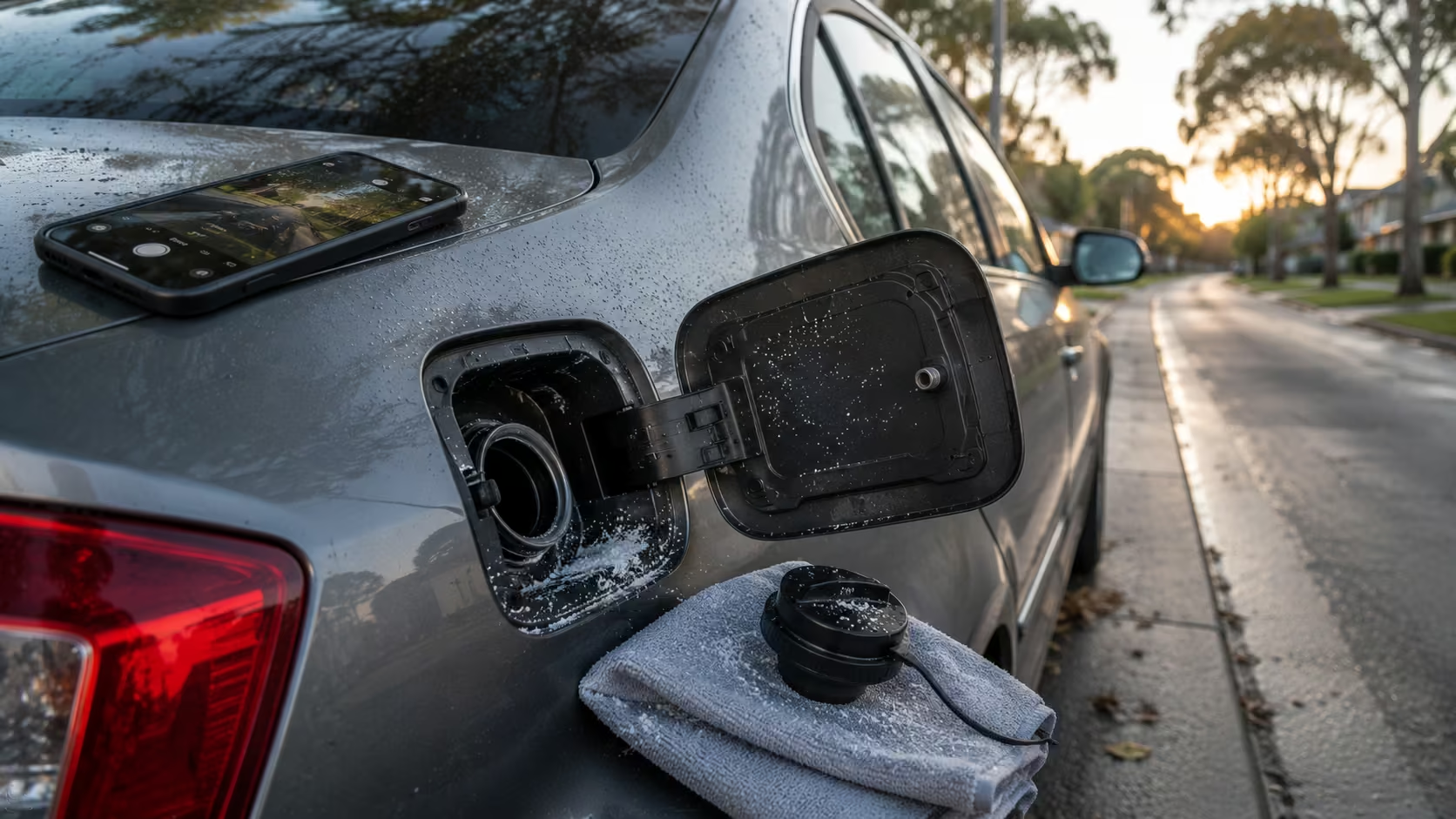
If you suspect it, look before you drive. Sugar is messy stuff to pour in a hurry at night, so there are often granules or a sticky residue around the filler neck, on the flap, or streaked down the paint below it. A fuel cap left loose, cross threaded or sitting differently to how you leave it is worth noticing. On a car with an exposed filler, scratching around the cap is another tell. Take photographs of anything you find before you touch it or wipe it off, because those photos matter later for both the police and the insurer. And if you find evidence, the sensible next move is making a report to police, not a conversation over the fence.
What to Do If You Think Sugar Is in Your Tank
The rule is the same as every other contamination we deal with, and it is the whole ballgame: do not start the engine. While the tank sits still, everything that went in is still in the tank, and the pump has never had the chance to pull it toward the filter. Every start after that is an invitation. Do not try to top it up with fuel to dilute it, because sugar does not dilute, it just gets stirred. Do not go poking around in the filler neck with anything either. Get the tank drained and the system checked, and in the great majority of cases that is the end of it: the fuel goes, the granules go with it, the filter gets replaced if needed and the car drives away. The drain and clean process is the ordinary job we do daily, and what shapes the cost is set out here so you know before you ring. If you have already started it and it ran badly, this is the right sequence from that point.
Why the Cause Is Often Something Else Entirely
Now the part worth saying before anyone gets accused. A car that suddenly will not start feels personal, and the mind reaches for sabotage fast. The trouble is that the ordinary causes produce exactly the same symptoms: water in the tank, a poor tank of fuel, a tiring fuel pump, or a filter that was overdue anyway. None of those leave granules around the filler neck, and every one of them looks identical from the driver’s seat. An accusation is hard to take back once it is made, so let somebody look at what actually comes out of the tank before you decide what happened.
That is the value in having the fuel itself looked at rather than guessing or going straight to a workshop queue. A drain tells you what is actually in the tank, not what the internet says should be, and we will say so plainly if the answer is nothing sinister and the car simply needs a filter. Wrong Fuel Help comes to wherever the car is sitting, drains and cleans the system on the spot, and leaves you with a written record of what was found, which is exactly what your insurer or the police will want if this does turn out to be someone’s idea of a joke. Call 0432 553 905 any time, and leave the engine off until we get there.
FAQs
Is putting sugar in someone’s fuel tank a crime in Australia?
Yes. Deliberately interfering with another person’s vehicle is criminal damage regardless of whether the engine is harmed, and the cost of draining and cleaning the tank is a real loss you can document. Report it to police rather than treating it as a prank between neighbours.
Does a locking fuel cap actually help?
It does, and it is the cheapest deterrent available. Most modern cars already release the flap from inside the cabin, which stops casual access when the car is locked. On older vehicles with an exposed filler, a locking cap removes the opportunity entirely.
Will insurance cover damage from someone tampering with my tank?
Malicious damage by another person is a different situation to a mistake you made yourself, and comprehensive policies often respond to it. You will generally need a police report and an invoice for the work, so make the report before the repair rather than after.
Does sugar behave differently in a diesel tank?
Not meaningfully. Sugar does not dissolve in diesel any more than it does in petrol, so it settles the same way and creates the same blockage risk at the pickup and filter. The response is identical: leave the engine off and have the tank drained and checked.