Which Cars Use AdBlue in Australia and How to Know If Yours Does
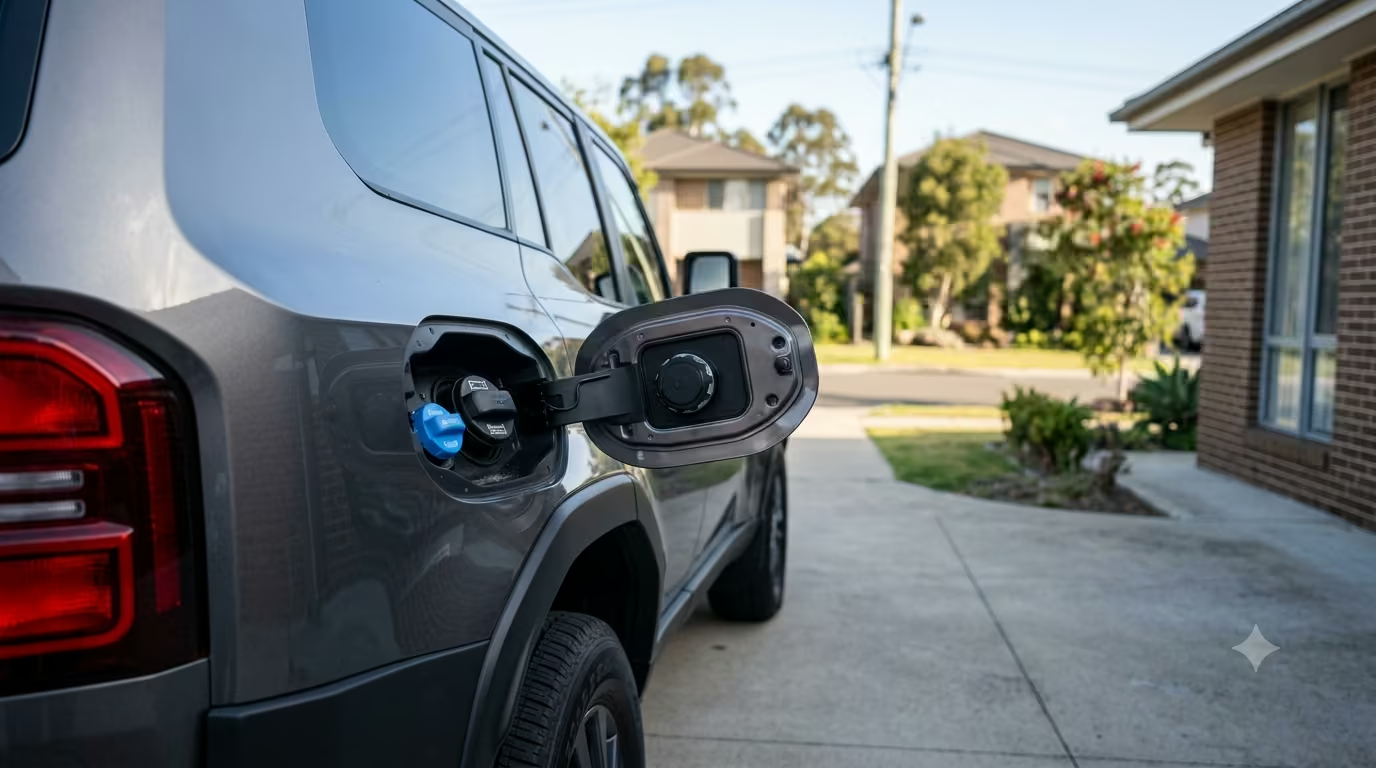
AdBlue is used by most new diesel cars, utes and 4WDs sold in Australia, and by no petrol vehicles at all. The quickest ways to check are a blue filler cap near the diesel filler, an AdBlue gauge or warning in the dash menu, and your owner’s manual.
Here is a question we get asked in the strangest moments: standing at a servo, holding a bottle of AdBlue, wondering whether their car even has somewhere to put it. And it is a better question than it sounds, because the people who know whether their vehicle uses AdBlue almost never mix their fillers up, and the people who do not know are the ones who end up on the phone to us. So consider this the five minute education that makes both AdBlue mixups, in either direction, far less likely to happen to you.
What AdBlue Actually Is and What It Does
AdBlue is not a fuel and it never touches your engine. It is a clear urea and water solution stored in its own small tank, and the vehicle sprays a fine mist of it into the hot exhaust, where a system called SCR converts harmful nitrogen oxides into plain nitrogen and water vapour. That is the whole job. Your engine burns diesel exactly as it always did, and the AdBlue works downstream, cleaning up after it. The reason it arrived on our roads is regulation: as Australia’s vehicle emissions standards have tightened in step with the European rules, SCR became the standard way for diesel engines to meet them, first in trucks and buses, then steadily through the cars, utes and 4WDs everyone actually drives.
Which Cars and Utes Use AdBlue in Australia
The honest answer is: more every model year, and the direction only goes one way. As a working guide, European diesels adopted it earliest, and badges are the giveaway there, BlueTEC on a Mercedes, BlueHDi on a Peugeot, and SCR equipped TDI badging across the Volkswagen family. Trucks and buses have run it for well over a decade. The newer shift, and the one that matters most around here, is that mainstream utes, 4WDs and vans have joined in: the LandCruiser 300 Series diesel carries it, the new Prado requires it across the whole range, the Ford Everest and Volkswagen Amarok run it, and even the famously old school LandCruiser 70 Series is picking it up as emissions rules tighten. One trap worth knowing: the Ford Ranger currently does not use AdBlue in Australia, even the V6, because it is classed as a light commercial vehicle, which is a neat illustration of why you check your own vehicle rather than assume from its neighbours in the carpark. If your diesel was built in the last few years, assume AdBlue is likely until you have checked. If it is a diesel from the early 2010s or before, it probably predates the system, but probably is doing real work in that sentence, which is why the next section exists.
How to Check If Your Car Uses AdBlue
You do not need a mechanic for this, you need two minutes. First, open the fuel flap: an AdBlue equipped vehicle almost always has a smaller second filler with a blue cap sitting next to the diesel filler, and some hide it under the bonnet or behind a panel in the boot instead, so check those before deciding you do not have one. Second, dig through the dash menus, because most AdBlue vehicles show a level readout or range figure somewhere in the trip computer, and the rest will at least surface a low level warning. Third, the owner’s manual settles it in one index lookup, under AdBlue, DEF or SCR. And if the manual has gone missing, which in a second hand ute is practically tradition, your dealer can answer it from the VIN in thirty seconds. Do the check once, on a quiet day, and you will never be the person at the servo squinting at two caps wondering which is which.
The AdBlue Warnings and What Happens If You Ignore Them
AdBlue vehicles look after their system fiercely, because emissions law requires them to. Run the tank low and the car begins a polite escalation: a warning, then a range countdown, then reduced performance, and finally a refusal to restart once it is empty. The same escalation fires if the system detects contamination, and that is where our world and this article meet. We have covered the reverse mixup and its restart countdown in detail, and the symptoms that show up when the fluid goes into the wrong side in another piece. The short version of both: the blue cap and the black cap are neighbours, mistakes travel in both directions, and neither direction is a keep-driving situation.
Why Knowing Your Vehicle Matters at the Filler
Every AdBlue mixup we attend has the same root cause: someone did not know, or did not think about, which liquid belonged in which hole. Knowing your vehicle has AdBlue changes your behaviour at exactly the right moments. You label your containers, because a shed with diesel cans and AdBlue bottles side by side is a mixup waiting for a dark morning. You slow down for two seconds at the flap, because the caps sit close enough to touch. You brief whoever else drives the vehicle, the apprentice, the partner, the new starter on the fleet, because what happens when AdBlue goes into the wrong filler is an engine level emergency, not a warning light. Five minutes of knowing beats an afternoon of recovering, every single time.
And if the day comes anyway, because servos are busy and mornings are dark and humans are human, it helps to call someone who does not need the situation explained twice. At Wrong Fuel Help the AdBlue system is part of the everyday job, both tanks, both directions of the mixup, drained and put right where the vehicle stands rather than on a tilt tray to a workshop queue. Save 0432 553 905 in your phone next to your insurer and your electrician, ideally before you need any of them. The drivers who never call us are our favourite kind, and this article is how you become one of them.
FAQs
Is DEF the same thing as AdBlue?
Yes. DEF stands for diesel exhaust fluid, which is the generic name, and AdBlue is the best known brand name for it. If a servo pump or a bottle says DEF, AUS32 or urea solution to the right standard, it is the same fluid your AdBlue tank takes.
Do any petrol cars use AdBlue?
No. AdBlue belongs to a diesel emissions system called SCR, so petrol cars do not have an AdBlue tank at all. If you drive a petrol vehicle, the blue capped filler is one mistake you never need to worry about.
Can I keep driving if the AdBlue runs out?
Not for long. The car will warn you, then limit performance, then refuse to restart once the tank is empty, because emissions rules require it. It will not stop while you are driving, but the next restart is not guaranteed, so top up as soon as the warnings begin.
Can I top up AdBlue myself?
Yes, and you should. Bottles from servos and auto stores pour straight into the blue capped filler, and many servos now have AdBlue at the pump. Just pour slowly, only into the blue cap, and never add anything else to that tank, no additives, no water, nothing.